




What trekking pole features are most important for long distance hiking?
Long‑distance hiking – whether on Germany’s Rennsteig (168 km), the Westweg (285 km), or international trails like the Pacific Crest Trail – places extreme demands on trekking poles. You’ll plant them tens of thousands of times. The wrong features will lead to blisters, fatigue, or catastrophic failure. Here are the non‑negotiable features for multi‑day and thru‑hiking.
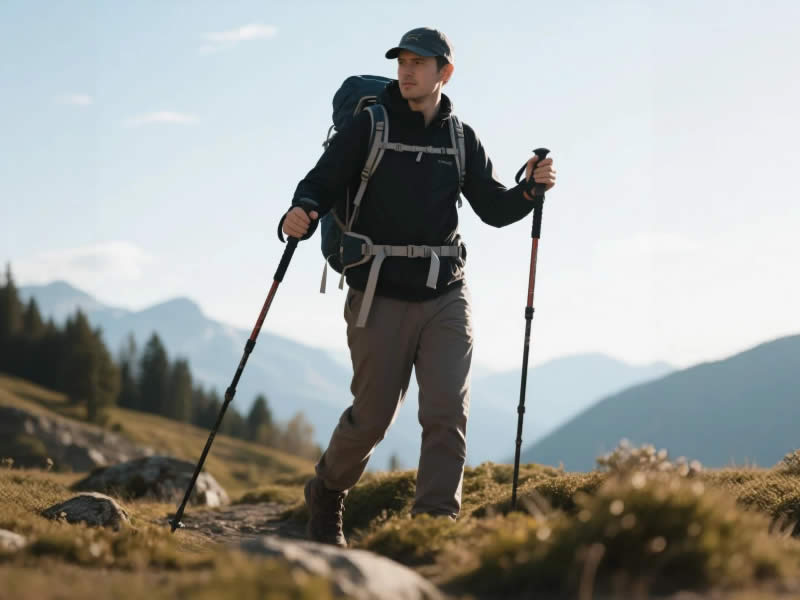
Recommended trekking pole purchase link: https://s.click.aliexpress.com/e/_c4M7OWaN
1. Durability: aluminum over carbon
Carbon fiber is light, but it can snap without warning when wedged between rocks or dropped on a sharp edge. For long trails with varied, unpredictable terrain, 7075 aluminum is the safer choice. It bends rather than breaks, and a bent pole can often be straightened enough to finish your day. Weight penalty is minimal (around 250g per pole vs. 200g for carbon). Save carbon for short, fast trips.
2. Locking mechanism: lever locks only
Twist locks are prone to slipping when wet or cold – and long trails guarantee both. External lever locks (e.g., Leki SpeedLock, Black Diamond FlickLock) are tool‑free, can be tightened with a dial, and provide visual confirmation. They are field‑repairable. Avoid any pole with plastic levers that could crack.
3. Grip: cork or high‑quality foam
Your hand will be on the grip for 8+ hours daily. Cork absorbs sweat, molds to your hand, and stays non‑slip. Foam is lighter and warm in cold weather, but some foam becomes slippery when wet. Look for an extended grip (foam below the main grip) – this lets you choke up on steep climbs without adjusting pole length, a huge time saver.
4. Replaceable carbide tip
After 500–1,000 km, even the best tip wears down. A non‑replaceable tip means throwing away the entire pole. All quality poles have screw‑in or press‑fit carbide tips. Carry a spare tip and a small tool (e.g., pliers or a dedicated tip remover) in your repair kit.
5. Adjustable length (telescopic, not fixed)
Long trails include steep ascents and descents. Fixed‑length foldable poles cannot adapt. Telescopic poles (3‑section) let you shorten for uphill and lengthen for downhill. This reduces strain on your knees and shoulders. Mark your ideal lengths with a permanent pen for quick resetting.
6. Light weight (under 500g per pair)
Every gram matters over 2,000 km. Aim for under 500g per pair for aluminum, or under 400g for carbon (if you accept the durability trade‑off). Heavier poles (600g+) will tire your arms noticeably after weeks on trail.
7. Wrist straps: padded and adjustable
Proper strap use transfers load from your grip to your arm. Look for padded, breathable straps that adjust easily. Avoid thin nylon straps that cut into your wrist.
Features you can ignore
- Shock absorbers: They add weight, sap energy, and break. Not needed for long distance.
- Folding (Z) design: While packable, fixed length is a disadvantage. Only choose if you are a fastpacker who rarely adjusts length.
- Fancy paint or carbon weaves: Doesn’t affect performance.
Final checklist for long‑distance hikers
- Aluminum 7075 shafts
- Lever locks (metal cam)
- Cork or quality foam grip with extended section
- Replaceable carbide tip
- 3‑section telescopic, 100–135 cm range
- Total pair weight under 500g
- Padded, adjustable wrist straps
With these features, your poles will last thousands of kilometres. Invest in quality – your knees and shoulders will thank you at the end of each long day.




