




How to choose trekking poles for winter snow hiking?
Winter hiking in Germany – whether on the snowy slopes of the Bavarian Alps, the Harz mountains, or the Black Forest – demands trekking poles that perform in cold, wet, and icy conditions. Standard three‑season poles often fail in winter: twist locks freeze, small baskets sink into powder, and metal shafts conduct cold to your hands. Here’s how to choose the right poles for snow.
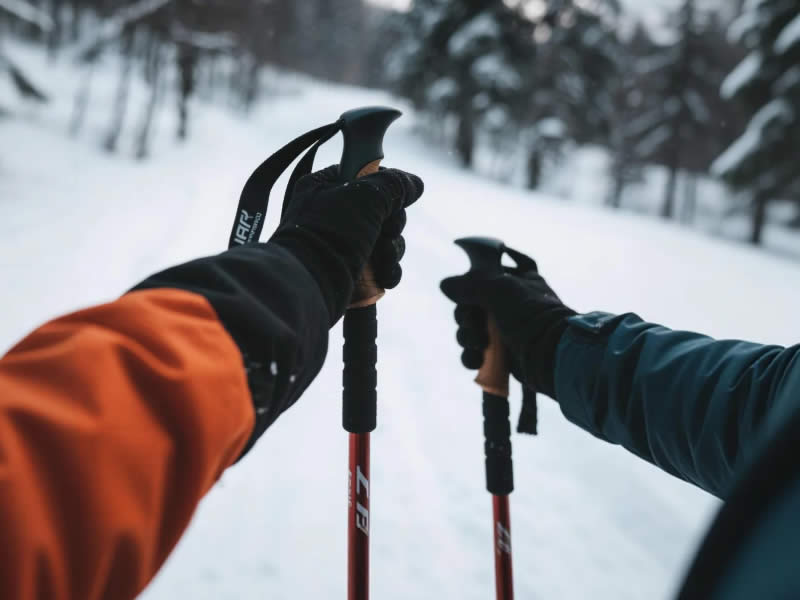
Recommended trekking pole purchase link: https://s.click.aliexpress.com/e/_c4M7OWaN
1. Material: aluminum, not carbon
Carbon fiber becomes more brittle in freezing temperatures. A minor fall or a jam between rocks can cause sudden snapping. Aluminum remains ductile in the cold – it will bend, not shatter. Look for 7075 alloy. Weight penalty is minimal, and safety is paramount.
2. Locking mechanism: lever locks over twist locks
Twist locks rely on internal friction. In winter, water seeps in, freezes, and prevents tightening – or worse, the lock slips under load. External lever locks (e.g., Leki SpeedLock, Black Diamond FlickLock) are immune to freezing because the mechanism is outside the shaft. You can operate them with gloves. Avoid twist locks entirely for snow.
3. Baskets: large snow baskets are essential
The small baskets that come with summer poles (about 5 cm diameter) will plunge deep into soft snow, making every step a struggle. Winter-specific snow baskets are 7–10 cm in diameter. They keep the pole tip near the surface, providing floatation and stability. Most quality poles have interchangeable baskets. Buy a pair of large baskets (often sold separately for €5–10) and install them before your first winter hike.
4. Tips: carbide with aggressive bite
On icy or hard‑packed snow, you need a tip that grips. Carbide tips are standard. Some winter poles feature a steel spike or a tungsten‑carbide hybrid with sharper edges. Avoid rubber tips – they slide on ice. If you hike on glaciers, consider poles with a removable ice pick tip (specialised mountaineering poles).
5. Grip material: foam or cork (not rubber)
Rubber grips become cold, stiff, and slippery in freezing temperatures. EVA foam stays warmer to the touch and provides good insulation. Cork is also acceptable but can feel cold initially. Many winter poles feature an extended foam grip – this lets you choke down without exposing your fingers to the cold shaft.
6. Length adjustability
In deep snow, you may need longer poles to reach the ground when post‑holing (sinking up to your thighs). Telescopic poles with a maximum length of 135–140 cm are ideal. Foldable fixed‑length poles may be too short for deep snow conditions.
7. Wrist straps: wide and adjustable
You’ll wear thick gloves or mittens. Wide, padded straps that adjust easily are a must. Avoid thin nylon straps – they are hard to use with gloves and can cut through insulation.
Optional: anti‑shock?
Not recommended. Springs can freeze, jam, or add unnecessary weight. Simple rigid poles are more reliable in winter.
Top winter‑ready pole recommendations
- Leki Makalu (aluminum, lever locks) + large snow baskets – classic and bombproof.
- Black Diamond Trail Pro + winter baskets – excellent grip and lock system.
- Decathlon Forclaz MT500 + aftermarket large baskets – budget winter setup.
Final checklist for winter snow hiking
- Aluminum shafts
- Lever locks (no twist locks)
- Large snow baskets (7–10 cm)
- Carbide tips
- Foam or cork grips (extended preferred)
- Telescopic, adjustable to 135+ cm
- Two poles (never one in snow)
With the right winter‑specific setup, you’ll stay stable, safe, and comfortable even in deep powder. Don’t forget to practice removing and installing baskets before your trip – cold fingers make everything harder. Happy winter trails!




