




Do trekking poles with extended foam grips offer better comfort?
If you’ve ever struggled up a steep switchback and wished you could choke down on your poles without stopping to adjust length, extended foam grips are the answer. But are they truly more comfortable, or just a marketing gimmick? For most hikers, especially those tackling varied terrain, the answer is a clear yes. Let’s explore why.
Recommended trekking pole purchase link: https://s.click.aliexpress.com/e/_c4M7OWaN
What are extended foam grips?
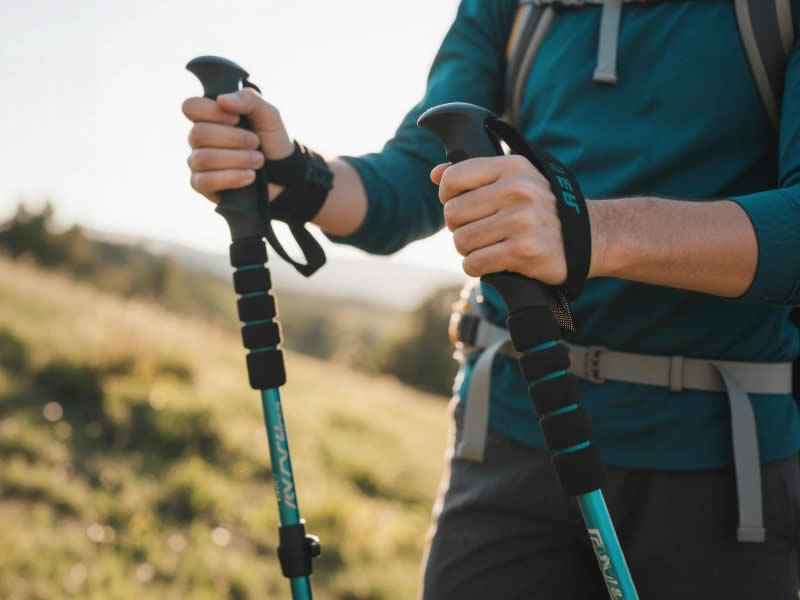
A standard trekking pole grip covers only the top 10–15 cm of the shaft. An extended foam grip continues another 10–20 cm down the shaft, made of lightweight EVA foam. This extra length allows you to grab the pole lower (choke up) on steep ascents or side‑hills without fiddling with the pole’s adjustment mechanism.
Why they improve comfort on steep climbs
When climbing a steep slope, your natural arm position is lower. If you hold the top of the pole at its normal length, your arm is forced too high, straining your shoulder. Shortening the pole takes time and breaks rhythm. With an extended foam grip, you simply slide your hand down the foam section. You instantly achieve the correct ergonomic angle, saving energy and reducing shoulder fatigue.
Other comfort benefits
- Versatility: You can instantly switch between normal grip (for flats) and choked grip (for climbs) without stopping.
- Warmth in cold weather: Foam is an insulator. On freezing days, gripping foam feels much warmer than bare aluminum or even cork.
- Sweat management: Quality foam wicks moisture reasonably well (though cork is better). It doesn’t become slippery when wet like some rubber grips.
- Light weight: Foam is lighter than cork or rubber, so extended grips add minimal weight.
Potential downsides
- Durability: Foam can tear or compress over years of heavy use, especially if you use the extended section frequently. Cork lasts longer.
- Not for everyone: Hikers with very large or very small hands might find the foam diameter less comfortable than shaped cork.
- Cost: Poles with extended foam grips are often €10–20 more expensive than standard versions.
Extended foam vs. cork vs. standard foam
| Feature | Extended Foam | Cork | Standard Foam |
|---|---|---|---|
| Choke‑up comfort | Excellent | Poor (no extension) | Poor |
| Sweat absorption | Good | Excellent | Good |
| Warmth | Excellent | Good | Excellent |
| Durability | Moderate | Excellent | Moderate |
| Weight | Very light | Moderate | Very light |
When extended foam grips are most beneficial
- Mountain hiking with frequent steep sections (e.g., German Alps, Black Forest valleys).
- Trail running – quick choke‑ups without breaking stride.
- Winter hiking – warm foam is a blessing in freezing temps.
- Hikers who dislike stopping to adjust pole length.
When you might not need them
- Flat, rolling terrain with little elevation change.
- Hikers who always adjust pole length for climbs (some prefer that).
- Budget‑conscious buyers – standard grips work fine for gentle trails.
Top models with extended foam grips
- Leki Makalu (cork main + extended foam) – best of both.
- Black Diamond Trail Pro (thick foam grip with long extension).
- Komperdell C4 Carbon Pro (full foam grip, extended design).
- Decathlon Forclaz MT500 (cork/foam hybrid with modest extension).
Final verdict
For anyone who hikes in steep or varied terrain, trekking poles with extended foam grips offer significantly better comfort than standard grips. The ability to choke up instantly without adjusting length saves time, energy, and shoulder strain. The foam is warm, light, and grippy. While cork remains superior for hot‑weather sweat management, a hybrid design (cork main + foam extension) is the ultimate comfort solution. If your typical hike includes any substantial climbs, extended foam grips are well worth the small extra cost.




