




What is the typical lifespan of carbon trekking poles?
Carbon fiber trekking poles are prized for their light weight and vibration damping, but they are not immortal. Unlike aluminum, which bends and can often be straightened, carbon can snap without warning. Understanding their typical lifespan – and the factors that extend or shorten it – helps you decide whether to invest and when to replace them.
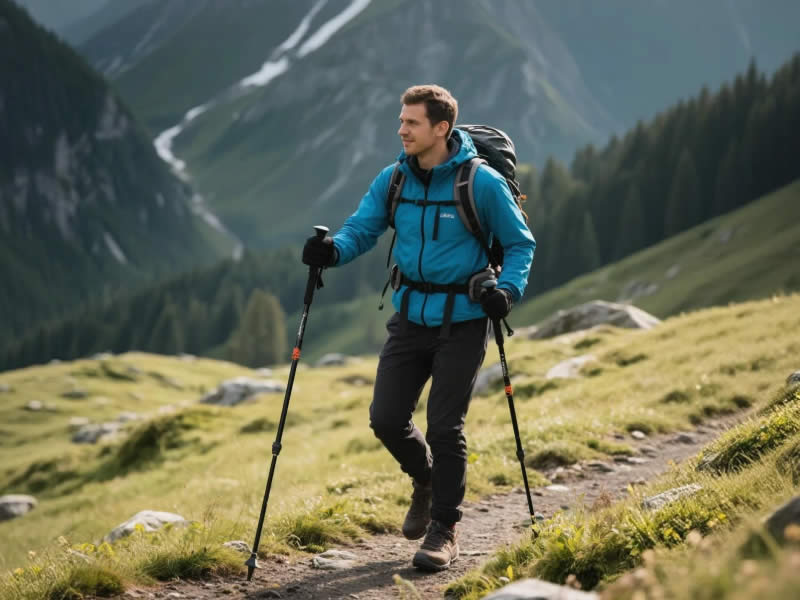
Recommended trekking pole purchase link: https://s.click.aliexpress.com/e/_c4M7OWaN
The short answer
Under normal use on well‑maintained trails, a quality pair of carbon trekking poles can last 3 to 5 years or 3,000 to 5,000 kilometres (about 1,800–3,100 miles). However, this varies enormously based on terrain, load, and luck. Some thru‑hikers finish a 4,000 km trail with the same carbon poles; others snap a pole in the first week on rocky ground.
Factors that determine lifespan
- Terrain: Smooth, soft trails (e.g., forest paths, gravel roads) are gentle on carbon. Rocky, root‑filled, or off‑trail terrain significantly increases the risk of lateral stress and sudden breakage.
- Hiker weight and pack load: A 100 kg hiker with a 15 kg pack puts far more stress on poles than a 60 kg day hiker. Carbon is more likely to fail under heavy loads.
- Technique: Hikers who plant poles at extreme angles, use them as levers, or fall frequently will break carbon poles much sooner.
- Maintenance: Inspecting for cracks, keeping locks clean, and storing poles properly extends life.
- Quality: Premium carbon (e.g., Black Diamond, Komperdell, Leki) uses higher‑modulus fibers and better resin than budget carbon. Cheap carbon can fail after a few hundred kilometres.
Signs of impending failure
Unlike aluminum, carbon does not bend – it cracks. Look for:
- Visible cracks or splinters on the shaft, especially near joints or ferrules.
- A dull thud or rattle when tapping the pole on the ground (a healthy carbon pole rings clearly).
- Creaking or flexing under normal load – indicates delamination.
- Loose or wobbly joints in foldable poles – can precede breakage.
If you see any of these, retire the pole immediately. A snapped pole on a steep descent is dangerous.
How to maximise carbon pole lifespan
- Never use as a lever to pull yourself up rocks or to pry apart stuck gear.
- Avoid planting sideways – keep the pole roughly vertical.
- Don’t extend beyond the “STOP” mark – the thin section is much weaker.
- Inspect after every fall – even a minor tumble can crack carbon.
- Store disassembled or fully extended (not partially collapsed) to avoid stress on joints.
- Rinse after muddy or salty use – grit in joints can cause wear.
Real‑world examples
- Light use (weekend hiker, smooth trails): Carbon poles may last 5–7 years or more. Many recreational hikers never break a carbon pole.
- Moderate use (Alpine day hikes, rocky trails): Expect 2–4 years. Some cracks may appear at the lower ferrule after repeated impacts.
- Heavy use (thru‑hiking, off‑trail, heavy pack): 1–2 years or 2,000–3,000 km is typical. Many thru‑hikers carry a spare section or switch to aluminum for rugged sections.
Comparing to aluminum lifespan
Aluminum poles typically last longer – 5–10 years or 5,000–10,000 km – because they bend rather than snap. You can often straighten a bent aluminum pole and continue. Carbon’s lifespan is shorter in rough conditions, but its weight savings may be worth it for smooth trails.
When to replace carbon poles
- After any visible crack or splinter.
- If the pole makes a rattling sound (internal delamination).
- After a hard fall that you suspect damaged the shaft (even without visible cracks).
- When the locking mechanism or joint becomes loose and cannot be tightened (wear, not repairable).
Final verdict
The typical lifespan of carbon trekking poles is 3–5 years or 3,000–5,000 km for average use on moderate terrain. On rocky or demanding trails, expect 1–3 years. For maximum longevity, choose aluminum. For weight savings on smooth trails, carbon is fine – just inspect regularly and accept that a single bad jam could end their life. Treat carbon poles with respect, and they will serve you well for many happy trails.




