




Do trekking poles with carbide tips last longer?
If you’ve ever compared a worn‑out steel tip to a fresh carbide one, you know the difference is dramatic. But just how much longer do carbide tips last? The answer: significantly longer – often 5 to 10 times the lifespan of steel tips on rocky terrain. Let’s dig into the science and real‑world performance.
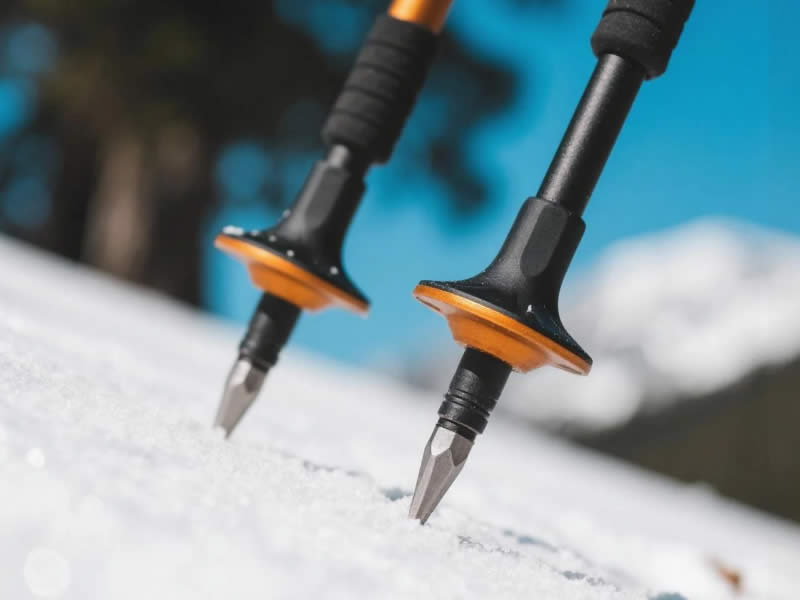
Recommended trekking pole purchase link: https://s.click.aliexpress.com/e/_c4M7OWaN
What makes carbide tips special
Tungsten carbide is a composite of tungsten and carbon, sintered into an extremely hard ceramic‑metal material. Its hardness rating is 8.5–9 on the Mohs scale, just below diamond (10) and far above hardened steel (5–6). This extreme hardness means carbide resists abrasion, deformation, and wear. When you plant a carbide tip on granite or limestone, the rock wears away far slower than the tip wears.
Lifespan comparison: carbide vs. steel
- Tungsten carbide tips: Under normal use on mixed terrain (dirt, rock, gravel), a quality carbide tip typically lasts 500–1,000 kilometres (300–600 miles). On very sharp, abrasive rock (e.g., volcanic or quartzite), lifespan may drop to 300–500 km. Some thru‑hikers report getting 2,000 km from a single set of carbide tips on softer trails.
- Hardened steel tips: On similar terrain, steel tips often wear down in 50–150 kilometres. The pointed shape rounds off, the tip mushrooms, and grip deteriorates rapidly. On abrasive rock, steel can become useless in a single weekend.
Why carbide lasts longer – the material science
Abrasive wear is a function of hardness. When two surfaces rub, the harder material scratches the softer one. Carbide is much harder than rock; steel is often softer than many rock types (e.g., granite is about 6–7 Mohs). So steel tips are worn down by the rock, while carbide tips wear the rock microscopically but remain sharp. Additionally, carbide has high compressive strength – it doesn’t deform plastically like steel, so the pointed shape is maintained.
Real‑world examples
- Appalachian Trail (rocky, rooty): Hikers using carbide‑tipped poles typically need one tip replacement during a 3,500 km thru‑hike. Steel‑tipped budget poles often need replacement after 200–300 km – or the entire pole is discarded.
- German Alpine trails (limestone, sharp): A weekend of heavy use on karst rock can completely round off a steel tip. Carbide tips show minimal wear after the same 30 km.
- Desert trails (sandstone, abrasive): Carbide lasts 800+ km; steel tips may last 100 km.
What “lasting longer” means for your wallet and safety
A pair of replacement carbide tips costs €5–15. A new pair of budget poles with steel tips costs €20–40. Over a year of rocky hiking, you might go through 3–4 pairs of steel‑tipped poles (€60–160) or simply replace the tips on your carbide poles once (€10). More importantly, a worn steel tip slips on wet rock, increasing fall risk. A sharp carbide tip bites securely, even after hundreds of kilometres.
Factors that reduce carbide tip life
- Dragging or scraping the tip sideways (plant straight).
- Using on pavement or asphalt without rubber covers – this rapidly wears carbide.
- Very hard, sharp rock (e.g., fresh volcanic scree) – still lasts longer than steel, but expect 300–400 km.
- Low‑quality carbide – some budget poles use a tiny carbide pellet glued into a steel housing. Once the steel wears, the pellet falls out. Genuine solid‑carbide tips are best.
How to maximise tip life
- Use rubber covers on paved sections.
- Plant the pole vertically, not at extreme angles.
- Replace tips when the carbide point is visibly rounded or the steel ferrule is exposed.
- Buy poles with replaceable tips – screw‑in or press‑fit. Avoid fixed tips.
Final verdict
Yes, trekking poles with tungsten carbide tips last far longer than those with steel tips – typically 5–10 times longer on rocky terrain. They are more cost‑effective, safer, and more reliable. For any hiking that involves rock – which is most German mountain trails – carbide tips are essential. Always choose poles with replaceable carbide tips, and carry a spare pair on long treks. Your knees and your wallet will thank you.




