




Are there trekking poles with built-in cameras or tripod functions?
For hiking photographers, carrying both trekking poles and a tripod can feel like double the weight. The idea of a trekking pole that doubles as a camera support is appealing. But are such products viable? The short answer: yes, but with significant compromises. Let's explore the options.
Recommended trekking pole purchase link: https://s.click.aliexpress.com/e/_c4M7OWaN
Camera‑ready trekking poles (monopod function)
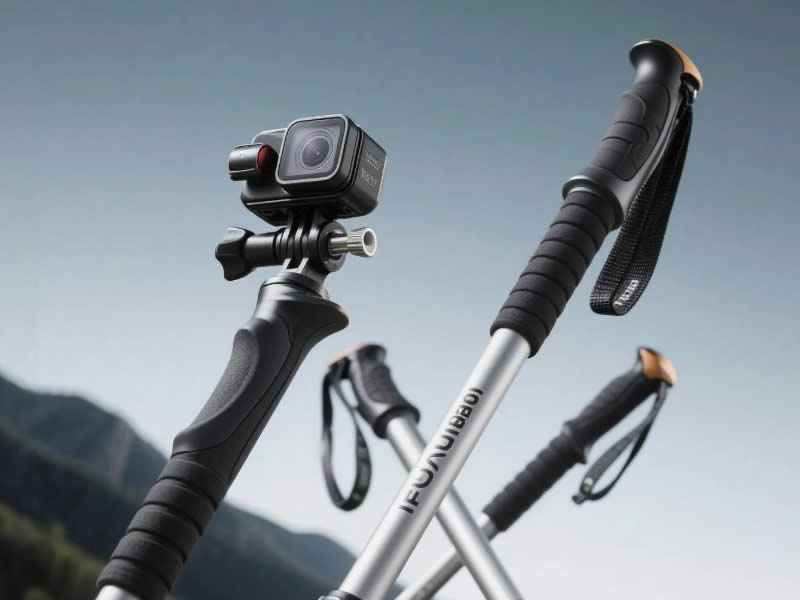
Several brands offer trekking poles with a removable grip that reveals a standard ¼‑20 camera screw mount. When you unscrew the top cap, you can attach your camera directly to the pole, turning it into a monopod (single‑leg support). This provides stability for photos and videos, especially when hiking alone.
Examples:
- Leki Photo Kit – An accessory kit (€30–40) that replaces the standard grip of many Leki poles. It includes a padded grip with a built‑in screw mount and a small ball head. You can use your existing Leki pole as a monopod.
- Black Diamond Distance Carbon Z with removable grip – Some Black Diamond poles have a compatible top cap (sold separately) that reveals a screw mount.
- TrailPix – A third‑party adapter that turns any trekking pole into a monopod or even a mini‑tripod using three poles (two poles + one as a leg).
Full tripod function using multiple poles
The most innovative solution uses two or three trekking poles to form a complete tripod. The TrailPix system (around €50) includes a small hub that attaches to your camera and has three receptacles for trekking pole tips. You insert your two poles and a third stick (or a third pole) to create a stable, lightweight tripod. Some ultralight photographers use this setup for long exposures.
Built‑in cameras? No.
There are no mainstream trekking poles with a built‑in camera (i.e., a camera embedded in the shaft). Such a product would be heavy, fragile, and impractical. Camera technology improves quickly, while poles last years – you don't want to replace your poles every time you upgrade your camera. Instead, the "built‑in" concept refers to the mounting interface.
Pros of camera‑ready trekking poles
- Weight saving: A monopod setup adds just 30–50g (the adapter) instead of carrying a separate 500g tripod.
- Always available: You already have the pole in your hand – no need to unpack a tripod.
- Quick deployment: Unscrew the grip, screw on the camera, and shoot.
- Stability: A single pole monopod reduces camera shake by 2–3 stops compared to handheld.
Cons and limitations
- No true tripod: A monopod does not allow hands‑free shooting or long exposures (unless you use a three‑pole system like TrailPix).
- Stability limited: A single pole is less stable than a dedicated tripod, especially in wind.
- Weight distribution: Adding a camera on top makes the pole top‑heavy; it's not ideal for hiking while the camera is attached.
- Compatibility: Not all poles have removable grips. Check before buying.
- Cost: The adapter or special grip adds €30–50 to your setup.
Best solution for hiking photographers
- For quick, handheld stabilization: Use a Leki Photo Kit or Black Diamond adapter. Great for fast shots, selfies, or video.
- For true tripod needs (landscape, long exposure, group photos): Carry a lightweight tripod (e.g., 300g tabletop tripod) or use the TrailPix system with two poles + a third stick. The TrailPix collapses to a small pouch and weighs only 30g.
- For ultralight backpackers: Consider a monopod pole + a small beanbag or clamp for occasional use.
What to look for when buying
- Removable grip: Ensure the pole's top grip can be unscrewed to reveal a standard ¼‑20 thread.
- Sturdy lock: The pole's lock must hold the extra weight of a camera without slipping.
- Ball head compatibility: A small ball head (sold separately) allows you to adjust the camera angle.
- Weight rating: Check the pole's maximum load capacity – most are fine for a mirrorless or DSLR up to 2 kg.
Final verdict
There are no trekking poles with built‑in cameras, but several models and accessories allow you to use your poles as monopods (single‑leg support) or even as a tripod (using two or three poles). The Leki Photo Kit and TrailPix are the most practical solutions. For most hiking photographers, a monopod function is a useful add‑on, but for serious landscape work, a dedicated lightweight tripod remains superior. If you already carry trekking poles, spending €30–50 on an adapter is a smart way to save weight and add versatility. Just don't expect it to replace a full tripod for long exposures.




