




What is the ideal shaft diameter for trekking poles?
When choosing trekking poles, most hikers focus on material (aluminum vs. carbon) and locking mechanism. But shaft diameter is equally important – it affects strength, weight, stiffness, and comfort. So, what is the ideal diameter? The answer depends on your body weight, pack load, and terrain.
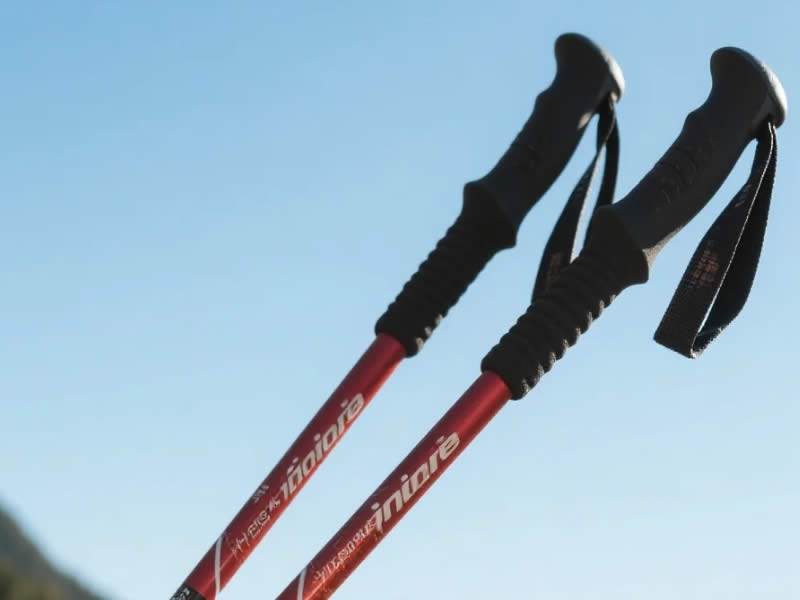
Recommended trekking pole purchase link: https://s.click.aliexpress.com/e/_c4M7OWaN
Typical diameter ranges
Trekking pole shafts range from 14 mm to 20 mm (measured at the thickest lower section). Upper sections are slightly wider. Here’s how they break down:
- Ultralight / trail running: 14–16 mm – very thin, flexible, lightweight. Best for low loads and smooth trails.
- All‑around hiking: 16–18 mm – the sweet spot for most hikers. Good balance of strength and weight.
- Heavy duty / backpacking: 18–20 mm – thick, stiff, durable. For heavy packs (15+ kg) or rocky terrain.
Why diameter matters
- Stiffness: A thicker shaft bends less under load. When you plant a pole, a thin shaft flexes, absorbing some of your push. Thicker shafts transfer energy more efficiently, giving you better feedback and control.
- Strength: Thicker walls and larger diameter resist bending and snapping. A 18 mm aluminum pole is significantly stronger than a 14 mm pole of the same alloy.
- Weight: Thicker = heavier. An 18 mm pole may weigh 20–30g more per pole than a 16 mm model.
- Grip comfort: Thicker shafts can be harder to grip for small hands, though the grip itself is usually moulded to a comfortable size regardless of shaft diameter.
Ideal diameter by user profile
1. Light hiker (under 70 kg / 155 lbs), day pack (under 8 kg), smooth trails: 14–16 mm is fine. You’ll save weight without sacrificing strength. Carbon poles in this range are common (e.g., Black Diamond Distance Z at ~16 mm).
2. Average hiker (70–85 kg), moderate pack (8–12 kg), mixed terrain: 16–18 mm is ideal. This covers most weekend hikers and day trekkers. Leki Makalu and Black Diamond Trail Pro are around 16–17 mm. They offer excellent durability without being heavy.
3. Heavy hiker (85+ kg) or heavy backpack (12–20 kg), rocky terrain: 18–20 mm is recommended. Look for poles with thicker walls and larger diameter, such as the Leki Khumbu or Black Diamond Alpine Carbon (which is thicker despite being carbon). Aluminum is preferred for ultimate durability.
4. Trail runner or ultralight backpacker: 14–16 mm – you prioritise weight savings over absolute strength. Accept that poles may flex more and are less durable on rock.
Diameter vs. wall thickness
Don’t confuse diameter with wall thickness. A 16 mm pole with a 1.2 mm wall is stronger than a 18 mm pole with a 0.8 mm wall (rare). Most quality poles use 1.0–1.2 mm walls for aluminum. For carbon, wall thickness is harder to compare. Always check the manufacturer’s specs for load ratings.
How to measure diameter
Use a caliper to measure the lower shaft (just above the tip). Many manufacturers list the diameter in product specs. If not, you can estimate: 16 mm is about the thickness of a US dime; 18 mm is like a nickel.
Real‑world recommendations
- Decathlon Forclaz MT500 (aluminum): 16 mm – good for average hikers.
- Leki Makalu (aluminum): 16 mm lower section, 18 mm upper – excellent compromise.
- Black Diamond Trail Pro (aluminum): 17 mm – very stiff for its weight.
- Black Diamond Distance Carbon Z (carbon): 14 mm – ultralight, but flexes noticeably.
- Komperdell Expedition Alu: 18 mm – for heavy loads.
The myth of “thicker is always better”
Not true. A very thick (20 mm) pole is heavy and may be overkill for day hiking. It can also be uncomfortable for those with small hands because the grip has to fit over a larger shaft. Conversely, a 14 mm pole may feel whippy and insecure on steep descents. The ideal is the smallest diameter that meets your strength needs.
Final verdict
For the majority of hikers – weighing 70–85 kg, carrying a day pack or light overnight load on mixed terrain – the ideal shaft diameter is 16–18 mm. This range provides a perfect balance of stiffness, strength, and weight. If you are heavier, carry a large pack, or hike very rocky trails, lean toward 18 mm. If you are ultralight or a trail runner, 14–16 mm works. Always prioritise quality materials (7075 aluminum or high‑modulus carbon) over diameter alone – a well‑made 16 mm pole is better than a cheap 18 mm pole.




