




Are quick-lock trekking poles safe for heavy users?
Quick-lock trekking poles – typically referring to external lever locks (e.g., Leki SpeedLock, Black Diamond FlickLock) – are popular for their ease of use and secure hold. But if you are a heavy user (body weight over 100 kg / 220 lbs, or carrying a backpack of 15+ kg), you need to know: are they safe? The answer is yes, provided you choose the right materials and quality level. Here’s what you need to consider.
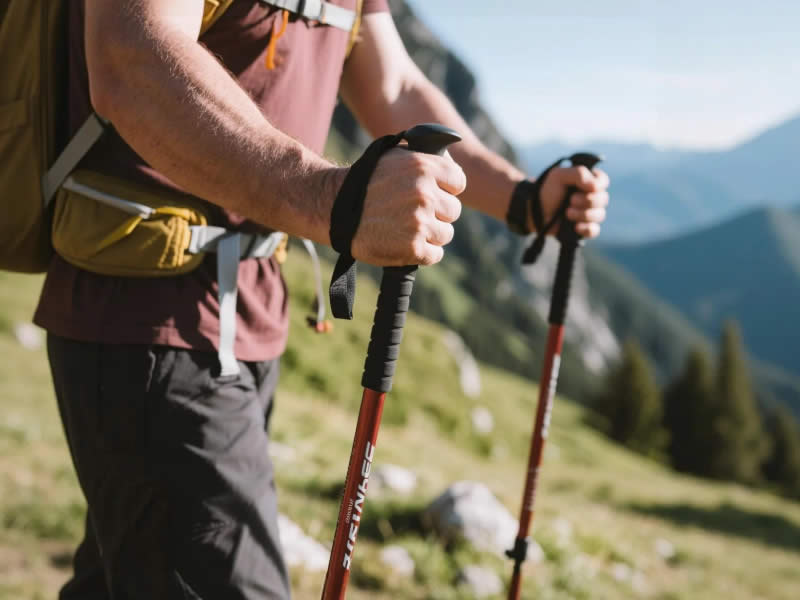
Recommended trekking pole purchase link: https://s.click.aliexpress.com/e/_c4M7OWaN
What “quick‑lock” means in this context
Quick‑lock usually means a lever‑operated external clamp, as opposed to twist locks (internal expanding cams). Lever locks are generally safer for heavy users because they offer visual confirmation, tool‑free adjustment, and consistent clamping force even when wet or dirty. However, not all lever locks are equal.
Why heavy users need special consideration
A heavy hiker plus a heavy pack can generate forces of over 150 kg per pole during a dynamic plant (e.g., catching a fall). The locking mechanism must resist slipping, and the shaft must resist bending or snapping. Key risks:
- Lock slip: The inner shaft slides down under load.
- Shaft failure: Aluminum bends; carbon snaps.
- Lock breakage: Plastic components crack.
Safe quick‑lock features for heavy users
- Metal lever and cam: Avoid levers made of plastic. Look for reinforced metal (e.g., Leki’s SpeedLock has a metal cam and a durable plastic lever housing; Black Diamond’s FlickLock is all metal). The clamping surface should be wide (at least 15 mm) to distribute pressure.
- Thick‑walled aluminum shaft (7075 alloy): Carbon is not recommended for heavy users – it can snap suddenly. 7075 aluminum with 1.2–1.5 mm wall thickness and 18 mm diameter is ideal.
- Tool‑free tension adjustment: A dial or screw that lets you increase clamping force as the lock wears. This is essential for long‑term safety.
- Positive stop: The lever should click or lock firmly in place, not just friction‑hold.
Which quick‑lock systems are safest?
- Leki SpeedLock (2nd generation or newer): Very safe for heavy users. The metal cam and large contact area hold well. Many heavy backpackers use Leki Makalu poles without issues. The plastic dial is reinforced and rarely fails.
- Black Diamond FlickLock: All‑metal construction, extremely robust. The hex‑screw adjustment is a minor inconvenience, but the lock itself is bombproof. Excellent for heavy loads.
- Komperdell lever locks: Also reliable, but check the model – some use plastic levers on budget lines.
What to avoid for heavy use
- Twist locks: Unreliable under heavy loads – they slip when wet or cold. Not recommended.
- Budget quick‑locks with plastic cams: Many no‑name poles have plastic‑on‑plastic clamping. They can crack under pressure.
- Foldable (Z) poles: Their joints are weaker than telescopic locks. Not for heavy users, regardless of lock type.
- Carbon shafts: One lateral jam can snap them. For heavy users, stick with aluminum.
Real‑world load limits
- A quality aluminum pole with a metal lever lock can safely support a static vertical load of 120–150 kg per pole – more than enough for a 100 kg hiker with a 20 kg pack (total 120 kg), provided the load is shared between two poles.
- Dynamic loads (falling, sudden planting) can be higher, but the margin is still acceptable if the lock is properly tensioned.
Maintenance for safety
- Check lock tension before every hike: The lever should require firm pressure to close. If it closes too easily, tighten the dial.
- Inspect for wear: Look for cracks in plastic parts, deformation of the metal cam, or burrs on the inner shaft.
- Clean regularly: Grit in the locking mechanism reduces clamping force. Rinse with fresh water after muddy hikes.
- Replace worn parts: Most quality brands sell replacement lever assemblies (e.g., Leki SpeedLock repair kit).
Signs your quick‑lock is unsafe
- The lever closes fully but the pole still slides under moderate hand pressure.
- You hear clicking or grinding when adjusting.
- The lever feels loose even when tightened.
- The inner shaft shows deep grooves or scratches from the clamp.
Final verdict
Yes, quick‑lock (lever lock) trekking poles are safe for heavy users – if you choose 7075 aluminum shafts with metal‑cam lever locks from reputable brands (Leki, Black Diamond, Komperdell). Avoid twist locks, plastic levers, carbon shafts, and budget no‑name poles. For users over 120 kg total weight (body + pack), consider heavy‑duty models like the Leki Khumbu or Black Diamond Trail Pro. Always maintain your locks and inspect them regularly. With proper gear and care, quick‑lock poles will serve you safely for years.




