




How to use trekking poles for scrambling and climbing?
Scrambling – that gray area between hiking and rock climbing – requires hands‑free movement on exposed terrain. Trekking poles can become a hindrance or even a hazard if used incorrectly. The golden rule: for genuine scrambling (Class 3 or 4 terrain), stow your poles. However, for easy climbing or exposed sections, you can use poles with caution. Here’s how to handle poles when the trail gets steep and rocky.
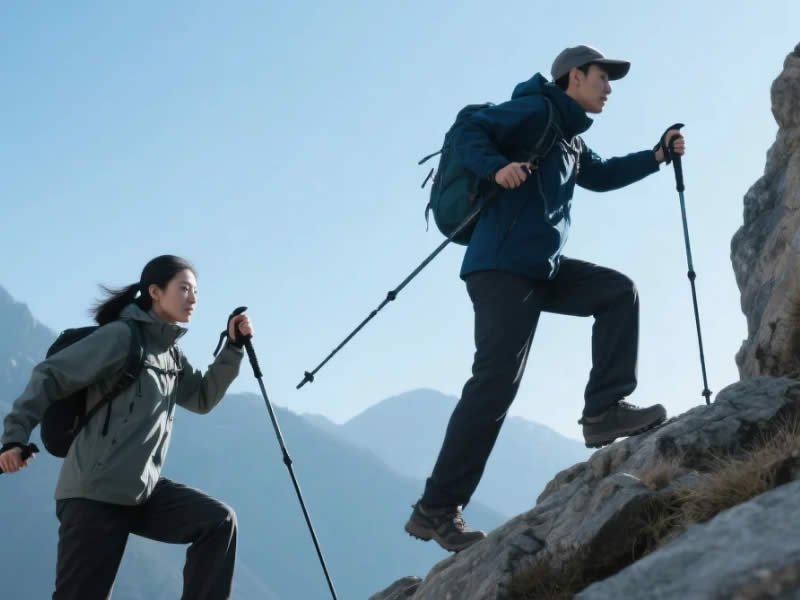
Recommended trekking pole purchase link: https://s.click.aliexpress.com/e/_c4M7OWaN
The cardinal rule: stow poles when you need both hands
If you encounter a section where you must use your hands for balance, holds, or pulling yourself up, your poles become dangerous. They can snag on rocks, slip, or cause you to lose balance. Always collapse and stow your poles on your pack before committing to a scramble. Trying to hold poles while climbing is a common cause of falls.
When you can keep using poles (easy climbing / exposed trails)
On Class 2 or easy Class 3 terrain – where you don’t need to use your hands for every step – you can continue using poles for balance. Examples: walking along a narrow ridge with good footing, crossing a rocky slope with large holds, or ascending a steep but non‑technical gully.
Technique for easy climbing with poles
- Shorten your poles significantly – reduce length by 10–15 cm from your flat‑terrain setting. Shorter poles give you better control and prevent them from hitting your face or getting caught above you.
- Use one pole – keep one hand free for balance or for touching rock. Hold the other pole in your uphill hand. Some climbers prefer to stow one pole and use the other as a walking stick.
- Plant carefully – avoid jamming the tip into cracks where it could get stuck. Plant on solid, flat surfaces.
- Don’t pull on poles – never use a trekking pole as a handhold to pull your body weight up. The pole can snap, or the tip can slip. Use your free hand on real rock.
- Keep straps loose or off – you don’t want a pole strapped to your wrist if you fall. Remove the wrist strap or keep it very loose.
When to definitely stow poles
- Exposed traverses with significant drop‑off.
- Any move where you need to pull on a rock with your hand.
- Descending steep, loose scree – poles can be helpful for balance, but if you need both hands to down‑climb, stow them.
- Via ferrata – use the steel cable for balance, not poles. Most via ferrata require hands free.
How to stow poles for scrambling
- Collapse telescopic poles to shortest length (or fold Z‑poles).
- Attach to pack using side compression straps, daisy chains, or dedicated pole holders. Ensure tips are secured so they don’t poke you.
- Position – attach poles vertically on the side or diagonally across the back. Avoid placing them where they could snag on rock.
- Quick‑deploy – practice unstowing poles quickly for when you return to hiking terrain.
Alternative: use poles as a balance aid on exposed ridges
On a narrow ridge with good footing but exposure on both sides, you can use both poles as outriggers. Extend them to full length, plant them wide, and walk normally. This provides lateral stability and psychological comfort. However, if the ridge becomes so narrow that you need to shuffle or use hands, stow the poles.
Common mistakes to avoid
- Trying to climb with poles in both hands – you have no way to grip rock.
- Using poles to pull yourself up – the lever force can snap carbon poles or bend aluminum ones.
- Leaving straps on your wrists – if you fall, the pole can twist your arm or prevent you from catching yourself.
- Forgetting to shorten poles – long poles will hit the rock above you, throwing off your balance.
Final verdict
For true scrambling and technical climbing, stow your trekking poles – your hands need to be free. For easy climbing or exposed hiking, you can use one or two poles with caution: shorten them, avoid pulling, and keep straps loose. Practice stowing and unstowing poles quickly. Never rely on poles as climbing aids – they are hiking tools, not mountaineering gear. When in doubt, stow them and use your hands. Your safety is more important than saving a few seconds.




