




Do trekking poles help with walking on loose gravel?
Loose gravel – whether on steep mountain descents, river banks, or rocky trails – is one of the most challenging surfaces to walk on. Each step can send stones skittering, and your feet may slide unpredictably. The short answer is yes, trekking poles help significantly on loose gravel. They provide stability, act as probes, and reduce the risk of falls. Here’s how and why.
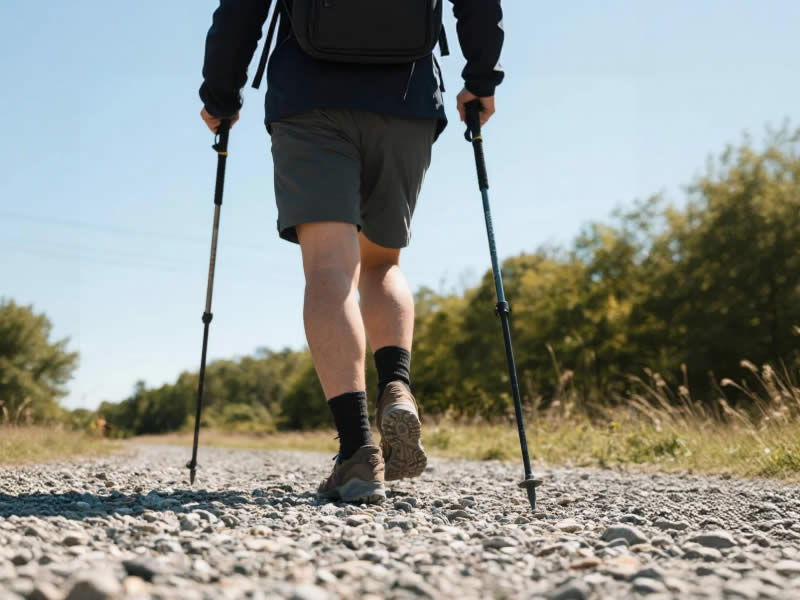
Recommended trekking pole purchase link: https://s.click.aliexpress.com/e/_c4M7OWaN
Why loose gravel is difficult
Gravel is essentially a collection of small, unconsolidated rocks. When you step on it, the stones roll and shift under your weight, offering little friction. Your foot can slide forward, backward, or sideways, and you may lose balance. Walking on gravel requires a wide stance, slow steps, and constant micro‑adjustments – all of which tire your legs and ankles quickly.
How trekking poles help
- Added points of contact: Two poles give you four points of contact (two feet + two poles). This greatly widens your base of support, reducing the chance of a slip turning into a fall.
- Probing before stepping: You can plant a pole ahead to test how stable the gravel is. If the pole sinks or slides, you know to choose a different foot placement.
- Load transfer: By pushing down on the poles, you transfer some of your body weight from your legs to your arms. This reduces the downward force on your feet, making it less likely that gravel will shift under your full weight.
- Catching slips: If your foot slides, a quick plant of the pole can arrest the motion before you fall.
Technique for walking on loose gravel
- Use two poles – never one. A single pole unbalances you on shifting surfaces.
- Lengthen poles slightly – add 2–3 cm to your flat‑terrain length. Longer poles allow you to plant farther ahead, giving you more warning about surface changes.
- Plant firmly – push the carbide tip into the gravel until it contacts a solid layer or larger rock below. A light plant will just slide.
- Take shorter steps – keep your feet under your body, not ahead. Short steps minimize the sliding distance if your foot moves.
- Keep your weight centered – avoid leaning forward or backward. Poles help you stay upright.
- Use a shuffle step – slide your feet rather than lifting them. This reduces the chance of dislodging gravel.
- On downhills – plant both poles together ahead of you, then step down onto the gravel. The poles act as brakes.
What to avoid
- Planting at an angle – a slanted pole can skid sideways. Keep the shaft as vertical as possible.
- Relying only on poles for balance – still use your legs. Poles assist but don’t replace good footwork.
- Using rubber tips – rubber slides on gravel. Use bare carbide tips for bite.
- Rushing – gravel demands slow, deliberate steps.
Real‑world example
Imagine descending a steep scree slope. Without poles, each step is a gamble – stones roll underfoot, your ankles tense, and your heart races. With poles, you plant firmly, feel the tip hit solid ground, and step down with confidence. The difference in stability and perceived safety is dramatic.
When poles are less helpful
- Very deep, loose gravel (like a dry riverbed) – poles may sink without finding solid base. In such cases, shorten poles and use them more for balance than support.
- Steep, soft scree where the whole slope moves – consider taking a different route. Poles help, but the risk of a slide remains.
Final verdict
Yes, trekking poles are highly effective on loose gravel. They provide stability, allow you to test footing, and help catch slips. Use two poles, lengthen them slightly, plant firmly, and take short, slow steps. The combination of four points of contact and reduced load on your feet makes walking on gravel far safer and less tiring. Don’t venture onto loose slopes without them.




