




Do Trekking Poles Help Reduce Upper Body Fatigue?
If you’ve ever finished a long hike with sore shoulders, a stiff neck, or numb fingers, you’ve experienced upper body fatigue. Many hikers assume that trekking poles are only for knee support or balance. But a compelling question arises: can these poles actually reduce fatigue in your upper body? The short answer is yes, but the mechanism is often misunderstood. In this article, we’ll unpack the biomechanics, proper technique, and common mistakes to help you use trekking poles as a true upper-body fatigue-fighting tool.
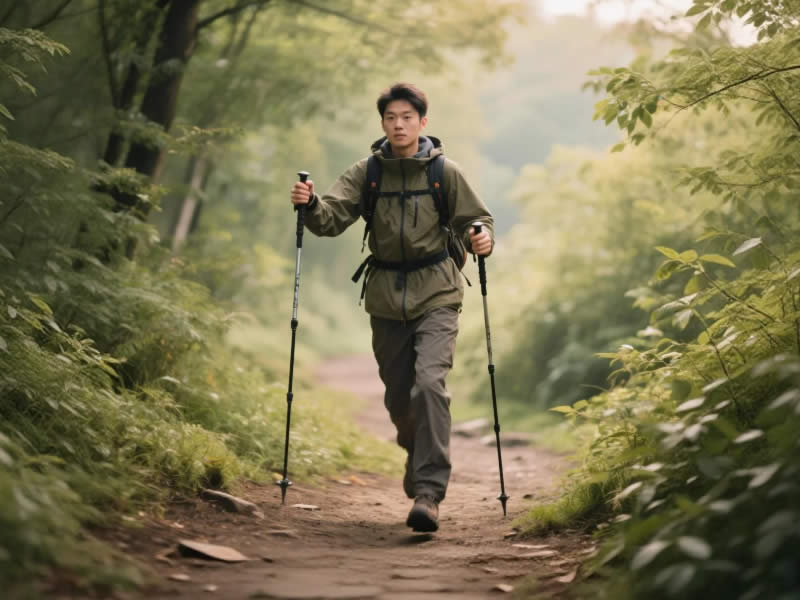
Recommended trekking pole purchase link: https://s.click.aliexpress.com/e/_c4M7OWaN
The Misconception: Poles Add Work to Your Arms
At first glance, swinging two poles might seem like extra exercise for your arms and shoulders. Wouldn’t that increase fatigue? This is a logical concern. However, research and practical experience show the opposite—when used correctly, trekking poles redistribute workload across your entire body, reducing localized fatigue in both your lower and upper body.
How Poles Reduce Upper Body Fatigue
1. They Promote an Upright Posture
One of the biggest hidden causes of upper body fatigue on trails is poor posture. Without poles, many hikers slump forward, especially during descents or when carrying a heavy backpack. This forward lean forces your neck and shoulder muscles (upper trapezius and levator scapulae) to work overtime to keep your head up. Trekking poles provide a tactile and proprioceptive cue to stay upright. By planting poles ahead of you, you naturally open your chest and align your spine, reducing static muscle tension in the upper back and neck.
2. Load Sharing Reduces Grip Strain
Contrary to intuition, trekking poles do not force you to grip tightly. In fact, the wrist straps are designed to bear most of the load. When you correctly thread your hand through the strap from below and grip the handle lightly, your body weight transfers through the strap to your forearm and then to the pole. This means your finger flexors and forearm muscles can remain relaxed. Without poles, hikers often clench their fists or swing their arms tensely, causing premature forearm and shoulder fatigue. With poles, that tension dissipates.
3. They Absorb Impact and Vibration
Repetitive impact—especially on descents—sends shock waves up your arms. Without poles, your elbows and shoulders absorb that shock, leading to joint fatigue and muscle microtrauma. Trekking poles with carbon fiber shafts or internal shock-absorbing springs (found in some models) dampen these vibrations before they reach your upper body. Less vibration means less neuromuscular fatigue.
4. They Prevent Arm Swelling and “Heavy Arm” Sensation
Long periods of walking with arms hanging down can impair venous return, causing blood pooling in the hands and forearms. This leads to swelling, numbness, and a heavy, achy feeling. Trekking poles encourage rhythmic arm movement and elevation, which pumps lymphatic fluid and blood back toward the heart. Many hikers report that using poles eliminates the “sausage fingers” phenomenon after a long day.
The Crucial Role of Technique
To truly reduce upper body fatigue, you must use poles correctly. Incorrect technique turns poles into fatigue multipliers.
- Don’t death-grip the handles. Your grip should be a 2 or 3 out of 10 in intensity. The strap does the holding; your hand just guides.
- Engage your core, not your shoulders. The force to push down on each pole should come from your torso and hip flexors, not from lifting your shoulders. Imagine pressing the pole into the ground by hinging slightly at your waist.
- Adjust pole height appropriately. Poles that are too long force you to hike with raised shoulders (constant muscle contraction). Poles that are too short make you hunch. On flat ground, your elbow should be at 90 degrees when holding the pole vertically.
- Use a relaxed arm swing. Let the poles swing naturally from your shoulders, not from your elbows. This mimics your natural arm motion during walking and avoids unnecessary muscle activation.
Scientific Evidence
A 2019 study published in the Journal of Sports Sciences examined energy expenditure and perceived exertion in hikers using trekking poles on steep terrain. While the study focused on overall fatigue, participants consistently reported lower “upper body discomfort” scores when using poles compared to unaided walking. Another biomechanical analysis found that pole use reduced deltoid and trapezius muscle activity by approximately 15-20% during prolonged loaded walking, as the poles transferred some propulsive forces to the lower body.
Real-World Scenarios Where Poles Help Most
- Heavy backpacking (over 10 kg/22 lbs): The load on your shoulders from pack straps compresses your cervical spine. Poles offload some of that compressive force.
- Steep descents: Without poles, you brake with your quads and also tense your arms for balance. Poles reduce that arm tension.
- Long, flat sections with monotonous arm swing: Poles add purposeful movement, preventing shoulder stiffness.
When Poles Might Increase Fatigue
There are exceptions. Very lightweight, flexible poles (e.g., aluminum budget poles) can transmit more vibration than they absorb. Also, if you have a pre-existing rotator cuff injury or wrist tendonitis, the repetitive planting motion may aggravate symptoms. Similarly, using poles with broken or poorly adjusted straps forces you to grip harder, increasing fatigue. Always invest in quality poles with comfortable, breathable straps and reliable locking mechanisms.
Final Verdict
Yes, trekking poles do help reduce upper body fatigue – but only when you pair them with proper technique and correctly fitted straps. Rather than adding work for your arms, poles redistribute forces, promote better posture, dampen impact, and encourage healthy circulation. For most hikers, the result is less shoulder tightness, fewer numb fingers, and a fresher upper body at the end of the day. To maximize the benefit, take a few minutes to learn the wrist strap method and practice a relaxed, core-driven push. Your shoulders will thank you on the summit.




