




How to clean trekking poles after muddy hikes?
Muddy trails are inevitable for hikers who don't wait for perfect weather. While the experience is often rewarding, the aftermath leaves your trekking poles caked in sticky, abrasive dirt. Many hikers simply wipe off the big chunks and call it done – but that mistake slowly destroys your poles. Mud contains fine grit that acts like sandpaper inside locking mechanisms and between telescoping sections. Proper cleaning after every muddy hike adds years to your poles' life. This guide covers a simple, effective routine using items you already have at home.
Recommended trekking pole purchase link: https://s.click.aliexpress.com/e/_c4M7OWaN
Why mud is so damaging
Mud isn't just wet dirt. It contains:
- Silica particles (microscopic quartz) – harder than aluminum or carbon fiber coatings.
- Organic acids from decaying leaves – can corrode metal over time.
- Clay – dries hard and jams twist‑locks.
- Salt (in coastal or desert mud) – accelerates galvanic corrosion.
When you collapse dirty poles, mud gets forced into the joints. Then it dries, creating a concrete‑like bond. The next time you try to extend the poles, the grit scratches the anodized coating. Once the coating is compromised, the underlying aluminum oxidizes, leading to stuck sections and slipping locks.
The quick clean (after every muddy hike)
Time required: 5 minutes. Tools: hose or bucket, soft brush, dry cloth.
Step 1: Rinse while extended
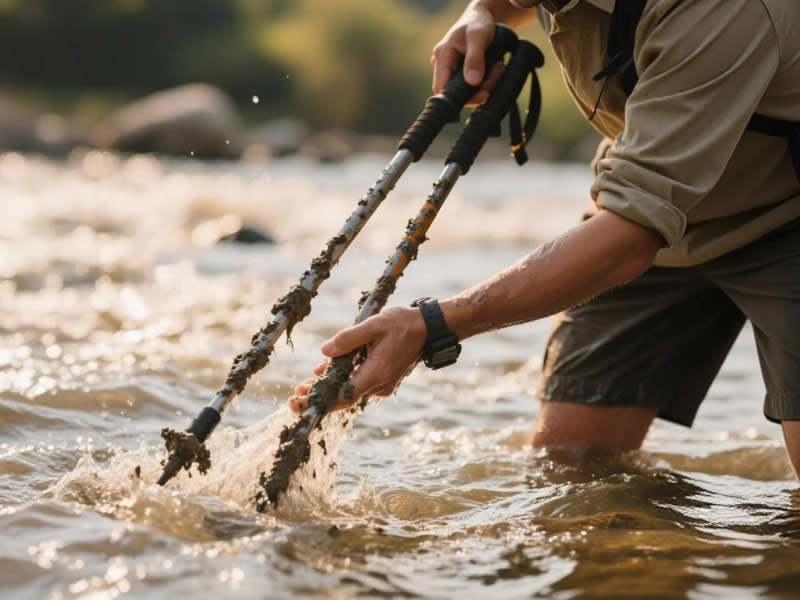
Before collapsing your poles, extend them fully. This opens the gaps between sections so water can flush out dirt. Use a garden hose (gentle spray) or dip in a bucket of clean water. Do not use a pressure washer – it forces water into sealed components.
Rinse the tips, baskets, and all shaft sections. Pay special attention to the area just above each joint – that's where mud accumulates.
Step 2: Brush the locks and baskets
For flick‑locks: Open the levers fully. Use an old toothbrush or a small scrub brush to remove mud from the cam mechanism and the gap between the lever and the pole. Mud here prevents the cam from clamping fully.
For twist‑locks: Extend the section and brush the exposed inner shaft. Mud on the shaft will be forced into the lock when you collapse.
Baskets: Mud packs between the basket and the shaft. Spin the basket and brush underneath it. Remove the basket if possible (most twist off) and clean separately.
Step 3: Wipe shafts dry
Use a microfiber cloth or an old cotton rag to wipe every section completely dry. Water left on aluminum can cause white oxidation; water on carbon fiber is less harmful but can seep into locks.
For inner shafts (the narrower sections), extend each one and wipe it from the joint outward. Then collapse partially, wipe again. You want no visible moisture or mud residue.
Step 4: Clean the tips
Mud hardens around carbide tips and inside the rubber tip covers (if you use them). Pick out packed mud with a toothpick or a paperclip. A muddy tip won't grip rock properly.
Step 5: Air dry fully before collapsing
This is the most critical step. Never collapse and store wet poles. Water trapped between sections leads to corrosion and stuck joints. Leave poles extended in a dry, ventilated area for at least 1 hour (or overnight). A boot dryer or gentle fan speeds the process.
Once dry, collapse the poles and store them in a cool, dry place.
The deep clean (monthly or after very muddy trips)
Sometimes a rinse isn't enough. Perform this deeper clean every 4–6 weeks or after especially muddy, salty, or sandy hikes.
Disassemble the poles
If your poles have removable sections (most flick‑lock poles allow full disassembly):
- Open all locks and pull the sections apart completely.
- Remove the baskets.
- If using twist‑locks, unscrew the end cap and remove the expander (keep small parts in a bowl).
Wash with mild soap
Fill a basin with lukewarm water and a few drops of dish soap (e.g., Dawn). Submerge the shafts and baskets. Use a soft sponge or brush to scrub. Do not soak the grips – water under the rubber can cause mold.
Rinse thoroughly with fresh water.
Dry each component
Lay everything on a towel. Use a hairdryer on low heat to dry inside the female sections (the wider outer tubes). Allow at least 2 hours of air drying.
Lubricate (if needed)
For twist‑locks: Spray a dry silicone lubricant onto the inner shaft. Wipe off excess. Never use grease or oil.
For flick‑locks: Apply a tiny drop of silicone spray to the lever pivot. Wipe away any drips.
Reassemble
Slide sections back together, ensuring no sand is trapped. Test each lock before your next hike.
What to avoid
- Never use dish soap in a dishwasher – Heat and aggressive detergents damage anodized coatings and melt plastic baskets.
- Avoid submerging the grips – Water trapped inside the foam or rubber leads to rot and unpleasant odors.
- Do not use abrasive pads (steel wool, scouring pads) – They scratch the finish, removing corrosion protection.
- Don't store poles in a damp basement or car trunk – Humidity promotes rust on screws and springs.
Cleaning checklist poster
| After every muddy hike | Monthly / as needed |
|---|---|
| Rinse extended poles | Disassemble completely |
| Brush locks and baskets | Wash with mild soap |
| Wipe shafts dry | Dry with low heat |
| Clean tips with toothpick | Lubricate twist‑locks |
| Air dry 1+ hour before collapsing | Inspect for wear |
What about snow and salt?
If you hike in winter on salted trails (common in some regions), rinse poles after every use. Salt is highly corrosive to aluminum and steel. Use the same rinse‑and‑dry method, but consider adding a freshwater soak to dissolve salt crystals inside crevices.
Pro tip: the "shake test"
After cleaning and drying, collapse the poles and shake them near your ear. If you hear a gritty sound, there's still sand inside. Repeat the rinse and drying process.
Final thoughts
Cleaning trekking poles after muddy hikes takes less than 10 minutes. That small investment prevents seized joints, slipping locks, and premature tip wear. Your poles will extend smoothly, lock securely, and last for thousands of trail miles. Make it a habit: come home from a muddy hike, rinse your poles while you rinse your boots. Your future self – and your poles – will thank you.




