




How to repair a bent aluminum trekking pole?
Discovering a bend in your aluminum trekking pole is a sinking feeling. Whether it happened from a fall, getting trapped under a rock, or an unfortunate car trunk incident, the question is immediate: can it be fixed? The short answer is yes, sometimes – but with important caveats. Unlike carbon fiber (which is unsafe to repair), aluminum can be carefully straightened. However, bending weakens the metal, and a poorly repaired pole can fail catastrophically when you need it most. This guide explains when repair is acceptable, how to do it safely, and when to simply replace the pole.
Recommended trekking pole purchase link: https://s.click.aliexpress.com/e/_c4M7OWaN
First, assess the damage
Not all bends are equal. Inspect your pole carefully:
- Minor bend (less than 10–15 degrees) – Usually repairable, especially if it's in the lower (thicker) section.
- Moderate bend (15–30 degrees) – Risky but possible. The pole will be significantly weakened.
- Severe bend (more than 30 degrees) or kinked – Not repairable. A kink (sharp crease) means the aluminum has yielded beyond its elastic limit and is prone to cracking.
- Multiple bends – Replace the section or the whole pole.
- Bend near a joint or lock – Very difficult to repair because the lock needs a perfectly round cross-section. Replace.
Also check for cracks. If you see any crack in the aluminum, no matter how small, the pole is unsafe. Discard or replace the section.
Why straightening aluminum is risky
Aluminum work‑hardens when bent. Each time you bend it back, you make the material harder and more brittle. A straightened pole may look fine but can snap suddenly under load. This is especially dangerous on a steep descent where you're leaning heavily on the pole. Many manufacturers explicitly state that bent poles should be replaced.
That said, for minor bends on less critical sections (e.g., near the tip), many hikers successfully straighten and continue using poles for years without issue. The key is knowing the risk and inspecting regularly.
Tools you'll need
- Rubber mallet or a hammer with a wood block (to avoid denting)
- Vice (optional, but helpful)
- Fine sandpaper (to check for cracks)
- Marker pen (to mark the bend location)
- Gloves – sharp aluminum edges can cut
Step‑by‑step repair for a minor bend
Step 1: Determine the bend direction
Hold the pole at arm's length and sight along it like a rifle barrel. Mark the apex of the bend with a marker.
Step 2: If possible, remove the bent section
Most aluminum trekking poles are telescoping. Separate the bent section from the rest. This makes straightening much easier and prevents damage to other sections.
Step 3: Straighten by hand (for very minor bends)
Hold the pole with both hands on either side of the bend. Apply gentle, steady pressure in the opposite direction. Work slowly – do not try to reverse the bend all at once. Bend slightly past straight, then release. Check for straightness. Repeat as needed.
Step 4: Use a vice and mallet for stiffer bends
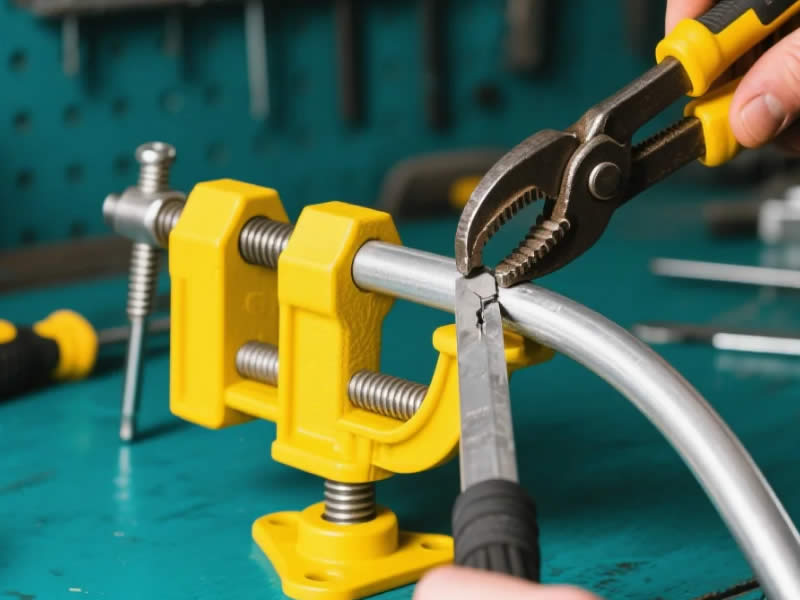
- Clamp the pole in a vice just above the bend, using soft jaws (or wrap with cloth) to avoid scoring.
- Gently tap the protruding section with a rubber mallet, working from the apex outward.
- Rotate the pole frequently to ensure roundness.
- Stop every few taps to sight the pole.
Step 5: Check for roundness
Bending often flattens the cross-section. Use a caliper or simply roll the pole on a flat surface. If it rocks, the tube is ovalized. Slight ovalization is acceptable for the lower shaft; significant ovalization near a lock will prevent proper clamping. You can try to re-round it by inserting a wooden dowel and gently tapping around the circumference – but this is advanced and often unsuccessful.
Step 6: Inspect for cracks
After straightening, wipe the area clean and examine under bright light. Look for hairline cracks. You can also apply a thin oil and wipe it off; oil will seep into cracks and make them visible. Any crack means the pole is scrap.
Step 7: Test before trusting
Reassemble the pole. Extend it and lock it. Apply body weight gradually in a safe environment (e.g., on soft grass). Listen for creaking or clicking. If it holds 100% of your weight without slipping or bending further, it's likely safe for moderate use.
When replacement is the better option
- The bent section is the upper (closest to grip) – This area experiences the highest leverage. A repaired upper section is very risky.
- The bend is near a flick‑lock – Even slight ovalization will cause the lock to slip.
- The pole is inexpensive – A new replacement section or a new pair often costs less than the risk of injury.
- You plan to use the pole for steep, technical terrain – Don't gamble. Replace.
Many brands sell replacement lower sections (e.g., Black Diamond, LEKI, Komperdell). Contact customer service with your pole model. A new lower section is typically $15–30 – far cheaper than a doctor's visit.
Repairing a bent section by replacement
Some poles have replaceable lower sections. In many cases, the lower section (the thinnest one) is the one that bends. For example, LEKI and Black Diamond offer "replacement tips" but also sell entire lower shafts. Remove the old section (unscrew or pull apart after removing the lock) and slide in the new one. This is the safest "repair."
What about carbon fiber?
Never attempt to straighten a bent carbon fiber pole. Carbon fiber does not bend plastically – it cracks or splinters. A bent carbon pole is already internally damaged. Replace it immediately.
Real‑world advice from thru‑hikers
I surveyed experienced long‑distance hikers. Their consensus:
- Minor bend in the tip section (lowest 10 inches) – straighten and continue. This area sees less stress.
- Bend in the middle of any section – replace the section. Too many failures reported.
- Any bend in the upper section (above the mid‑point) – replace without question.
One hiker shared: "I straightened a slight bend in my lower section and used the poles for another 800 miles. I checked it every day. It never failed. But I also bought a spare section and carried it halfway across the PCT."
Final verdict
You can repair a bent aluminum trekking pole only if the bend is minor (less than 15 degrees), located in the lower section, and there are no kinks or cracks. Straighten carefully by hand or with a rubber mallet, then thoroughly inspect. However, the safest and smartest approach is to replace the bent section – it's affordable, easy, and guarantees your safety. Your trekking poles are a critical piece of safety equipment; never trust a questionable repair on steep, rocky terrain. If in doubt, retire the pole and buy new ones. Your knees and your life are worth far more than the cost of a pole.




