




How to fix a twisted trekking pole section?
A twisted trekking pole section is a less common but frustrating problem. It happens when one telescoping section rotates relative to another, usually due to over-tightening a twist‑lock or forcing the pole when the lock is partially engaged. The result is a pole that no longer aligns straight, making locking difficult and planting awkward. This guide explains how to diagnose the issue and safely restore your pole.
Recommended trekking pole purchase link: https://s.click.aliexpress.com/e/_c4M7OWaN
What does “twisted” mean?
Unlike a bent shaft (a curve along the length), a twisted section refers to rotational misalignment. The inner shaft has spun inside the outer tube, often causing the locking mechanism to bind or the tip to point off‑axis. This is most common with twist‑lock poles, where excessive torque can deform the expander or gouge the inner shaft.
Can it be fixed? It depends on the material.
Aluminum poles: Yes, with caution. Aluminum can withstand a small amount of torsional correction.
Carbon fiber poles: No. Carbon fiber is anisotropic – it has little strength in torsion. Twisting a carbon shaft back will cause internal delamination. Replace the section.
Step‑by‑step fix for aluminum poles
Step 1: Disassemble the pole
Separate the twisted section from the rest of the pole. For twist‑locks, unscrew the end cap and pull out the inner shaft. For flick‑locks, open the lever completely and slide the sections apart.
Step 2: Inspect the damage
Look for:
- Gouges or flat spots on the inner shaft – caused by the expander or lock biting into soft aluminum. Light scratches are normal; deep grooves will always cause binding.
- Deformed expander – rubber or plastic expanders can twist into an oval shape. Replace it.
- Bent inner shaft – if the shaft is also bent, straighten it first (using the method for bent aluminum poles), then address the twist.
Step 3: Correct the twist
If the inner shaft is rotated but otherwise straight:
- Clamp the outer tube gently in a padded vice.
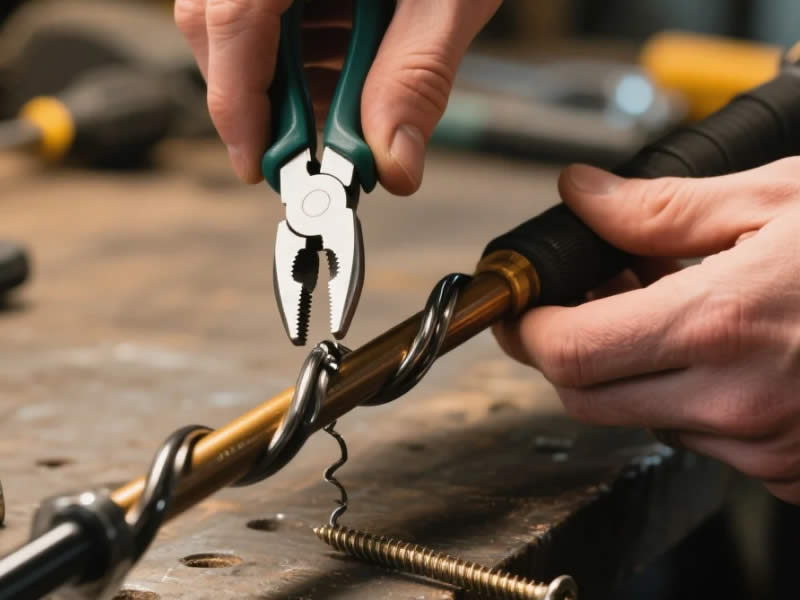
- Grip the twisted end of the inner shaft with rubber‑jawed pliers or wrap it with several layers of cloth.
- Slowly and gently rotate the inner shaft back to its original orientation. You are correcting a small amount of rotation – typically less than 15 degrees. Do not force.
- Work incrementally: rotate a few degrees, release, check alignment, repeat.
Step 4: Clean and lubricate
After straightening, clean both shafts with alcohol to remove any metal shavings. Apply a dry silicone spray to the twist‑lock expander (or leave flick‑lock clamping surfaces dry). Reassemble and test.
Step 5: Test under load
Extend the pole and lock it. Push straight down on a soft surface (grass) with your full body weight. The pole should hold firmly and not slip or re‑twist. If it slips, the expander or lock may be worn – replace those parts.
When repair is not possible
- Deep gouges in the shaft – The shaft is compromised and will always catch. Replace the section.
- Twist in a carbon pole – Do not attempt. Carbon fibers break internally and will fail catastrophically.
- Twist near a flick‑lock cam – The cam’s mounting hole may have ovalized. Replace the complete lower section.
Prevention: how to avoid twisting a pole
- Do not over‑tighten twist‑locks – Tighten only until the pole holds your weight. Over‑tightening deforms the expander and twists the shaft.
- Never force a stuck lock – If a twist‑lock is stuck, disassemble and clean it. Twisting harder will just gouge the shaft.
- Use flick‑locks for heavy‑duty use – Flick‑locks are much less prone to twisting because they clamp radially, not rotationally.
- Inspect expanders annually – A worn or compressed expander is more likely to slip and then bind, causing twist.
Real‑world example
A hiker on the Pacific Crest Trail reported twisting the lower section of an aluminum twist‑lock pole after overtightening to stop slipping. He disassembled, found the expander was crushed, replaced it, and carefully rotated the shaft back by hand. The pole worked for another 500 miles before he replaced it with flick‑lock poles. His advice: “If you hear creaking or feel resistance when twisting, stop. Clean it first.”
Final verdict
A twisted aluminum trekking pole section can often be corrected by careful reverse rotation, especially if caught early and the damage is minor. However, the fix is temporary for heavily worn poles. Replace the expander (for twist‑locks) or the entire section if gouges are deep. For carbon fiber poles, never attempt to untwist – replace immediately. And remember: the best fix is prevention. Use proper locking technique, clean your poles regularly, and upgrade to flick‑locks if you frequently encounter twisting issues.




