




Is Leki Makalu or Khumbu better for heavy hiking?
When you’re carrying a heavy backpack – think 15–20 kg (33–44 lbs) for multi‑day treks – your trekking poles become essential load‑bearing tools. You need poles that won’t slip, bend, or fatigue your hands. Leki offers two popular aluminum models: the Makalu (often the Makalu Lite) and the Khumbu (Khumbu Lite). Both are excellent, but which one is better for heavy hiking? The short answer: they are mechanically identical. The main difference is the grip material. This article breaks down the details so you can choose based on your personal preference.
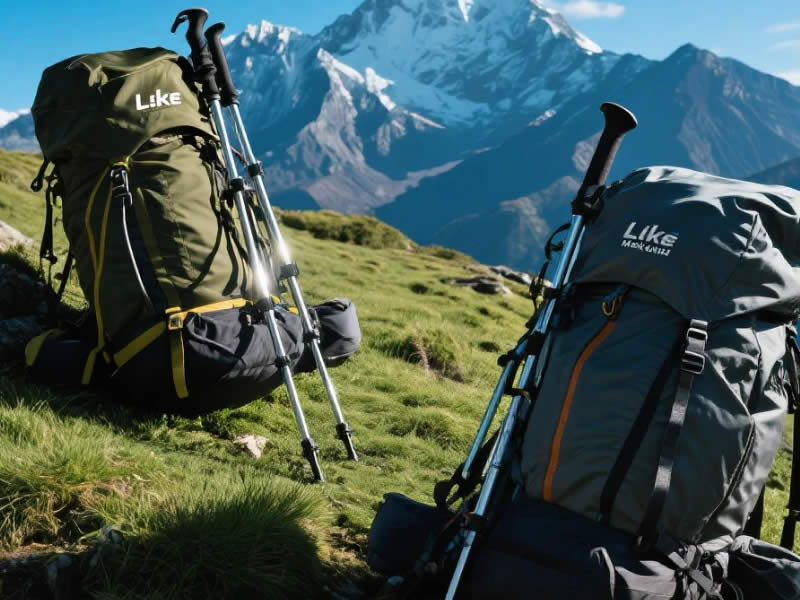
Recommended trekking pole purchase link: https://s.click.aliexpress.com/e/_c4M7OWaN
Construction and durability
Both the Makalu and Khumbu series are built on the same 7075‑T6 aluminum shaft. This is a high‑strength, heat‑treated alloy used in aircraft construction. It resists bending and can tolerate rough handling. Both poles use the SpeedLock 2 (or newer SpeedLock Plus) external flick‑lock mechanism. These locks are proven to hold securely under heavy downward pressure – exactly what you need when leaning into a steep ascent or braking on a descent.
The carbide tips, interchangeable baskets, and wrist straps are also identical. In terms of raw durability and load‑bearing capability, there is no difference between the Makalu and Khumbu. A heavy hiker (e.g., 100 kg / 220 lbs body weight plus a 20 kg pack) will not break one model more easily than the other.
Grip material – the real difference
The only significant difference is the grip:
- Makalu – Features a cork grip (or Core‑Tec, a cork‑rubber blend). Cork is naturally moisture‑wicking, molds to your hand over time, and provides excellent grip even when wet. It also dampens vibration, reducing hand fatigue on long, rocky trails. However, cork can wear down over many years of heavy use, and it may feel slightly rough to some users.
- Khumbu – Uses a foam grip (often EVA foam). Foam is lightweight, soft, and warm in cold weather. It provides good cushioning and doesn’t absorb sweat as much as cork. Foam is also more durable than cork in terms of resisting chipping or flaking. However, foam can become slippery when very wet or muddy, and it compresses slightly over time, losing some cushioning.
Grip shape and ergonomics
Both models have ergonomically shaped grips with a slight angle (negative angle) to promote a natural wrist position. They both feature a padded, adjustable wrist strap. The Makalu’s cork grip may have a slightly more pronounced contour for hand index fingers; the Khumbu’s foam grip is more cylindrical. For heavy hiking, where you often shift grip positions (e.g., choking down on the shaft for traverses), both perform well.
Which is better for heavy hiking?
The choice depends on your conditions and hand preference:
- Choose Makalu (cork) if you hike in hot, sweaty conditions or expect rain. Cork remains grippy when wet, reducing the risk of the pole twisting in your hand under heavy load. Many heavy hikers prefer cork because it feels more secure and reduces blistering.
- Choose Khumbu (foam) if you hike in colder weather or prefer a softer, more cushioned feel. Foam doesn’t get as cold as cork in winter, and it provides excellent vibration damping. However, be aware that wet foam can become slick – you may need to wear gloves or use straps more aggressively.
Other considerations
- Weight: The Khumbu Lite is slightly lighter (about 10–15g per pole) due to the foam grip, but the difference is negligible for heavy hiking.
- Price: Khumbu is often $10–20 cheaper per pair. If budget matters, that’s a point for Khumbu.
- Availability: Both are widely sold. Makalu may be easier to find in specialty outdoor stores; Khumbu is common on Amazon and big‑box retailers.
Real‑user feedback
On thru‑hiking forums, heavy hikers often report:
- “I used Makalu for the PCT with a 35lb pack – cork grips saved my hands in the desert heat.”
- “Khumbu foam is great for winter trips in the Whites; my hands stayed warm and comfortable.”
- “After 2000 miles, the foam on my Khumbu started to compress, but it still worked fine. Cork on my Makalu developed a smooth patina but never lost grip.”
Final verdict
For heavy hiking, both the Leki Makalu and Khumbu are equally capable in terms of strength and locking reliability. Your decision should be based on grip feel:
- Makalu (cork) – Better for sweaty hands, wet conditions, and those who prefer a firm, textured grip.
- Khumbu (foam) – Better for cold weather, those who want a softer feel, or budget‑conscious hikers.
If you can, try both grips in a store. Load a backpack with weight and simulate planting the pole. Your hands will tell you which is right. Either way, you are getting a pair of bomb‑proof poles that will handle the heaviest loads you can throw at them.




