




Do I need special trekking poles for snowshoeing?
If you already own a pair of trekking poles, you might be wondering whether you need to buy a separate set for snowshoeing. The short answer is no – you do not need “special” snowshoeing poles. Your regular trekking poles can work perfectly well in the snow, provided you make a few adjustments and understand the limitations. This article explains what changes are necessary, when you might consider dedicated snow poles, and how to get the most out of your existing gear.
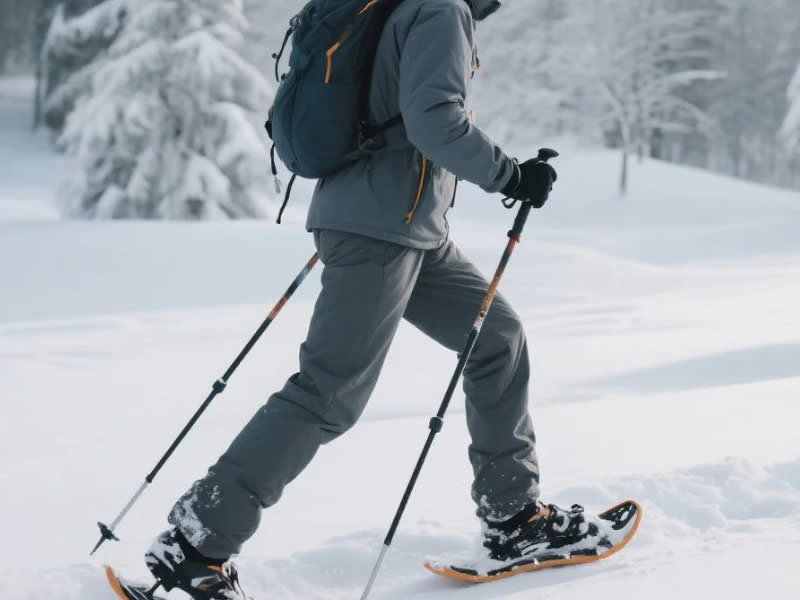
Recommended trekking pole purchase link: https://s.click.aliexpress.com/e/_c4M7OWaN
The main difference: baskets
The most critical component for snowshoeing is the basket – the plastic disc near the tip that prevents the pole from sinking too deep. Standard trekking poles come with small baskets (typically 40–50 mm in diameter) designed for mud, gravel, or packed dirt. In soft snow, these small baskets offer almost no flotation; your pole will plunge deep with every plant, ruining your rhythm, wasting energy, and providing little stability.
For snowshoeing, you need large powder baskets (70–120 mm in diameter). These act like a snowshoe for your pole, spreading the load and keeping the tip near the surface. Most quality trekking poles from brands like Leki, Black Diamond, and Komperdell have interchangeable baskets. You can simply unscrew or pull off the summer basket and snap on a winter basket. This is a cheap and easy upgrade (typically €10–20 per pair).
Do you need different locks?
Snow and cold affect locking mechanisms differently. Twist‑locks are problematic in winter. Moisture can seep inside and freeze, making it impossible to turn the lock. Ice can also form between the shaft sections, causing the pole to slip or seize. If you have twist‑lock poles, you can still use them for snowshoeing, but be prepared to clean and dry them thoroughly after each use, and consider upgrading to flick‑locks if you snowshoe often.
External flick‑locks (like Leki’s SpeedLock or Black Diamond’s FlickLock) are far superior for winter. They are easy to operate with gloves, less prone to ice buildup, and can be adjusted even if wet. If your current poles have flick‑locks, you are already in good shape.
Carbon vs. aluminium in winter
Carbon fibre poles are lightweight and stiff, but they become more brittle in sub‑freezing temperatures. A hidden rock under the snow can cause a carbon shaft to crack or snap. Aluminium poles (especially 7075 series) are more forgiving – they may bend but rarely break. For deep snow where you cannot see obstacles, aluminium is the safer choice. If you have carbon poles, use them carefully and avoid jamming them forcefully.
Grip and strap considerations
Snowshoeing often involves wearing thick gloves or mittens. Some trekking pole grips are better than others:
- Foam grips are warm and easy to grip with gloves.
- Cork grips can become cold and slippery when wet.
- Extended foam sections (sometimes called “blade grips”) allow you to choke down on the pole for steep traverses – very useful in snow.
The wrist strap should be adjustable and easy to use with gloves. Leki’s Trigger Shark quick‑release system is excellent for snowshoeing because you can detach the pole instantly without removing your glove.
When “special” snowshoeing poles make sense
While regular poles can be adapted, some manufacturers sell poles specifically designed for snowshoes. These often have:
- Built‑in large baskets (no need to swap)
- Telescoping sections that are sealed against moisture
- Extended foam grips for cold hands
- Carbide tips reinforced for icy surfaces
Examples include the Leki Sherpa Lite, Black Diamond Traverse Compactor, and Komperdell Snowpole. These are convenient if you snowshoe frequently, but they are not necessary for occasional use.
Summary: what you actually need
To use your regular trekking poles for snowshoeing, follow this checklist:
| Component | Requirement |
|---|---|
| Baskets | Swap to large powder baskets (70+ mm) |
| Lock type | Flick‑lock preferred; twist‑lock possible with care |
| Shaft material | Aluminium recommended; carbon OK on soft snow |
| Grip | Foam or extended grip helpful |
| Tip | Carbide, replaceable |
Final verdict
No, you do not need special trekking poles for snowshoeing. Your regular poles – with the addition of large powder baskets – are perfectly adequate for most winter trails. If you already own flick‑lock aluminium poles, you are 90% there. The only exceptions are extreme cold, deep powder, or very technical terrain, where dedicated snow poles may offer minor advantages. Save your money, buy a set of winter baskets, and enjoy the snow.




