




Can I use my regular trekking poles for ski touring?
If you already own trekking poles, it’s tempting to think they might work for ski touring – after all, both activities involve poles and snow. However, the short answer is no. Using standard trekking poles for ski touring is not recommended and can even be dangerous. This article explains why ski touring requires specialised poles and what could go wrong if you try to substitute.
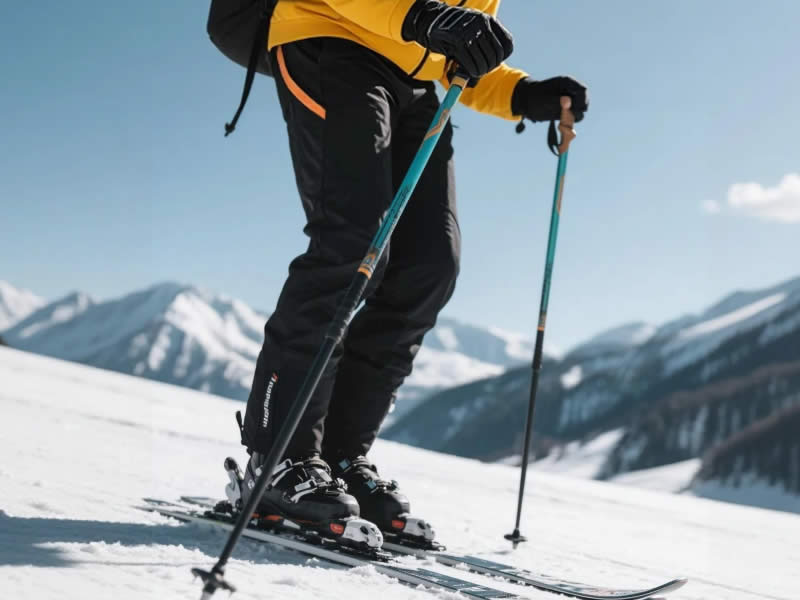
Recommended trekking pole purchase link: https://s.click.aliexpress.com/e/_c4M7OWaN
Key differences between trekking and ski touring poles
| Feature | Trekking poles | Ski touring poles |
|---|---|---|
| Length | Typically 100‑135 cm | Often 120‑150 cm (longer for downhill control) |
| Baskets | Small (40‑50 mm) | Large powder baskets (70‑120 mm) |
| Shaft material | Aluminium or carbon (light, flexible) | Thicker aluminium or carbon (stiffer, stronger) |
| Grip design | Straight or slightly angled | Angled (for downhill poling) |
| Wrist strap | Basic adjustable | Often padded, wider, with quick release |
| Tip | Carbide, replaceable | Carbide or steel, often with ice teeth |
Why trekking poles are unsuitable for ski touring
1. Insufficient length
Ski touring poles need to be longer than trekking poles. When descending on skis, you plant the pole further downslope, and a longer shaft provides better leverage and balance. Most trekking poles max out at 135 cm, which is too short for an average‑height skier (175‑185 cm) in a downhill stance. Using a pole that is too short forces you to lean forward awkwardly, compromising control.
2. Small baskets sink in deep snow
Trekking pole baskets are designed to prevent sinking into mud or gravel, not snow. On soft or deep snow, a small basket will plunge 20‑30 cm with each plant, destabilising you and exhausting your arms. Ski touring poles have large powder baskets (70‑120 mm) that float on the snow surface, providing consistent purchase.
3. Shaft strength and flex
Ski touring places higher lateral and bending forces on poles. You use them to push off, brace against turns, and sometimes to self‑arrest. Trekking poles are built for vertical compression forces (planting) but are weaker in bending. Aluminium trekking poles can bend or snap when used as a ski pole; carbon trekking poles are even more brittle and may shatter on impact.
4. Grip angle and strap design
Ski touring grips are angled (often 15‑30 degrees) to allow a natural wrist position when poling downhill. Trekking pole grips are essentially straight, which causes wrist strain and inefficient power transfer. Additionally, ski touring straps are wider, more padded, and often feature quick‑release mechanisms for safety – important if you fall and need to free your hands.
5. Ice and snow tolerance
Ski touring poles are designed to withstand freezing temperatures, moisture, and ice on the locking mechanisms. Many trekking poles (especially those with twist‑locks) will seize or slip in the cold. Flick‑locks can ice up and become hard to operate.
What happens if you try anyway?
- Risk of pole breakage – A snapped pole on a steep descent can cause a fall, potentially leading to injury or avalanche exposure.
- Poor flotation – Without large baskets, your poles will sink deeply, messing up your rhythm and balance.
- Inefficient poling – Short, straight‑gripped poles will make climbing and traversing much harder.
- Lock failure – Cold and snow can cause twist‑locks to slip, collapsing the pole when you lean on it.
Are there any exceptions?
Some adjustable trekking poles can be converted for light ski touring if they meet all the following criteria:
- Extend to at least 140 cm (or suit your height with a downhill test).
- Have large powder baskets available as spare parts (e.g., Leki, Black Diamond, Komperdell offer such baskets).
- Use external flick‑locks (not twist‑locks).
- Have a reinforced aluminium shaft (7075 series, thick wall).
Even then, the straight grip will never be as comfortable or powerful as an angled ski touring grip. For occasional, gentle touring on gentle slopes, you might get away with it. But for any serious or steep terrain, invest in proper ski touring poles.
What to look for in proper ski touring poles
- Adjustable length – Essential for transitioning from uphill (shorter) to downhill (longer).
- Large powder baskets – 70‑120 mm, easily interchangeable.
- Aluminium shaft – 7075 series for durability; carbon optional for experts.
- Angled foam grip – Warm, comfortable, and ergonomic.
- Flick‑lock mechanism – Reliable in cold.
- Carbide tip with ice teeth – Extra grip on hard snow.
Recommended models: Black Diamond Compactor, Leki Trekking (or Sherpa), Komperdell Expedition.
Final verdict
No, you should not use regular trekking poles for ski touring. The differences in length, basket size, shaft strength, grip angle, and cold‑weather reliability make trekking poles unsuitable and potentially hazardous. If you plan to ski tour more than once or twice, buy dedicated ski touring poles. They are a relatively small investment for safety, efficiency, and enjoyment. Your regular trekking poles can stay in your pack for summer use – where they belong.




