




Are aluminum trekking poles better than carbon for winter use?
Yes, for most winter conditions, aluminum trekking poles are superior to carbon. While carbon poles are celebrated for their lightweight and vibration‑damping properties in summer, cold temperatures introduce unique challenges that favor aluminum. This article explains why aluminum outperforms carbon in winter, when carbon might still be acceptable, and how to choose the right pole for your cold‑weather adventures.
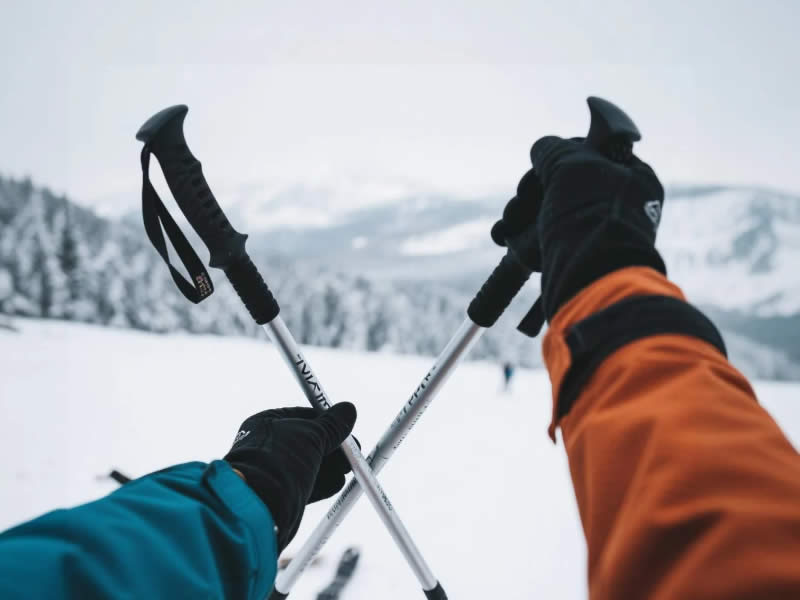
Recommended trekking pole purchase link: https://s.click.aliexpress.com/e/_c4M7OWaN
The problem with carbon in the cold
Carbon fiber poles are composite structures: carbon fibers embedded in a polymer resin (typically epoxy). This resin has a glass transition temperature (Tg) – around 60–80°C for hiking poles. Below Tg, the resin becomes increasingly hard and glass‑like, losing flexibility. At temperatures below -10°C (14°F), the composite becomes brittle.
In practical terms, a carbon pole that would flex and survive an impact at room temperature may shatter when striking a hidden rock under snow at -15°C. The failure is catastrophic – the pole snaps completely, leaving you with a sharp, useless stub. This is not a theoretical risk; many winter hikers and mountaineers have reported carbon poles breaking in cold conditions.
Aluminum’s advantages in winter
Aluminum (especially 7075‑T6 alloy) behaves differently. As temperature drops, aluminum actually becomes slightly stronger, while retaining ductility – the ability to deform without breaking.
- Impact resistance: If you jam an aluminum pole between rocks or onto a hidden ice block, it may bend but will rarely snap. A bent pole can often be carefully straightened and still used. A snapped carbon pole is irreparable in the field.
- Predictable failure: Aluminum bends gradually, giving you warning. Carbon fails suddenly, with no prior indication.
- Cost: Aluminum poles are significantly cheaper (typically €60‑100 vs. €150‑200 for carbon). In winter, where damage is more likely, the lower cost makes replacement less painful.
When carbon can work in winter
Carbon poles are not entirely useless in cold weather. They are acceptable for:
- Mild winter conditions – Temperatures above -10°C (14°F) where the resin remains relatively flexible.
- Groomed trails or packed snow – Where hidden rocks are unlikely.
- Trail running or fastpacking – Where low weight is paramount and you are moving quickly over predictable surfaces.
- Backup poles – If you carry a spare section or are willing to risk breakage.
However, for serious winter hiking, snowshoeing, or mountaineering, the risk of breakage is simply too high.
Real‑world comparisons
| Property | Aluminum (7075) | Carbon (standard) |
|---|---|---|
| Weight | 240‑280g per pole | 150‑200g per pole |
| Cold impact resistance | Good – bends | Poor – brittle |
| Failure mode | Bend (often repairable) | Snap (unrepairable) |
| Cost | Low to moderate | High |
| Vibration damping | Moderate | Excellent (in warm temps) |
| Best for | Winter, backpacking, rugged terrain | Summer, trail running, ultralight |
What about “cold‑optimized” carbon?
Some manufacturers claim to use epoxy resins with a lower glass transition temperature, making their carbon poles more cold‑tolerant. These do exist (e.g., certain Black Diamond carbon poles with “carbon fiber blend”). However, even the best carbon is still more brittle than aluminum in extreme cold. For temperatures below -20°C, no carbon pole is recommended.
Maintenance tip for aluminum in winter
Aluminum poles can corrode from road salt or sweat. After winter use, rinse poles with fresh water and dry thoroughly. Apply a light coat of car wax to the shafts to protect against salt. This is not a concern with carbon, but the durability trade‑off still favors aluminum.
Expert opinion
Winter guides and experienced thru‑hikers overwhelmingly prefer aluminum for cold, rocky, or unpredictable winter terrain. As one guide from the Bavarian Alps put it: “Carbon poles are great for summer speed, but when there’s snow hiding rocks, I always take aluminum. I’ve seen too many carbon poles snap on the first hidden boulder.”
Final verdict
Yes, aluminum trekking poles are better than carbon for winter use. They offer superior impact resistance, predictable failure (bending rather than snapping), and lower cost – all critical factors when hiking on snow‑covered, rock‑strewn terrain. Save your carbon poles for summer trail running or day hikes on well‑maintained paths. For winter backpacking, snowshoeing, or any adventure where temperatures drop below freezing and hidden obstacles are likely, choose aluminum. Your safety and your wallet will thank you.




