




Do I really need trekking poles for hiking?
The short answer is no, you don’t need them – millions of people hike happily without poles. However, for many hikers – especially those tackling steep, rocky, or long trails – trekking poles offer significant benefits that can transform a painful slog into a comfortable, efficient walk. This article breaks down the pros and cons to help you decide if they are right for you.
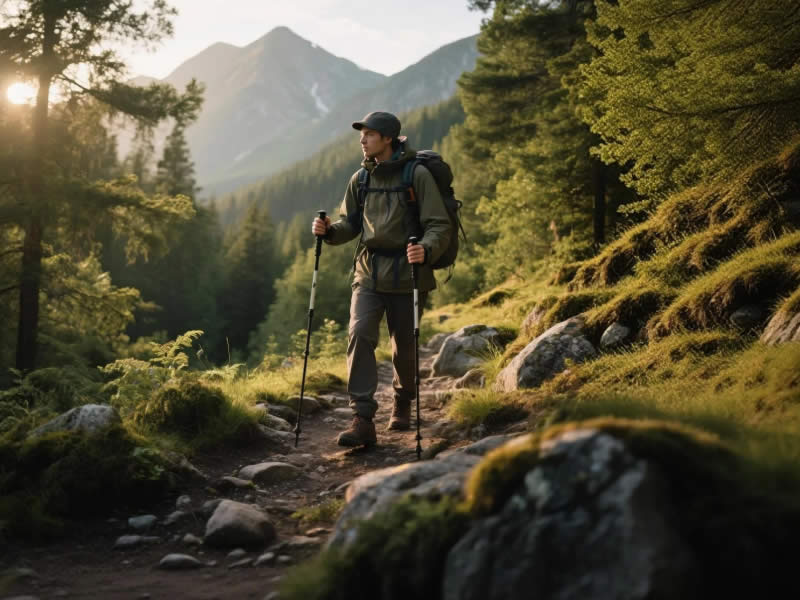
Recommended trekking pole purchase link: https://s.click.aliexpress.com/e/_c4M7OWaN
The benefits of using trekking poles
1. Reduced joint impact, especially on descents
When you walk downhill, your knees absorb shock equivalent to 3‑4 times your body weight with each step. Trekking poles transfer up to 20–25% of that load from your legs to your arms, dramatically reducing cumulative stress. For hikers with knee issues or those carrying heavy backpacks, this can mean the difference between a pain‑free descent and days of soreness.
2. Improved balance on uneven terrain
Poles act as two extra points of ground contact. On slippery roots, loose scree, or muddy trails, this wider base of support prevents stumbles and gives you confidence. Crossing streams or navigating boulder fields becomes much safer.
3. Increased endurance and speed
By engaging your upper body, poles distribute muscular work more evenly. You’ll tire less quickly, especially on long ascents. Studies show that hikers using poles maintain a faster pace on steep terrain because they can push off with their arms as well as their legs.
4. Protection against wildlife and obstacles
Poles can be used to part tall grass, test mud depth, or ward off curious dogs. They also serve as a makeshift tent pole for some ultralight shelters.
5. Rhythmic aid
Many hikers find that poles help establish a steady walking rhythm, reducing mental fatigue and making long days feel more meditative.
When you might not need poles
- Short, flat, well‑maintained trails – On smooth paths, poles offer little advantage and can feel like unnecessary clutter.
- Bushwhacking or dense forest – Poles can catch on branches and become annoying.
- Hands‑free scrambling – On steep rock sections, you may need both hands free; poles become a hindrance.
- Very light daypacks – Without significant weight, the load‑reduction benefits are less noticeable.
- Personal preference – Some hikers simply dislike the extra motion and prefer a minimalist approach.
Who benefits most from trekking poles?
- Older adults or those with knee/hip problems – The joint‑saving effect is profound.
- Backpackers carrying heavy loads – Every kilogram saved from your knees matters.
- Hikers on alpine, rocky, or icy terrain – Balance is critical.
- Trail runners – Poles on steep climbs can boost efficiency and reduce falls.
- Injured walkers (e.g., mild ankle sprain) – Poles offload the injured leg.
Potential downsides
- Additional weight and cost – A decent pair of poles adds 400‑500g to your pack and costs €60‑150.
- Learning curve – Using wrist straps and planting rhythmically takes practice.
- Not allowed on some flights in carry‑on – You must check them, which is inconvenient.
- Trail damage (controversial) – Some argue that metal tips scar rock, though rubber covers can be used.
- One more thing to carry – When not in use, you have to stow them on your pack.
So, do you really need them?
For casual half‑day hikes on gentle trails with a light pack – no. You’ll be fine without them. For multi‑day treks, steep descents, heavy loads, or if you have any joint concerns – yes, you will likely appreciate them. Ultimately, try borrowing a pair before investing. Most hikers who start using poles seldom go back, but plenty of seasoned walkers never use them and are perfectly happy. There is no right or wrong – only what works for your body and the terrain you choose.
Final verdict
Trekking poles are not essential equipment for every hiker, but they are one of the most effective tools for reducing injury risk, improving comfort, and extending your hiking years. If you frequently hike mountainous terrain or feel knee pain after descents, give them a serious try. If you stick to flat, short walks, save your money and enjoy the simplicity of unencumbered hands.




