




Are trekking poles good for people with bad knees?
Yes – absolutely. For anyone suffering from knee pain – whether from osteoarthritis, previous injuries (e.g., ACL or meniscus tears), patellofemoral syndrome, or general age‑related wear – trekking poles can be a game‑changer. They reduce the load on your knees, improve stability, and allow you to keep hiking or walking without excessive pain. This article explains the biomechanics, the evidence, and how to choose the right poles for knee problems.
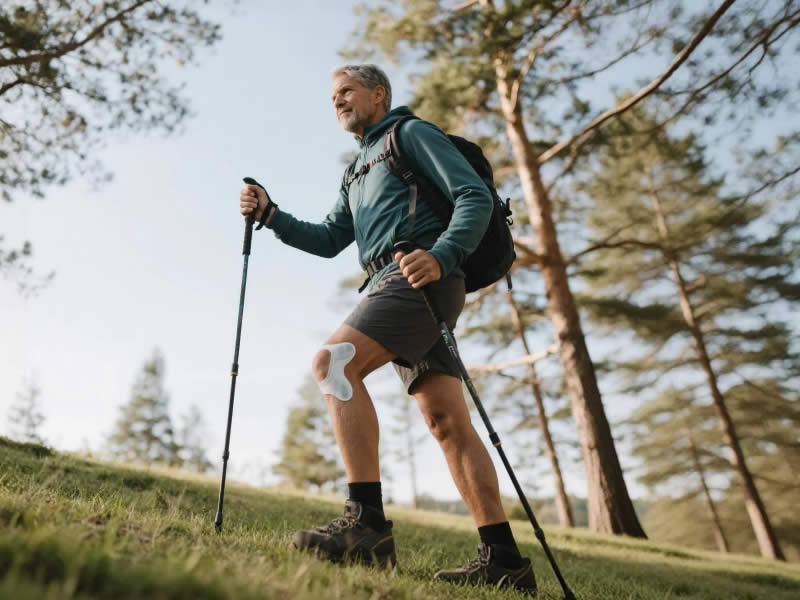
Recommended trekking pole purchase link: https://s.click.aliexpress.com/e/_c4M7OWaN
How trekking poles help bad knees
Your knees absorb tremendous force with every step, especially when walking downhill. On a steep descent, the force transmitted through the knee joint can reach 3–4 times your body weight. Adding a heavy backpack multiplies that further. Trekking poles offload a significant portion of that force by transferring it from your legs to your arms and core.
Biomechanical studies show that using two poles can reduce the load on the knee joint by 20–25% on flat ground and even more on descents. A 2013 study in the Journal of Orthopaedic Research found that walking with two hiking poles and a wide pole placement reduced medial knee contact forces by up to 34% – a clinically meaningful reduction for people with arthritis or post‑surgical knees.
Key benefits for bad knees
- Reduced impact on descents – The most painful part for many knee sufferers is going downhill. Longer poles (5‑10 cm above flat setting) allow you to plant ahead and brake, absorbing shock that would otherwise travel through the kneecap.
- Improved walking posture – Poles encourage an upright stance, shifting your centre of gravity back over your hips. Leaning forward (common when knees hurt) actually increases knee load. Poles correct this.
- Increased confidence – Fear of pain can cause you to walk stiffly, altering your gait and stressing other joints. Poles provide a sense of security, allowing a more natural stride.
- Off‑loading on climbs – Uphill may be less painful than downhill, but still stressful. Pushing down on poles behind you helps propel you upward, reducing quadriceps and patellar tendon strain.
- Distraction from pain – The rhythmic motion of planting poles can act as a cognitive distraction, reducing pain perception (a well‑documented psychological effect).
What the experts say
Many orthopaedic surgeons and physical therapists recommend trekking poles for patients with knee osteoarthritis or after knee replacement. For example, the American College of Rheumatology suggests using a cane or trekking poles as part of non‑pharmacological management of knee OA. The British Mountaineering Council notes that using two poles can reduce cumulative knee stress by as much as 20 tonnes over a 1,000‑metre descent.
However, poles are not a cure. They should be used as part of a comprehensive management plan that includes strengthening (especially quadriceps and glutes), weight control, and appropriate footwear.
Choosing the right poles for bad knees
Not all poles are equally helpful. For knee issues, prioritise:
- Shock‑absorbing (anti‑shock) poles – Internal springs in the lower section dampen impact vibrations. This feature is particularly beneficial for descents. Example: Leki Makalu Anti‑Shock, Black Diamond Trail Shock.
- Flick‑locks (external levers) – You will need to adjust length frequently (shorter for uphill, longer for downhill). Flick‑locks are quick and easy; twist‑locks are frustrating and prone to slipping.
- Aluminium over carbon – Aluminium (7075) is more durable and can bend without breaking. Carbon may snap if you mis‑plant. For bad knees, you want reliability.
- Large, comfortable grips – Foam grips reduce hand fatigue, allowing you to push down effectively without developing blisters or grip strain.
- Adjustable length with clear markings – You’ll want to easily find your uphill/downhill settings.
How to use poles for maximum knee relief
- Set your flat‑ground height – Elbow at 90° with tip on ground.
- Uphill: shorten by 5‑10 cm – This keeps your torso upright and transfers load efficiently.
- Downhill: lengthen by 5‑10 cm – Plant the pole downslope before your foot; push down to absorb impact.
- Use a reciprocal rhythm – Right pole with left foot, left pole with right foot. This mimics natural walking and distributes forces evenly.
- Let the wrist strap do the work – Insert hand from below, cinch snugly. You should be able to relax your grip; the strap bears the weight.
- Plant vertically or slightly behind – Avoid planting far ahead on descents, which can jerk your knee.
Real‑world testimony
“I have severe osteoarthritis in both knees. Before using trekking poles, a 5‑km walk with a small hill left me limping for two days. After switching to anti‑shock poles and learning proper downhill technique, I can hike 10‑15 km with minimal post‑walk pain. They have literally allowed me to keep hiking.” – Barbara, 67, avid hiker.
Potential drawbacks and precautions
- Upper body strength required – Pushing down on poles requires shoulder and arm strength. If you have rotator cuff problems, consult a physiotherapist.
- Not a substitute for medical advice – If you have acute knee injury or severe instability, see a doctor before relying on poles.
- Learn proper technique – Incorrect use (e.g., planting too far ahead) can actually increase knee torque. Watch videos or take a brief lesson.
Summary: are they worth it?
For the vast majority of people with chronic knee pain (arthritis, past injuries, or simply age‑related weakness), trekking poles are absolutely beneficial. They reduce joint load, improve balance, and allow you to stay active longer. The combination of shock‑absorbing poles, flick‑locks, and proper technique can transform hiking from a painful ordeal into an enjoyable activity. If you have bad knees, invest in a quality pair – your knees will thank you.




