




Are carbon fibre trekking poles worth the extra money for British trail?
When hiking in Britain – from the damp, rocky paths of the Lake District to the muddy, root‑tangled trails of Snowdonia – every piece of gear is tested to its limit. Trekking poles are no exception. Carbon fibre poles are significantly lighter and stiffer than aluminium, but they come at a premium price (often 50‑100% more). The question is: are they worth the extra cost for British trails? The short answer: for most hikers, no. But there are nuances. This article breaks down the pros and cons to help you decide.
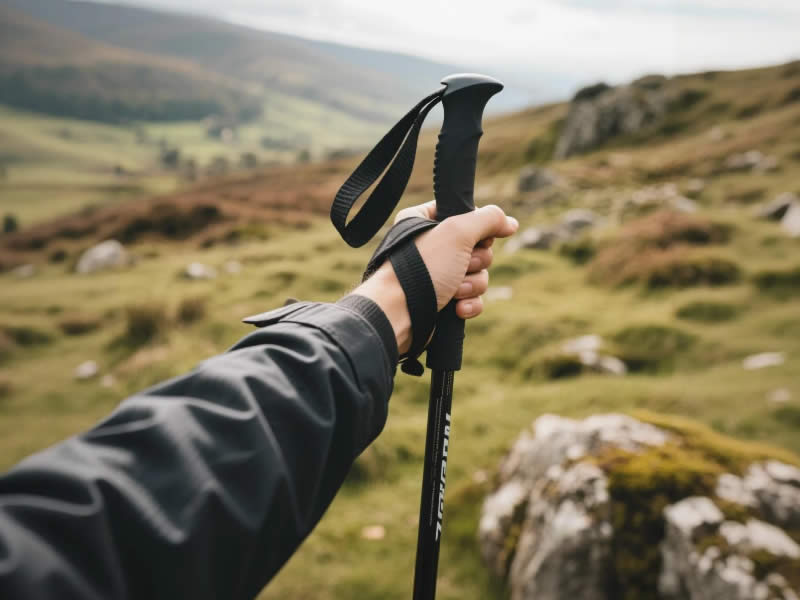
Recommended trekking pole purchase link: https://s.click.aliexpress.com/e/_c4M7OWaN
The case against carbon for British trails
1. Brittleness in rocky terrain
Carbon fibre is strong in compression but weak under sharp impact. British mountains are littered with slate, quartzite, and gritstone – all capable of snapping a carbon pole if you jam it between rocks or drop it onto a pointy edge. Aluminium (especially 7075 alloy) will bend or dent but rarely break. A bent aluminium section can often be straightened; a snapped carbon pole is ruined. On popular scrambles like Crib Goch or Striding Edge, carbon poles are a liability.
2. Wet and mud – no advantage
Carbon’s low weight is its main selling point. But on wet, slippery trails where you are planting poles carefully, the weight saving is less noticeable. The difference between a 190g carbon pole and a 240g aluminium pole is about 100g for the pair – the weight of a small energy bar. Most hikers won’t feel this after the first mile. Meanwhile, carbon offers no benefit in grip, lock reliability, or mud resistance.
3. Higher cost, lower durability
A decent pair of carbon poles costs £120‑180, while a high‑quality aluminium pair (e.g., Leki Makalu Lite) is £70‑90. For that extra £50‑100, you get poles that are more fragile and have a shorter lifespan on rocky terrain. Financially, it makes little sense for the average UK hiker who tackles rough ground.
The case for carbon – when it might be worth it
1. Long, gentle trails
If you hike long distances on relatively smooth, non‑rocky terrain – for example, the South West Coast Path, the Norfolk Coast Path, or canal towpaths – carbon poles can reduce arm fatigue over many miles. The risk of a sharp impact is low.
2. Fastpacking or trail running
For fastpackers and runners who need the lightest possible gear and move quickly over moderate terrain, carbon folding poles (e.g., Black Diamond Distance Carbon Z) are excellent. The weight saving matters when you are lifting poles thousands of times per hour.
3. Arthritis or weak arms
If you have reduced upper body strength, every gram counts. Carbon poles can make walking less tiring. But for such users, the risk of breakage on rocky ground may still outweigh the benefit – consider using carbon only on softer trails.
British trail types: which material suits best?
| Trail type | Recommended material | Why |
|---|---|---|
| Lake District fells (rocky, scrambles) | Aluminium | Impact resistance |
| Snowdonia (rocky, wet) | Aluminium | Durability |
| Scottish Highlands (boggy, mixed rock) | Aluminium | Reliability |
| South West Coast Path (long, mostly smooth) | Carbon or aluminium | Either works; weight saving optional |
| Lowland forests, canals | Carbon (if budget allows) | Low impact, weight benefit |
Real‑world experience from UK hikers
In online forums (e.g., UKClimbing, Walkingtalk), the consensus is clear: aluminium is the pragmatic choice for British hills. Many hikers report carbon poles snapping on their first rocky descent. Others have used carbon successfully for years by being extremely careful. The difference often comes down to luck and terrain.
Other factors to consider
- Locking mechanisms – Both carbon and aluminium poles use the same flick‑locks. Carbon shafts are often thinner, but locks are identical.
- Vibration damping – Carbon transmits less vibration than aluminium, which can reduce hand fatigue on hard, frozen ground. In Britain’s typically soft, muddy trails, this is rarely needed.
- Corrosion – Carbon does not corrode, while aluminium can oxidise (white powder). However, a quick rinse after muddy hikes solves this.
The bottom line
For the vast majority of hikers on British trails that are rocky, wet, and uneven, carbon fibre trekking poles are not worth the extra money. Aluminium poles are cheaper, more durable, and only slightly heavier – a trade‑off that makes sense for real‑world use. Save carbon for long, smooth trails or for running. Unless you have specific weight‑sensitive needs, invest in a solid pair of aluminium flick‑lock poles from Leki, Black Diamond, or Komperdell. Your wallet – and your poles – will last longer.
Final verdict: No – stick with aluminium for British trails.




