




What are the best trekking poles for thru-hiking the West Highland Way?
The West Highland Way (WHW) stretches 96 miles (154 km) from Milngavie to Fort William, crossing the dramatic landscapes of the Scottish Highlands. Thru‑hiking this trail means dealing with everything: rocky passes, knee‑deep mud, slippery boardwalks, rolling moorland, and sudden downpours. Your trekking poles will be used for thousands of steps, supporting your weight on steep climbs (like the Devil’s Staircase), braking on descents, and probing boggy sections. Choosing the wrong poles can turn a glorious walk into a painful, gear‑failure nightmare. After analysing the WHW’s conditions and consulting seasoned thru‑hikers, the best trekking poles for this trail are durable aluminium models with external flick‑locks, comfortable all‑weather grips, and large‑diameter mud baskets. Top recommendations: Leki Makalu Lite and Black Diamond Trail Pro.
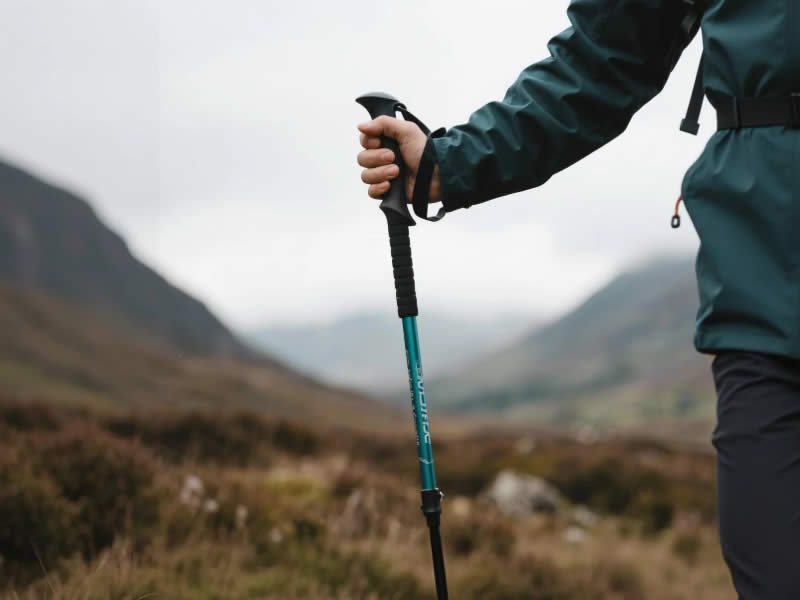
Recommended trekking pole purchase link: https://s.click.aliexpress.com/e/_c4M7OWaN
Why the West Highland Way demands specific features
- Mud, mud, and more mud – Sections like the stretch from Balmaha to Rowardennan and the Conic Hill descent are notoriously boggy. Small baskets (40‑50 mm) will sink, forcing you to wrench poles out with every step. You need large powder/mud baskets (70‑90 mm) to keep the tips near the surface.
- Wet, abrasive rock – The Highland’s volcanic and metamorphic rocks are sharp and slippery. Carbide tips are essential, and they must be replaceable because they will wear down.
- Relentless rain – Grips that stay grippy when wet are a must. Cork is excellent; good quality foam also works. Avoid hard rubber.
- Steep ascents and descents – You need to adjust pole length quickly (shorter for climbing, longer for descending). External flick‑locks are far superior to twist‑locks, which clog with grit and slip.
- Heavy pack – Most thru‑hikers carry 10‑15 kg. Your poles must be strong enough to handle repeated heavy loading. Aluminium (7075) is more trustworthy than carbon, which can snap on a hidden rock.
Top picks for the West Highland Way
1. Leki Makalu Lite – the proven workhorse
The Leki Makalu Lite is a favourite among long‑distance hikers on the WHW. It features a 7075 aluminium shaft (strong, ~240g per pole), SpeedLock 2 flick‑locks that are easy to clean after mud baths, and a cork grip (Core‑Tec) that stays non‑slip in rain. The carbide tip is replaceable, and Leki sells large Powder Baskets that snap on to cope with the bogs. Price ~£70‑90.
Why it excels: The cork grip is superb in wet Scottish conditions, the lock is reliable, and the aluminium shaft shrugs off impacts that would crack carbon.
2. Black Diamond Trail Pro – ultra‑durable alternative
For those who want even more ruggedness, the Black Diamond Trail Pro uses a thicker‑wall aluminium shaft (275g) and the bomb‑proof FlickLock Pro metal cam. The dual‑density foam grip has an extended “blade” – excellent for choking down on steep sections like the climb out of Glencoe. It also accepts large powder baskets. Price ~£90‑110.
Why it excels: The metal lock is the most reliable on the market; the extended grip is great for side‑hilling on the WHW’s many slopes.
3. Komperdell Contour Powerlock – value choice
The Komperdell Contour Powerlock offers similar specs (7075 aluminium, flick‑lock, cork/foam grip) at a lower price (~£60‑80). It’s a solid option if budget is tight, though the plastic lever may not be as durable as Leki’s or Black Diamond’s over thousands of miles.
What to avoid on the West Highland Way
- Carbon fibre poles – The risk of snapping on a hidden rock under mud is too high. Aluminium bends but rarely breaks.
- Twist‑locks – They will fail in the mud and wet. Avoid any pole with twist‑locks.
- Fixed‑length folding (Z‑poles) – You cannot adjust length for steep gradients, and their internal cords can fail. Some thru‑hikers use them, but telescoping poles are more versatile.
- Small baskets – Without large mud baskets, you will exhaust your arms pulling poles out of the mire.
Practical tips for the WHW
- Bring spare tips and a small screwdriver – Rocky sections (e.g., the old military road) wear tips quickly.
- Adjust length daily – For the long, gentle climbs (e.g., along Loch Lomond), keep poles at flat length. For the Devil’s Staircase, shorten by 5‑10 cm. For the descent into Kinlochleven, lengthen by 5‑10 cm.
- Use rubber tip covers only on paved sections – Remove them when you hit dirt or rock.
- Rinse poles every evening – The WHW’s mud is abrasive. Rinse locks with water and let them dry.
Final verdict
For thru‑hiking the West Highland Way, the Leki Makalu Lite offers the best combination of durability, wet‑weather comfort, and reliability. It has proven itself on thousands of Scottish miles. If you want an even more rugged pole, the Black Diamond Trail Pro is excellent. Avoid carbon, twist‑locks, and fixed‑length folding poles. Equip your poles with large mud baskets, and they will carry you from Milngavie to Fort William with less fatigue and more joy. Your knees will thank you after every descent.




