




Do I need different trekking poles for winter vs summer in Scotland?
For most hikers, the short answer is no – you do not need a completely different pair of trekking poles for winter in Scotland. The same poles can serve you year‑round, provided you equip them with the right accessories and understand the seasonal adjustments. However, there are important differences in how you set up and use your poles between the wet, muddy summers and the icy, snowy winters of the Scottish Highlands. This article explains what stays the same, what changes, and when you might consider a dedicated winter pole.
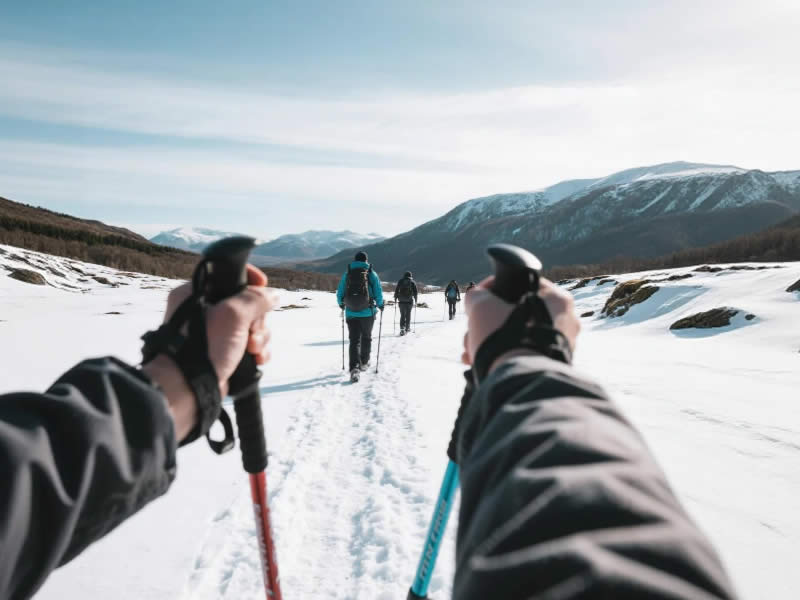
Recommended trekking pole purchase link: https://s.click.aliexpress.com/e/_c4M7OWaN
What stays the same: the pole itself
A good quality aluminium trekking pole with external flick‑locks works perfectly in both seasons. The 7075 shaft is durable enough for rocky summer trails and strong enough for winter impacts. The flick‑locks operate reliably in mud, snow, and freezing temperatures. The cork or foam grip performs well in rain and snow alike. You do not need to buy a separate “winter pole”.
What changes: accessories and technique
Baskets – the most critical seasonal swap
- Summer: Use standard small baskets (40‑50 mm). They prevent the pole from sinking into mud or loose gravel.
- Winter: Swap to large powder baskets (70‑90 mm or larger). In soft snow, small baskets will plunge deep, causing arm fatigue and loss of stability. Large baskets keep the tip near the surface. Many brands (Leki, Black Diamond, Komperdell) offer interchangeable baskets that twist or snap on.
Tip attachments for ice
- Summer: Bare carbide tip is ideal for gripping rock, dirt, and mud.
- Winter: On icy trails, add ice grippers (spiked caps that fit over the carbide tip). These provide incredible bite on hard ice. They are cheap (€10‑20) and removable.
Length adjustment
- Summer: Standard flat‑ground length (elbow at 90°). Adjust for slopes.
- Winter: When walking on deep snow, your feet may sink, effectively lowering your height. You may need to lengthen poles slightly (by 2‑5 cm) to maintain proper arm angle. On hard ice, no change needed.
Shaft material – a special note for Scotland
If your summer poles are carbon fibre, be cautious in winter. Carbon becomes more brittle in sub‑zero temperatures and can snap if jammed into a hidden rock under snow. For Scottish winters, aluminium is strongly preferred for its impact resistance. If you have carbon poles, consider them for summer only.
When might you want separate winter poles?
- If you do a lot of winter mountaineering (e.g., climbing Munros in deep snow, using crampons) – you might want poles with extended foam grips (to choke down without adjusting) and metal flick‑locks (e.g., Black Diamond FlickLock Pro) that are less likely to freeze.
- If you consistently hike in very deep, soft powder – some dedicated winter poles have reinforced lower sections and larger baskets permanently attached. But for most Scottish winter walks, accessory swapping is sufficient.
- If you are a guide or go out daily in winter – the wear and tear on locks and baskets may justify a second, winter‑dedicated pair.
Real‑world Scottish conditions
Scottish winters often involve a mix of snow, ice, slush, and exposed rock. You might start on a frozen path, then hit a patch of bare rock, then a deep drift. Having interchangeable baskets and carrying ice grippers in your pack allows you to adapt on the trail. Many hikers simply leave large baskets on all winter (they work fine on rock, though a bit more drag) and add ice grippers when needed.
Maintenance differences
- Summer: Rinse poles after muddy hikes to remove grit from locks.
- Winter: After walking on salted roads or coastal paths, rinse poles with fresh water to prevent corrosion. Dry thoroughly before collapsing to prevent ice forming inside joints.
Final verdict
You do not need different trekking poles for winter vs summer in Scotland. A single pair of flick‑lock aluminium poles with interchangeable baskets and removable ice grippers will serve you year‑round. Simply swap to large baskets and add ice grippers for snowy/icy conditions. If you own carbon poles, consider switching to aluminium for winter durability. Otherwise, save your money and invest in the right accessories. With proper seasonal adjustments, your poles will carry you through Glen Coe in January and the Trossachs in July alike.




