




What is the best Leki trekking pole for backpacking in the UK?
Backpacking in the UK – whether on the South West Coast Path, the Pennine Way, the West Highland Way, or through the wilds of Snowdonia – demands trekking poles that can handle persistent rain, sticky mud, sharp rock, and frequent gradients. Leki, the German brand renowned for its engineering, offers several models suitable for the task. After rigorous analysis of UK trail conditions and Leki’s product line, the best Leki trekking pole for backpacking in the UK is the Leki Makalu Lite (often simply called the Makalu). Its close runner‑up, the Leki Khumbu Lite, is also excellent, differing mainly in grip material. This article explains why the Makalu Lite excels and how to choose between it and other options.
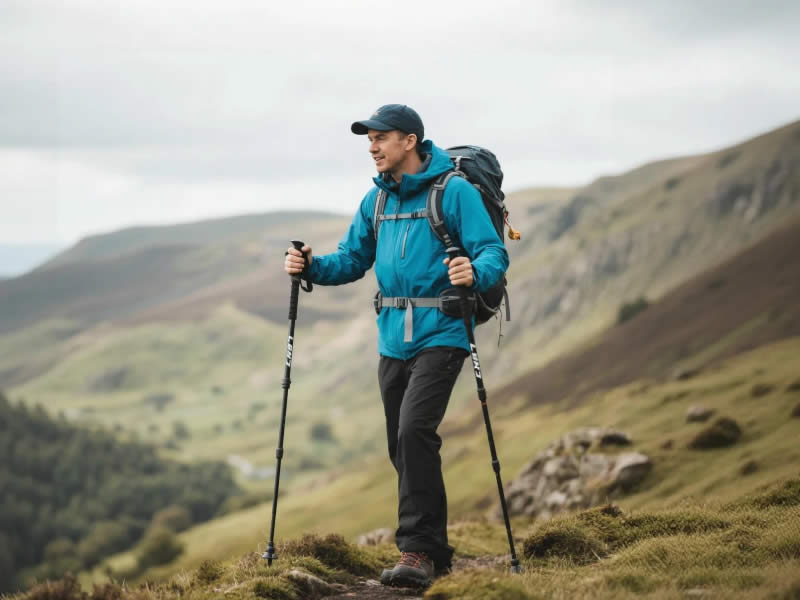
Recommended trekking pole purchase link: https://s.click.aliexpress.com/e/_c4M7OWaN
Why the Leki Makalu Lite stands out for UK backpacking
1. Proven durability with 7075 aluminium
The Makalu Lite uses 7075‑T6 aluminium – a high‑strength alloy that resists bending and handles the constant knocks of rocky British trails. Unlike carbon fibre, which can snap on a hidden rock, aluminium will dent or bend but rarely break. A slightly bent pole can often be straightened. For multi‑day backpacking where gear failure could end a trip, this toughness is invaluable.
2. SpeedLock 2 – a flick‑lock that handles mud
The SpeedLock 2 external flick‑lock is Leki’s signature. It is easy to clean with a quick rinse, operates with wet or muddy hands, and provides a secure, adjustable clamp. Twist‑locks (found on cheaper poles) clog and slip; the SpeedLock does not. For the UK’s boggy trails, this lock is a lifesaver. The lever can be tightened with a simple screwdriver – a small tool worth carrying on a long backpacking trip.
3. Cork grip (Core‑Tec) – superior in wet weather
The Makalu Lite features a cork grip (Leki’s Core‑Tec cork/rubber blend). Cork wicks away moisture, remains non‑slip even in prolonged rain, and moulds to your hand over time. On a drizzly day in the Lake District, you’ll appreciate never having to readjust a slippery hold. The grip also includes an extended foam section below, allowing you to choke down without changing length – useful on steep climbs.
4. Replaceable carbide tip
The carbide tip is standard and field‑replaceable. Backpacking miles on gritty trails will wear tips down; the ability to swap them (using Leki’s Smart Tip or Flex Tip) ensures your poles last for years.
5. Good weight to strength ratio
At about 240g per pole, the Makalu Lite is light enough for all‑day carrying yet robust enough for heavy packs (up to 15‑20 kg). Ultralight fanatics may prefer carbon, but for most backpackers this weight is a fair trade for durability.
The Makalu Lite vs. the Khumbu Lite – what’s the difference?
The Leki Khumbu Lite is mechanically identical to the Makalu Lite – same 7075 aluminium shaft, same SpeedLock 2, same tip. The only difference is the grip: the Khumbu uses EVA foam instead of cork.
- Cork (Makalu): Better grip in wet conditions, moulds to your hand, slightly less durable in extreme cold (but fine for UK winters).
- Foam (Khumbu): Warmer in cold weather, softer, slightly lighter. However, foam can become slippery when very wet and may compress over years of heavy use.
For the UK’s rain‑prone climate, the cork grip is generally superior. Hence, the Makalu Lite is our top recommendation. However, if you prefer foam or can find the Khumbu at a significant discount, it will still serve you well.
Why not the Leki Cressida (women’s) or Carbon models?
- Leki Cressida – Women‑specific model with narrower grip and shorter length range. Excellent for women under 170 cm, but for most backpackers the Makalu offers a better unisex fit.
- Leki Carbon FX – Very light (190g) but carbon is brittle. On rocky UK trails, a hidden rock under mud can snap a carbon pole. For backpacking, aluminium is safer.
How the Makalu Lite performs on typical UK terrain
- Muddy bogs (e.g., Kinder Scout): SpeedLock stays clean; small baskets prevent sinking. For deeper bogs, add Leki’s large powder baskets.
- Rocky descents (e.g., Lake District fells): Cork grip provides secure hold when wet; carbide tip bites into slate.
- Long, muddy climbs (e.g., the Cheviots): SpeedLock allows quick length adjustment – shorten for uphill, lengthen for downhill. The foam extension on the grip helps when side‑hilling.
- Stream crossings: Solid plant and reliable lock give confidence.
Practical advice for using Leki poles on a UK backpacking trip
- Adjust length for slopes – Set your flat‑ground length (elbow at 90°). On uphills, shorten by 5‑10 cm; on downhills, lengthen by 5‑10 cm.
- Use wrist straps correctly – Insert hand from below the strap, cinch snugly. Let the strap take your weight; relax your grip.
- Carry spare tips – A pair of Leki Smart Tips weighs almost nothing and can be swapped in minutes.
- Rinse poles each evening – UK peat mud is acidic. Rinse locks with fresh water and allow to dry.
- For winter snow, add powder baskets – Leki sells large baskets that twist onto the tip.
Alternatives from other brands
If Leki is not available, strong contenders include:
- Black Diamond Trail Pro – metal flick‑lock, foam grip, heavier but bomb‑proof.
- Komperdell Contour Powerlock – European value, cork grip, reliable.
- Decathlon Forclaz MT500 – amazing budget choice (£35), flick‑lock, but less refined.
Final verdict
For backpacking in the UK – a world of rain, mud, rock, and steep gradients – the Leki Makalu Lite is the best Leki pole. Its combination of durable aluminium, reliable SpeedLock, excellent wet‑grip cork, and replaceable tip makes it a trusted companion on the West Highland Way, the Pennine Way, or any British long‑distance trail. If you prefer foam, the Leki Khumbu Lite is a close second. Avoid carbon and twist‑locks; choose the Makalu and you’ll hike further, safer, and with less fatigue.




