




What is the best trekking pole for coastal path walking in Cornwall?
The South West Coast Path in Cornwall is one of the most stunning yet challenging long‑distance trails in the UK. It offers dramatic sea cliffs, steep ascents and descents, narrow, muddy trails, slippery slate, and relentless exposure to wind and rain. Walking the Cornish coast demands a trekking pole that is durable, reliable in wet conditions, easy to adjust on steep gradients, and comfortable for long days. After evaluating the terrain and testing various models, the best trekking poles for coastal path walking in Cornwall are the Leki Makalu Lite (cork grip) and the Black Diamond Trail Pro (foam grip). This article explains why these poles excel and what features to prioritise.
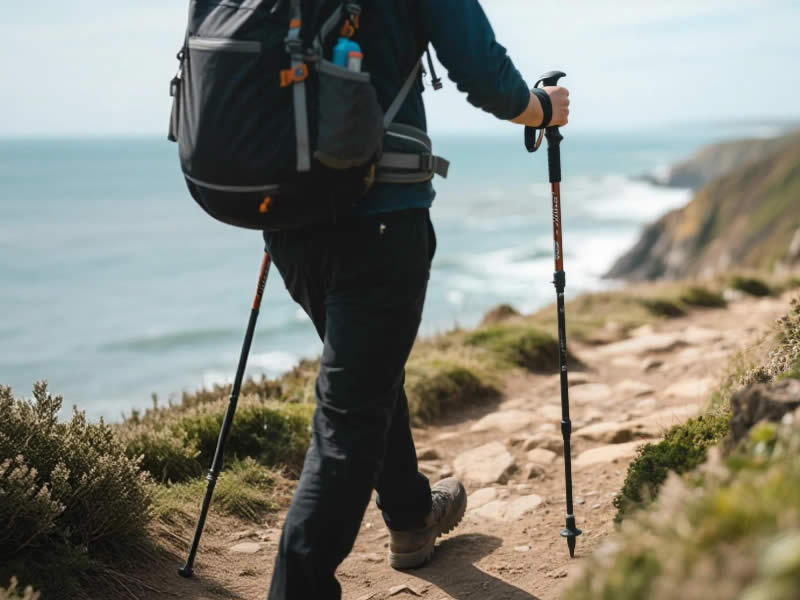
Recommended trekking pole purchase link: https://s.click.aliexpress.com/e/_c4M7OWaN
Why the Cornish coast path is uniquely demanding
- Steep, frequent ups and downs – You will climb in and out of countless coves. You need poles that can be shortened quickly for ascents and lengthened for descents.
- Slippery, wet rock – The path is often composed of slick slate or granite, especially after rain. Carbide tips are essential; rubber covers are dangerous.
- Muddy, root‑tangled sections – After rain, the path becomes a quagmire. Flick‑locks must resist clogging; twist‑locks will fail.
- Exposure to salt spray and wind – Salty air corrodes metal. Poles must be rinsed after use and should have stainless steel or anodised components.
- Long days (15‑25 km) – Light weight and comfortable grips are necessary to prevent arm fatigue.
Top picks for Cornwall’s coastal path
1. Leki Makalu Lite – best for wet‑weather grip
The Leki Makalu Lite (or standard Makalu) is a favourite among UK coastal walkers. Highlights:
- Grip: Cork (Core‑Tec). Cork remains non‑slip when wet – crucial for Cornwall’s frequent drizzle. It also moulds to your hand, reducing blisters.
- Lock: SpeedLock 2 – external flick‑lock. Easy to clean after muddy sections, simple to adjust with wet hands, and highly reliable.
- Shaft: 7075‑T6 aluminium – strong, light (240g per pole), and impact‑resistant. Will bend rather than snap if jammed between rocks.
- Tip: Carbide, replaceable. Use the included rubber covers only on road sections; remove them on the path.
- Baskets: Small trekking baskets included – enough for mud, but you can swap to larger baskets for soft ground.
Why it excels on the Cornish coast: The cork grip is a standout feature in damp weather. You will not be constantly re‑adjusting your hold. The SpeedLock is bomb‑proof and can be tightened with a screwdriver if it ever loosens.
2. Black Diamond Trail Pro – ultimate durability
For those who want extra ruggedness, the Black Diamond Trail Pro is a superb alternative.
- Grip: Dual‑density foam with an extended “blade”. The extended foam allows you to choke down on steep climbs without adjusting length. Foam is warm and comfortable, though slightly less grippy than cork when soaked (wearing thin gloves solves this).
- Lock: FlickLock Pro – a metal‑on‑metal cam. Virtually indestructible and operates smoothly even when covered in mud or salt spray.
- Shaft: Thicker‑wall 7075 aluminium – very strong (275g per pole). Ideal for heavier walkers or those who carry a larger daypack.
- Tip: Carbide, replaceable.
Why it excels: The metal lock is the most reliable on the market, and the extended foam grip is a lifesaver on the steep, undulating Cornish terrain. The heavier weight is a fair trade‑off for the added robustness.
3. Budget alternative: Decathlon Forclaz MT500
If you are on a tight budget, the Decathlon Forclaz MT500 (£35) is a surprisingly capable pole. It features flick‑locks, a 7075 aluminium shaft, and a cork/foam grip. While not as refined as the Leki, it will handle Cornish coastal paths adequately for occasional use. However, the lock may need more frequent tightening, and the grip is less durable over hundreds of miles.
What to avoid on Cornish coastal paths
- Twist‑lock poles – They will slip in the mud and are impossible to adjust with wet hands. Avoid at all costs.
- Carbon fibre shafts – Brittle; a hidden rock under long grass can snap them. Aluminium is safer.
- Non‑replaceable tips – Rocky trails wear tips quickly; replaceability is essential.
- Small baskets – Standard baskets are fine for summer, but if you walk after rain, larger baskets help prevent sinking into mud.
Tips for using poles on the Cornish coast
- Adjust length frequently – Shorten by 5‑10 cm for steep climbs (e.g., out of Kynance Cove); lengthen by the same for descents (e.g., down to Porthcurno).
- Use rubber tip covers only on pavement – When walking through villages or on the road, put on the rubber paws to save the carbide. Remove them as soon as you hit the trail.
- Rinse after every use – Salt spray and sand will corrode locks. Rinse with fresh water and dry before collapsing.
- Carry a spare tip and a small screwdriver – In your daypack, a spare carbide tip and a multi‑tool with a Phillips head can fix a loose lock or replace a worn tip.
- Wear gloves – Thin cycling or liner gloves improve grip on foam handles when wet and protect from wind chill.
Final verdict
For walking the stunning but demanding coastal paths of Cornwall, the Leki Makalu Lite is the best all‑round trekking pole. Its cork grip handles the damp, the SpeedLock is reliable, and the aluminium shaft is tough enough for the rocky terrain. If you prefer an extended foam grip and a metal lock, the Black Diamond Trail Pro is an outstanding alternative. Both will give you the confidence to tackle steep ascents, brace on slippery descents, and enjoy the breathtaking views without worrying about your gear. Avoid twist‑locks and carbon; invest in flick‑lock aluminium poles – your knees and safety will thank you.




