




What is the best handle shape for natural hand position?
When you spend hours gripping trekking poles, the shape of the handle directly affects your comfort, fatigue, and even injury risk. A handle that forces your wrist into an unnatural angle can lead to tendonitis, carpal tunnel symptoms, or simple hand cramping. So, what is the best handle shape for a natural hand position? The answer is: an ergonomically contoured, slightly angled grip – not a straight, round cylinder.
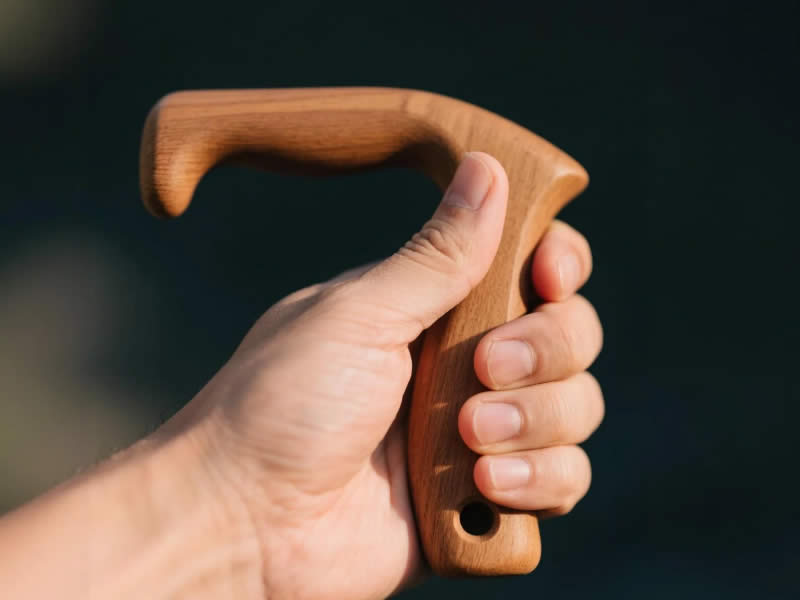
Recommended trekking pole purchase link: https://s.click.aliexpress.com/e/_c4M7OWaN
The anatomy of a natural grip
Relax your arm at your side and look at your hand. Notice that your palm is not perfectly perpendicular to your forearm; it’s angled slightly inward (about 5–10 degrees of ulnar deviation). When you grip a cylindrical pole with a straight handle, you must twist your wrist to align your palm with the handle. This creates tension in the forearm muscles and compresses the carpal tunnel. Over a long day, this leads to pain and reduced strength.
A truly natural grip allows your wrist to remain in its neutral, relaxed position, with the hand slightly angled inward. The best trekking pole handles mimic this angle and also provide contouring for your palm and fingers.
Key features of a natural handle shape
- Slight inward angle (5–15 degrees) – Also called “ergonomic angle” or “biomechanical angle.” Brands like Pacer Poles have pioneered this with their 15‑degree angled handles, which keep the wrist straight during planting.
- Contoured palm rest – A slight bulge that fits the hollow of your palm, spreading pressure evenly.
- Index finger ridge – A subtle groove or rest for your index finger (the strongest finger) to improve control.
- Flared base – A small flare at the bottom of the grip prevents your hand from slipping off during steep climbs.
- Extended foam section – Not part of the grip shape per se, but allows choking up without twisting your wrist.
Comparison of common handle shapes
| Shape | Natural wrist position? | Comfort | Best for |
|---|---|---|---|
| Straight round cylinder | No – forces wrist bend | Poor | None (avoid) |
| Straight with finger grooves | Slightly better, still forces angle | Moderate | Occasional use |
| Slightly angled (e.g., Leki Aergon) | Yes – near neutral | Very good | Most hikers |
| Highly angled (e.g., Pacer Poles) | Yes – fully neutral | Excellent | Hikers with wrist issues |
Top ergonomic handle models
- Leki Aergon (cork or foam) – This grip features a subtle 6‑degree inward angle, a large palm rest, and a flared base. It is widely regarded as one of the most natural-feeling handles on the market. Available on Leki Makalu, Cressida, and other models.
- Pacer Poles – These are unique: the handle is angled at 15 degrees, and the strap is integrated differently. Users with carpal tunnel or wrist arthritis often report immediate relief. The downside is they look unusual and take time to learn.
- Black Diamond Trail Pro – While the grip is not strongly angled, it has an excellent contoured palm swell and a flared base, making it very comfortable for most hand sizes.
- Komperdell ergonomic grips – Some Komperdell models (e.g., C4 Carbon Pro) have a slight anatomical curve that improves wrist alignment.
What to avoid
- Completely straight, round handles – These are common on cheap poles. They force your wrist into ulnar deviation, causing fatigue and potential injury.
- Handles with deep, fixed finger grooves – If the grooves don’t match your hand size, they create pressure points.
How to test for natural hand position
If possible, visit a store and hold the poles with your arms relaxed. Stand naturally, let your arms hang, then bring your hands up to a 90‑degree elbow bend. Look at your wrist: is it straight, or does it bend to align with the handle? If it bends, the handle shape is wrong for you. Some manufacturers offer left/right specific handles for even better fit.
Final verdict
The best handle shape for natural hand position is ergonomically contoured with a slight inward angle (5–15 degrees) and a palm rest. Leki’s Aergon grip and Pacer Poles’ angled handles are top choices. Avoid straight, cylindrical grips – they are the leading cause of hand and wrist pain among hikers. Investing in a well‑shaped handle is as important as choosing the right boot. Your wrists will thank you after every long descent.




