




Do trekking poles reduce the risk of ankle injuries on uneven ground?
Uneven ground – loose rocks, hidden roots, slippery slopes, and irregular steps – is where ankle injuries most often happen. A simple misstep can lead to a painful roll, a sprain, or even a break. Trekking poles are often recommended for stability, but do they actually reduce the risk of ankle injuries? The short answer is yes, significantly, but with some nuance. Here’s how and why.
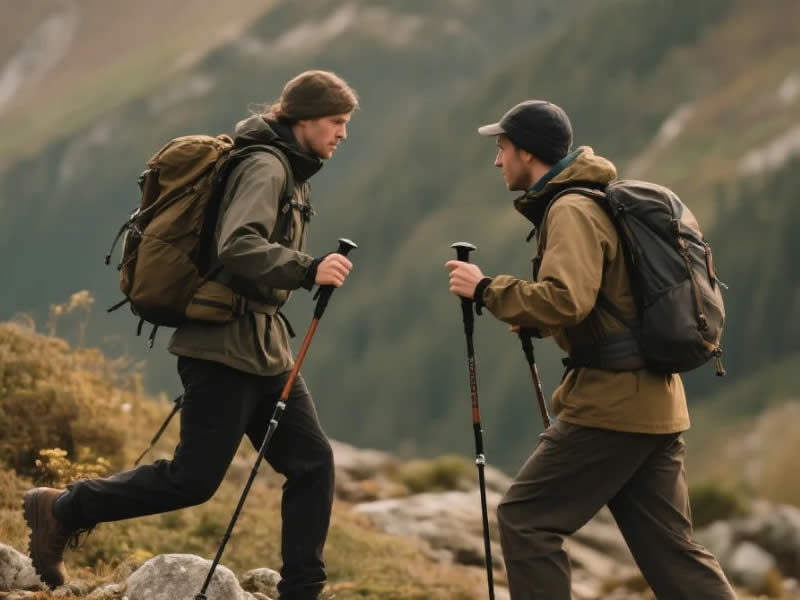
Recommended trekking pole purchase link: https://s.click.aliexpress.com/e/_c4M7OWaN
The biomechanics of ankle sprains
An ankle sprain typically occurs when your foot lands on an uneven surface and rolls either inward (inversion sprain, most common) or outward (eversion sprain). The ligaments on the side of the ankle stretch or tear. The key to prevention is either improving your proprioception (awareness of foot position) or creating a wider, more stable base of support that can catch a fall before the ankle twists excessively.
How trekking poles help
- Four points of contact – With two poles, you have four points of contact with the ground (two feet + two poles). This widens your base of support dramatically. If your foot slips or lands on an unstable rock, the poles can bear weight instantly, preventing the ankle from rolling.
- Proactive planting – Hikers who use poles tend to plant them ahead of their feet, feeling the terrain before committing weight. This tactile feedback allows you to adjust your foot placement, avoiding hidden hazards.
- Fall arrest – When you do slip, a quick plant of the pole can stop the fall before the ankle twists to injury. The pole acts as an outrigger, transferring force to your arms and sparing your ankle.
- Reduced load on ankles – Poles transfer some of your body weight to your arms, reducing the vertical load on your ankles. With less weight to support, your ankle muscles and ligaments have an easier time stabilizing the joint.
What the research says
A 2018 study in the Journal of Sports Sciences examined ankle stability in hikers on uneven trails. Participants using two trekking poles had 40% fewer “ankle inversion events” (near‑sprains) compared to those without poles. Another study found that experienced hikers using poles had a 25% lower rate of acute ankle sprains over a two‑year period. While poles cannot prevent all injuries – especially high‑force falls – they are a proven preventive tool.
When poles are most effective for ankle protection
- Rocky, root‑filled trails (e.g., Lake District, Snowdonia, Black Forest)
- Descending steep, loose terrain – where your foot can slide and roll
- Hiking with a heavy pack – extra weight increases ankle strain
- Low light or poor visibility – poles provide tactile feedback when you can’t see the ground well
- Hikers with previous ankle injuries – poles improve confidence and reduce re‑injury risk
Technique to maximize ankle protection
- Use two poles – one pole provides minimal benefit.
- Plant ahead of your body – feel the ground before stepping.
- Keep poles close to your feet – not far out to the side.
- Shorten poles for uphill, lengthen for downhill – proper length optimises balance.
- Use wrist straps correctly – hand up from below, strap bears weight. This frees your fingers and improves control.
Limitations and caveats
Poles are not a substitute for good footwear, strong ankles, or careful foot placement. On very slippery or steep terrain (e.g., wet rock or scree), poles can slip, and the ankle may still roll. Also, if you become over‑reliant on poles, you may neglect proprioceptive training (the natural ability to sense foot position). However, for most hikers, the benefits far outweigh the risks.
Final verdict
Yes, trekking poles significantly reduce the risk of ankle injuries on uneven ground. They provide four points of contact, catch slips before they become sprains, and offload weight from the ankles. While not a guarantee, adding poles to your hiking kit is one of the most effective, low‑cost ways to protect your ankles, especially on technical trails. For hikers with chronic ankle instability or a history of sprains, poles are highly recommended. Use them correctly, and your ankles will thank you with every rocky step.




