




Are spring-loaded shock absorbers reliable on long distance trails?
Spring‑loaded shock absorbers (also called anti‑shock mechanisms) are a feature found on some trekking poles, promising to reduce impact and make hiking more comfortable. But for long‑distance trails – where reliability and simplicity are paramount – are they a good choice? The short answer is no, spring‑loaded shock absorbers are generally not reliable on long‑distance trails. Here’s why, and what you should use instead.
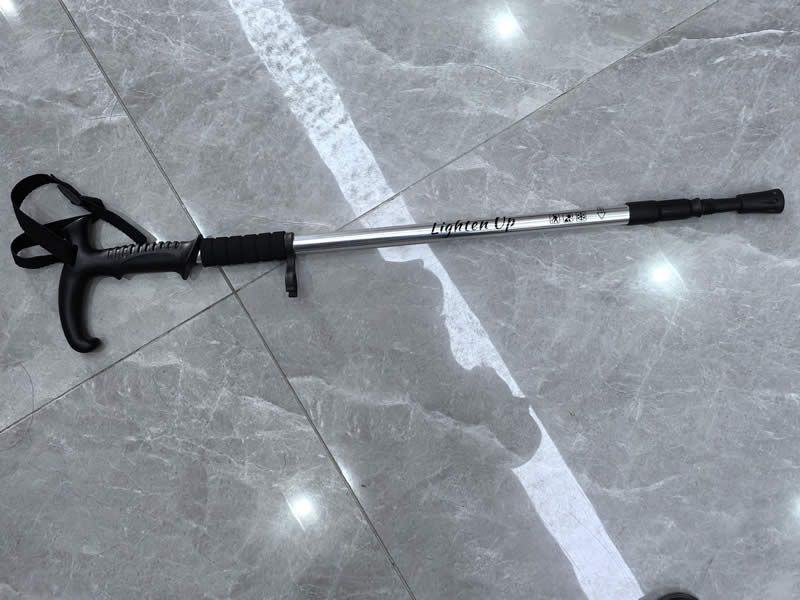
Recommended trekking pole purchase link: https://s.click.aliexpress.com/e/_c4M7OWaN
How spring shock absorbers work
A small coil spring or elastomer cartridge is housed inside the upper shaft of the pole. When you plant the pole, the spring compresses 10–20 mm, theoretically absorbing some of the shock that would otherwise travel up your arm. The mechanism can often be turned on or off.
Why they fail on long trails
Long‑distance trails (e.g., the Pacific Crest Trail, the Westweg, the Rennsteig) involve tens of thousands of pole plants over weeks or months. This relentless repetition exposes any weakness.
- Spring fatigue – Metal springs lose tension over time. After 1,000–2,000 km, a spring may no longer return to full extension, leaving you with a permanently “soft” pole that feels mushy and reduces planting efficiency.
- Jamming – Dirt, sand, or mud can enter the shaft and jam the spring mechanism. Once jammed, the pole may stay stuck in a compressed position, effectively shortening it permanently. Cleaning a jammed spring in the field is nearly impossible.
- Squeaking and grinding – With wear, the spring or elastomer can start to squeak or grind with every plant. This is annoying to you and fellow hikers, and it indicates internal wear.
- Added complexity, more breakpoints – A rigid pole has no moving internal parts. A shock absorber adds several parts (spring, guides, seals) that can fail. On a long trail, simplicity is king.
- Weight penalty – Spring mechanisms add 30–50g per pole. That may not sound like much, but on a 2,000 km trail, you’ll lift that extra weight tens of thousands of times. It adds up.
Do they even help on long trails?
The supposed benefit of shock absorbers is reduced arm and wrist fatigue. However, studies show that the primary source of joint impact on descents is your knees, not your arms. Rigid poles already reduce knee load by 20–25% through proper load transfer – springs add no extra knee protection. For arm comfort, a well‑padded grip and correct wrist strap technique are far more effective than a spring. Many long‑distance hikers find the spring’s bouncy feel disconcerting on uneven terrain, reducing their sense of control.
What the long‑distance community says
Surveys of thru‑hikers on the Pacific Crest Trail and Appalachian Trail consistently show that over 90% use rigid poles (no shock absorption). The most popular models – Leki Makalu, Black Diamond Trail Pro, Black Diamond Distance Carbon Z – are all rigid. When asked why, hikers cite reliability, lighter weight, and better feedback. Spring poles are rarely seen after the first few hundred miles.
When might shocks be acceptable?
- Short trails or day hikes – where failure is less consequential.
- Hikers with wrist or elbow arthritis – some find the slight cushion beneficial.
- Walking on very hard, smooth surfaces (e.g., pavement) – the constant impact can be annoying.
But for long‑distance trails, the risks outweigh the benefits.
What to use instead
- Rigid poles with lever locks – Leki SpeedLock or Black Diamond FlickLock systems are bombproof.
- Aluminium shafts – 7075 aluminium bends rather than snaps and can be straightened in the field.
- Cork or foam grips – provide comfort and reduce hand fatigue without moving parts.
- Replaceable carbide tips – essential for long wear.
Final verdict
Spring‑loaded shock absorbers are not reliable on long‑distance trails. They add weight, complexity, and failure points for minimal, often unnoticeable, benefit. For multi‑week or multi‑month hikes, rigid poles with lever locks are lighter, simpler, and far more dependable. Save the springs for short, gentle walks. On a long trail, trust your wrists – not a spring.




