




How to use trekking poles for boulder hopping in the Peak District?
The Peak District is famous for its gritstone edges, boulder fields (like those on Kinder Scout or the Roaches), and rocky stream crossings. “Boulder hopping” – moving from one large rock to another – requires agility, balance, and often the use of your hands. Trekking poles can be a help or a hindrance. Used correctly, they improve stability and prevent falls; used poorly, they become a dangerous tangle. Here’s how to master boulder hopping with poles in the Peak District.
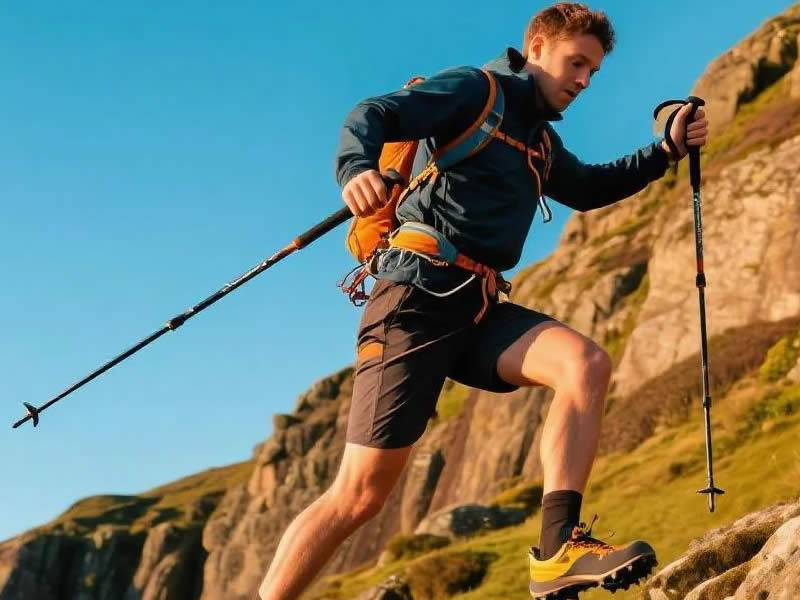
Recommended trekking pole purchase link: https://s.click.aliexpress.com/e/_c4M7OWaN
When to use poles – and when to stow them
- Use poles for: Hopping between large, stable boulders where you have room to plant; crossing rocky streams with flat stepping stones; moving across boulder fields with gaps that require a balance aid.
- Stow poles for: Scrambling up a steep boulder (e.g., on Stanage Edge), sections where you need both hands for grip, or very tight, narrow gaps between rocks.
Prepare your poles for boulder hopping
- Shorten them significantly – reduce length by 10–15 cm from your flat‑terrain setting. Short poles give you better control and prevent them from hitting your face or getting caught above you.
- Remove wrist straps – or keep them very loose. If you slip, you don’t want a pole strapped to your wrist.
- Use carbide tips – remove rubber covers. Carbide bites into rock even when wet.
- Remove large baskets – they can catch on rock edges. Small summer baskets are fine.
Technique for boulder hopping with poles
- Test each boulder before stepping – Use one pole to tap or press down on the next boulder. Check if it wobbles, is slimy, or is unstable.
- Plant the pole on the boulder you’re about to step onto – not on the one you’re leaving. The pole should be on solid, flat rock.
- Keep three points of contact – Before lifting your foot, ensure both poles and your plant foot are stable. Then move one foot, then reposition the poles.
- Use poles as outriggers – On wide boulders, plant both poles to the sides to widen your base. This is especially useful on convex rock surfaces.
- When crossing a narrow gap, plant one pole on each side of the gap (if possible) for balance.
Special tips for Peak District terrain
- Gritstone is rough and grippy when dry – carbide tips bite well. When wet, gritstone can be very slippery, especially if covered in algae. Test with the pole tip first; if it skids, look for a different foothold.
- Boggy boulder edges – On Kinder Scout, boulders may be half‑buried in peat. Use poles to probe the ground around the boulder – if the pole sinks easily, the boulder may be less stable.
- Climbing over a stile or wall – Collapse your poles and attach them to your pack. Stow them before you reach the obstacle.
Common mistakes on boulder fields
- Planting poles between boulders – The tip can get jammed, and as you move forward, the pole can snap or you can fall. Always plant on flat rock surfaces.
- Using full‑length poles – Long poles hit rocks above you, throw you off balance, and can cause you to tip forward.
- Keeping wrist straps tight – If you fall, a strapped pole can twist your arm. Remove straps or leave them very loose.
- Relying solely on poles – Use your free hand for balance on large rocks whenever possible.
When to abandon poles altogether
For sections of true scrambling (e.g., the upper reaches of Grindsbrook Clough), stow your poles on your backpack. Use both hands to grip holds. Trying to navigate steep boulders with poles in hand is dangerous.
Final verdict
Trekking poles can be a valuable aid for boulder hopping in the Peak District, but they require modified technique: shorten them, loosen or remove straps, test each boulder before stepping, and plant on rock surfaces – not in gaps. On steep or complex scrambles, stow them and use your hands. With practice, you’ll move efficiently and safely across the gritstone edges and boulder fields of the Peak District, saving your knees and improving your balance.




