




Do trekking poles improve walking posture and prevent back pain?
Walking for hours on uneven trails – or even on pavement – often leads to a slumped, forward‑leaning posture. Over time, this “hiking slouch” can strain the lower back, shoulders, and neck, leading to chronic pain. Trekking poles are commonly seen as knee‑saving tools, but their benefits extend to posture and back health. The short answer is yes, trekking poles can significantly improve walking posture and help prevent back pain, but only when set up correctly and used with proper technique. Here’s how.
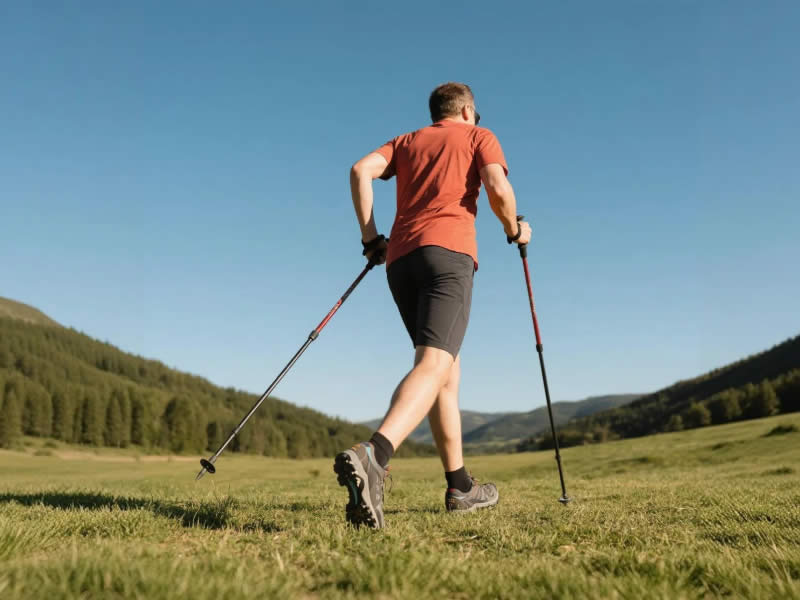
Recommended trekking pole purchase link: https://s.click.aliexpress.com/e/_c4M7OWaN
The link between posture and back pain
Without poles, many hikers gradually adopt a forward‑leaning position, especially when tired or carrying a pack. The head drops, shoulders round, and the lower back arches excessively (hyperlordosis). This posture:
- Compresses the lumbar spine.
- Overworks the erector spinae muscles.
- Reduces breathing efficiency.
- Increases fatigue.
Over long distances, this poor alignment can trigger or worsen lower back pain, as well as cause upper back and neck stiffness.
How trekking poles encourage upright posture
Trekking poles act as tactile guides that naturally invite a more upright stance when used correctly:
- Arm angle and elbow position: With poles set to the correct length (elbow at 90° on flat ground), your arms are positioned at your sides, pulling your shoulders back slightly. This opens your chest and encourages a neutral spine.
- Engagement of the core and back muscles: Planting the poles and pushing down activates your latissimus dorsi, rhomboids, and core stabilisers. These muscles help maintain an upright torso, counteracting the tendency to slouch.
- Tactile feedback: If you start to lean forward, the poles will feel too low or too high relative to your hands. This constant feedback prompts you to correct your posture automatically.
- Weight transfer away from the spine: By transferring some of your body weight and pack load to your arms, poles reduce the compressive force on your lumbar discs. Less compression means less risk of disc‑related back pain.
What research and experts say
A 2017 study in the Journal of Physical Therapy Science examined the effect of pole use on posture during walking. Participants using ergonomically adjusted trekking poles showed significantly reduced forward head angle and less thoracic kyphosis (upper back rounding) compared to walking without poles. Physical therapists often recommend trekking poles for patients with chronic lower back pain, as they help maintain a more neutral spine position and reduce loading on the lumbar region.
Proper setup for back‑friendly posture
To gain postural benefits, you must adjust your poles correctly:
- Length on flat ground: Elbow at 90°, tip on the ground. Mark this length.
- Uphill: Shorten by 5–10 cm. This keeps your arms low, preventing shoulder hiking.
- Downhill: Lengthen by 5–10 cm. This allows you to plant ahead and brake, reducing the forward lunge that strains the lower back.
Wrist strap technique: Insert hand from below, strap between thumb and index finger. The strap should bear weight, not your grip. This relaxes your shoulders and prevents you from shrugging up toward your ears.
Grip pressure: Hold the handle lightly. A death grip tenses your upper trapezius, which can radiate pain into your neck and shoulders.
Common mistakes that worsen back pain with poles
- Poles too short: Forces you to hunch forward, increasing lumbar curve.
- Poles too long: Makes you raise your shoulders, leading to neck and upper back tension.
- Not using wrist straps: Your hands grip tighter, transferring tension to your shoulders.
- Planting poles too far ahead: Over‑reaching pulls you into a forward lean, straining the lower back.
- Using only one pole: Asymmetrical loading can twist the spine over time.
Tips for preventing back pain on long walks
- Keep your chest open – imagine a string pulling your sternum up and forward.
- Look ahead, not down – use peripheral vision for footing; glance down occasionally.
- Engage your core – a light abdominal brace stabilises the spine.
- Take breaks – stretch your back and shoulders every hour.
- Choose a lightweight pack – less load = less back strain.
Final verdict
Yes, trekking poles can improve walking posture and help prevent back pain when used with correct length, proper wrist straps, and a relaxed upright technique. They encourage a neutral spine, reduce lumbar compression, and provide tactile feedback against slouching. However, poorly adjusted poles or incorrect technique can worsen posture. Take time to set your poles correctly, practice the upright rhythm, and listen to your back. With the right approach, your poles will not only spare your knees but also keep your spine happy for many miles.




