




Can trekking poles be used for self-defence against aggressive dogs?
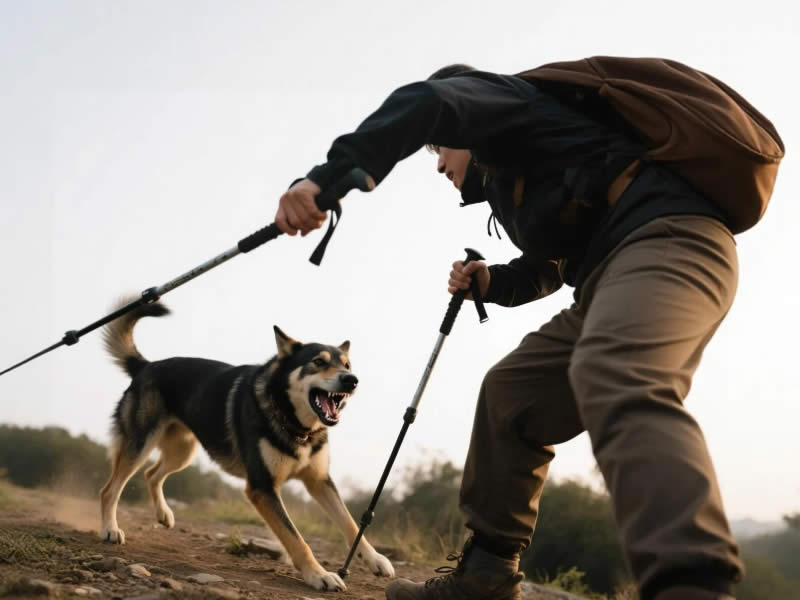
Encountering an aggressive dog on a trail can be frightening. Your first instinct may be to reach for a stick or rock, but you already have a lightweight, sturdy tool in your hands: your trekking poles. The short answer is yes, trekking poles can be used as a deterrent against aggressive dogs, but they are not a weapon for striking. The goal is to create a barrier, startle the animal, and give you time to retreat. Here’s how to use them effectively and safely.
Recommended trekking pole purchase link: https://s.click.aliexpress.com/e/_c4M7OWaN
Why trekking poles work as a deterrent
- They extend your reach: You can keep a dog at a distance while protecting your hands and legs.
- They can be used to create a visual barrier: A horizontal pole held in front of your body can block a dog’s path and make you appear larger.
- Auditory startle: Tapping the pole on the ground or clacking two poles together makes a sharp noise that may startle an approaching dog.
- They are not intended for striking: Hitting a dog should be an absolute last resort (e.g., if you are being bitten and cannot escape). Your priority is to avoid injury to both yourself and the animal.
Correct defensive technique
- Stop moving – Do not run. Dogs have a chase instinct; running may trigger an attack.
- Hold one pole horizontally in front of you, at waist or chest level, using both hands. This creates a barrier between the dog and your body.
- Stand sideways to the dog (less of a frontal threat) and avoid direct eye contact (which can be seen as a challenge).
- Speak in a firm, low voice – “No”, “Stay”, or “Go home”.
- If the dog continues to approach, tap the pole sharply on the ground in front of it – not at the dog. The noise and vibration may make it hesitate.
- If the dog lunges, you can extend the pole to keep it away from your legs or arms. Use the shaft to block, not the sharp tip.
- Back away slowly – never turn your back. Keep the barrier up until you have put distance between you.
What to avoid
- Never swing the pole like a baseball bat – this can injure the dog and may provoke a more aggressive response. It also leaves you off‑balance.
- Do not jab with the carbide tip – the tip is sharp and could cause serious injury. Use the side of the shaft.
- Do not scream or run – high‑pitched noises and sudden movement can escalate the situation.
- Do not rely on poles for protection against a pack of dogs – multiple animals can attack from different angles. Seek higher ground or use bear spray.
Limitations and better alternatives
- Bear spray (or dog‑specific pepper spray) is far more effective than poles. A short burst creates an immediate deterrent without lasting harm. Carry it in dog‑dense areas.
- Poles are not a guarantee – a determined, large dog may ignore the barrier. Use poles as part of a strategy that includes backing away, speaking firmly, and seeking help.
- In a real attack, you may need to use the pole to protect your neck or face, but this is a last resort.
Training and mental preparation
- Practice the horizontal barrier at home. It should feel natural to bring your poles up quickly.
- Carry a whistle – a loud, sharp blast can also deter a dog and alert others.
- Know the signs of aggression – stiff body, raised hackles, staring, growling, or barking.
Real‑world advice from dog trainers
Dog behaviour experts often recommend using an object (trekking pole, umbrella, or jacket) to block the dog’s view of your body. The sudden appearance of a horizontal pole can confuse the dog and break its charge. Most aggressive dogs are bluffing; if you stand your ground and create a barrier, they will often veer away.
Final verdict
Trekking poles can be used as a self‑defence tool against aggressive dogs, primarily as a deterrent and barrier – not as a weapon. Hold one pole horizontally, tap the ground to startle, and back away slowly. Avoid striking or jabbing. For maximum safety in dog‑prone areas, carry bear spray or a dedicated dog deterrent. Your poles are a useful tool, but they are not a replacement for proper precautions. Always prioritise de‑escalation and retreat over confrontation.




