




Can broken carbon fibre trekking poles be repaired in the UK?
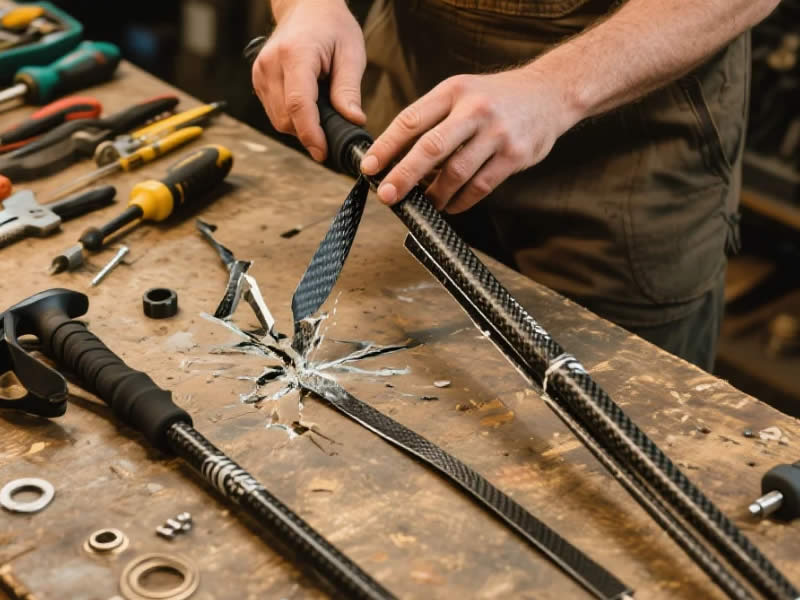
A snapped or cracked carbon fibre trekking pole is a gut‑wrenching sight – especially if it was an expensive pair. Unlike aluminium poles, which can often be bent back into shape, carbon fibre is brittle and tends to shatter or split. So what are your options in the UK? Here’s an honest look at repair possibilities, their limitations, and when it’s simply time to buy new poles.
Recommended trekking pole purchase link: https://s.click.aliexpress.com/e/_c4M7OWaN
The short answer
In almost all cases, broken carbon fibre trekking poles cannot be reliably repaired for safe hiking. Carbon fibre structures rely on a continuous matrix of fibres and resin. Once broken, the strength is permanently compromised. While a few specialist composite repair shops in the UK might attempt a repair, the result will be weaker, heavier, and unpredictable – not something you want to trust on a steep descent.
Why carbon is so hard to repair
Carbon fibre gains its strength from long, continuous fibres oriented to carry load. When a pole snaps or cracks, those fibres are severed. A repair (wrapping with new carbon fibre and resin) can only restore a fraction of the original strength because the load cannot be transferred continuously across the break. Additionally:
- Stress risers: The repaired area becomes a stiff spot, concentrating stress at the edges.
- Hidden damage: Cracks may extend beyond the visible break, weakening the pole internally.
- Weight and bulk: A proper repair would add significant thickness, making the pole unbalanced and possibly preventing it from collapsing.
Are there any UK shops that offer carbon pole repair?
Very few. Carbon bike repair specialists (e.g., Carbon Bike Repair in Bristol, Fibre-Lyte in Cambridge) focus on bicycle frames, which are much larger and can be reinforced internally. They may accept trekking poles, but the cost typically starts at £60–100 – often more than a new mid‑range pole. Some smaller businesses that repair fishing rods (carbon) could also attempt it, but trekking poles face very different loads (bending, compression, and side‑impact) compared to a fishing rod.
DIY repair – strongly discouraged
YouTube videos may show people wrapping a broken carbon pole with epoxy and carbon fibre sheet. Do not do this for poles you rely on for safety. The repair will be:
- Untested – you have no way to know its load capacity.
- Prone to sudden failure – the repaired area may look fine but snap without warning.
- Heavy and ugly – multiple layers of carbon and epoxy add weight and thickness, often preventing the pole from collapsing.
If you must try a DIY fix for a non‑critical use (e.g., a spare pole for a garden tarp), use a sleeve repair: find an aluminium tube that fits snugly over the break, coat the broken ends with epoxy, slide the sleeve over, and clamp. This will be heavy and stiff, but might hold for low‑load applications. Never use such a pole for hiking.
Manufacturer warranty – your best bet
Before attempting any repair, check the warranty from the brand (e.g., Black Diamond, Leki, Komperdell). Many offer a limited lifetime warranty against manufacturing defects. While a fall or obvious impact isn’t covered, a spontaneous crack might be. Contact the UK distributor. Some brands also sell replacement lower sections (the part most likely to break). For example, Leki and Black Diamond offer spare parts – you may be able to buy a new lower shaft for a fraction of the cost of new poles.
Recommended action for broken carbon poles
- Stop using them immediately – a repaired carbon pole is a safety hazard.
- Check the warranty – you might get a free replacement or discounted spare part.
- Buy a replacement lower section – many brands sell individual shaft sections. This is the safest and most cost‑effective repair.
- If no parts are available, recycle the poles – carbon fibre can be recycled (some outdoor shops offer recycling bins). Separate the grips, locks, and tips for reuse.
When to simply replace
- Any snap or splinter that leaves loose fibres – not repairable.
- Crack near a lock or ferrule – impossible to reinforce effectively.
- Poles that have already been repaired once – never trust them again.
- Budget poles – a new pair costs less than a professional repair.
Alternatives: switch to aluminium
If you frequently break carbon poles on rocky UK trails (e.g., Snowdonia, the Lakes, Scottish Highlands), consider switching to 7075 aluminium poles. They are heavier (about 500g per pair instead of 350g), but they bend rather than snap, and a bent aluminium pole can often be straightened enough to finish your hike. For rugged terrain, aluminium is more durable and field‑repairable.
Final verdict
In the UK, broken carbon fibre trekking poles are not worth repairing for serious hiking. Professional repairs are expensive, rarely offered, and result in weakened, unpredictable poles. The only safe route is to replace the broken section (if available) or buy a new pair. For rugged British terrain, many hikers prefer aluminium for its ability to bend rather than snap. Don’t risk your safety on a glued‑together carbon stick – let it go and invest in new poles.




