




How to refurbish old trekking poles for resale or donation?
Old trekking poles often end up in the back of a closet, but with some basic maintenance, they can be given a second life. Whether you want to sell them online or donate to a youth group, refurbishing your poles ensures they are safe, functional, and presentable. Here’s a step‑by‑step guide to bringing old trekking poles back to life.
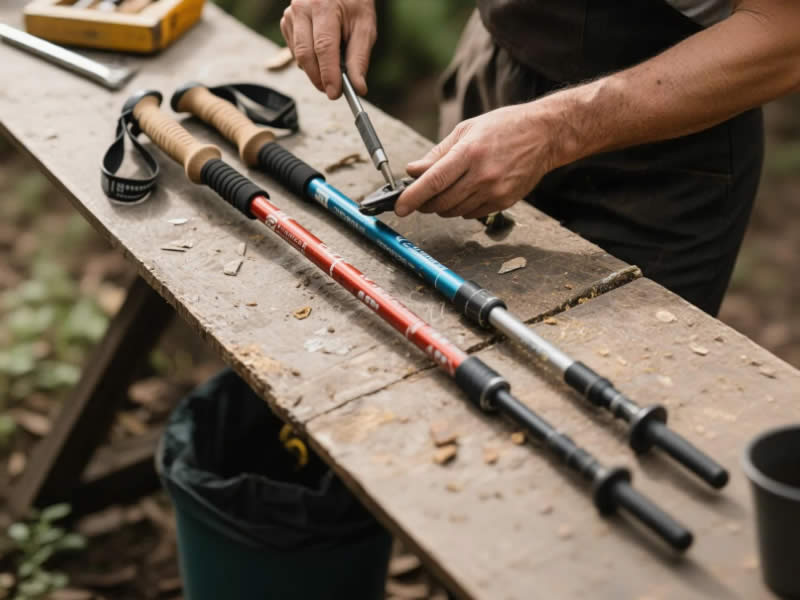
Recommended trekking pole purchase link: https://lightenup.aliexpress.com/store/1101521655
Step 1: Assess the condition
Before starting, decide if the poles are worth refurbishing. Toss them if:
- The shaft is severely bent, cracked (carbon), or has deep dents.
- The locking mechanism is broken beyond repair (e.g., cracked plastic cam with no spare parts).
- The tip is non‑replaceable and completely worn down.
If the poles are structurally sound, proceed.
Step 2: Deep clean everything
- Extend the poles fully and wash the shafts with warm soapy water and a soft brush. Pay special attention to the overlapping sections.
- Clean locking mechanisms: Open lever locks and flush with water; scrub twist‑lock threads with a toothbrush.
- Remove baskets and tips (if possible) and clean the grooves.
- Wipe grips with a damp cloth (avoid harsh detergents that can make cork or foam slippery).
- Rinse thoroughly and dry completely – leave extended for a few hours.
Step 3: Replace worn consumables
- Carbide tips: If the points are blunt or the steel ferrule is exposed, replace them. Most quality poles have replaceable tips (€5–15 per pair).
- Baskets: Replace cracked or missing baskets. Summer baskets are standard; include snow baskets if available.
- Wrist straps: Replace frayed or torn straps. Universal straps or brand‑specific replacements are cheap.
- Grips: If the foam or cork is crumbling, consider replacing them (some are slide‑on).
- Lock components: For Leki SpeedLock, you can buy replacement lever assemblies. For other brands, check spare parts availability.
Step 4: Lubricate moving parts (sparingly)
- Lever lock pivots: One drop of light machine oil on the hinge; work the lever.
- Twist‑lock threads: Apply a tiny amount of silicone grease.
- Do not lubricate clamping surfaces (the inner shaft or inside the outer tube) – that will cause slipping.
Step 5: Straighten bent aluminium (if safe)
- Roll the bent section on a flat surface to identify the high point.
- Apply gentle, gradual pressure with your hands or a rubber mallet (with a protective block).
- Never straighten carbon fibre – it will be weakened and unsafe.
- For severe bends (creasing), the pole should be scrapped.
Step 6: Test for safety
- Extend each pole and lock it. Apply your full body weight vertically – the pole must not slip or bend.
- Shake the pole; there should be no rattling.
- Collapse and extend several times – the mechanism should work smoothly.
- Check that both poles are the same length when extended.
Step 7: Present them for resale or donation
- For resale: Take clear photos showing the poles extended, collapsed, and close‑ups of locks and tips. List any replaced parts. Price realistically – used poles typically sell for 30–60% of new price. Use platforms like eBay, Facebook Marketplace, or outdoor gear exchange groups.
- For donation: Contact local scout groups, hiking clubs, or outdoor charities (e.g., Outdoor Alternative, Scouts UK, or community youth programmes). Clearly state that the poles have been refurbished. Attach a note with the maximum length and any limitations.
What to avoid when refurbishing
- Do not use WD‑40 on locks – it leaves residue that attracts dirt and can cause slippage.
- Do not paint or anodise shafts – it will cover damage and may hide cracks.
- Do not mix parts from different brands unless you are sure they are compatible.
- Do not donate poles that are unsafe (e.g., bent carbon, slipping locks). It’s better to recycle them (carbon fibre can be recycled, aluminium can be scrapped).
Final checklist before donation or sale
- Poles cleaned and dry
- Tips sharp and secure (or replaced)
- Baskets intact
- Wrist straps not frayed
- Locks hold under body weight
- Both poles match in length
- No sharp burrs or protruding parts
Final verdict
Refurbishing old trekking poles is a satisfying project that saves money, reduces waste, and helps others get into hiking. With a few inexpensive parts and a couple of hours of cleaning and testing, you can turn neglected poles into reliable gear. Whether you sell them or donate them, always prioritise safety – never pass on a pole that could fail on the trail. A refurbished pair of poles can give many more miles of service and joy.




