




How to maintain trekking poles after exposure to road salt and grit?
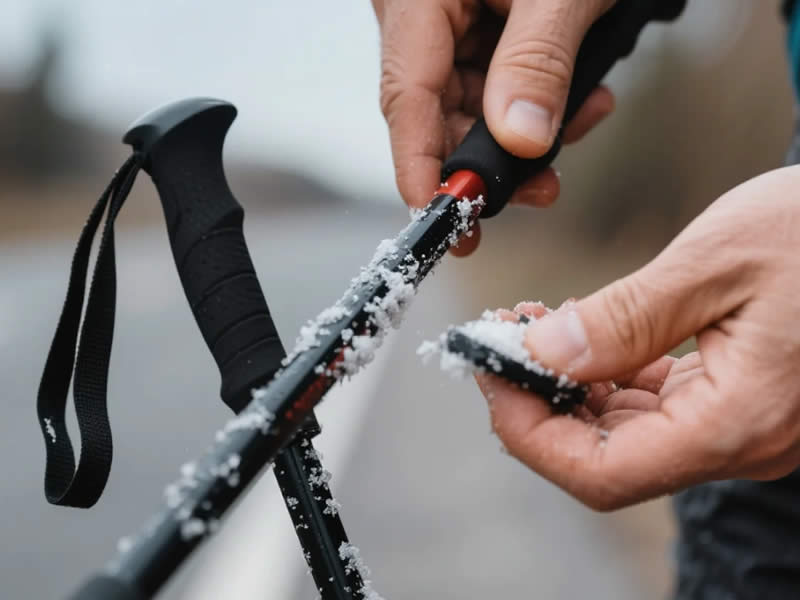
Walking on gritted roads, salted pavements, or coastal paths exposes your trekking poles to two enemies: salt (which accelerates corrosion) and grit (which accelerates wear on locks and shafts). After a winter hike that involved road sections or coastal trails, proper maintenance is essential to keep your poles functioning safely. Here’s a step‑by‑step guide to cleaning and protecting your poles after salt and grit exposure.
Recommended trekking pole purchase link: https://lightenup.aliexpress.com/store/1101521655
Why salt and grit are so damaging
- Salt (sodium chloride or calcium chloride) is hygroscopic – it attracts moisture. Left on aluminium or steel parts, it promotes galvanic corrosion, causing pitting, white oxidation (aluminium), or rust (steel). Even carbon fibre poles have metal ferrules and locking components that can corrode.
- Grit (small, sharp particles of sand, gravel, or salt crystals) acts as an abrasive. When it gets into locking mechanisms or between telescopic sections, it grinds away the anodised coating and can cause locks to stick or slip.
What you’ll need
- Fresh water (a hose, tap, or a large container)
- Soft brush (toothbrush or dish brush)
- Microfiber cloth or old towel
- Isopropyl alcohol (for final cleaning)
- Light machine oil or silicone spray (for lubrication)
- A dry, warm place to let poles air dry
Step 1: Rinse immediately after use (if possible)
Do not let salt and grit dry on your poles. As soon as you finish your hike, rinse the poles with fresh water. Pay special attention to:
- The baskets and tip area (grit collects there)
- The locking mechanisms – open lever locks and flush water through
- The joints between telescopic sections – extend the poles fully and rinse the inner shaft
A garden hose on a gentle spray works well. If you’re still on the trail, a water bottle with a sports cap can be used to squirt water into the locks.
Step 2: Scrub away stubborn deposits
After rinsing, use a soft brush to scrub any remaining salt crust or grit from:
- The carbide tip ferrule (the metal base)
- The inside of the baskets
- The grooves and teeth of lever locks or twist‑lock threads
- The shaft surface (especially where sections overlap)
Do not use a wire brush – it will scratch the anodised coating, creating more places for corrosion to start.
Step 3: Rinse again and dry thoroughly
Rinse once more with fresh water to remove any loosened grit. Then dry the poles with a cloth. Crucially, extend the poles fully and leave them in a warm, dry room for at least 2–3 hours (or overnight) to ensure all moisture evaporates from inside the locks and between sections. Do not collapse and store wet poles.
Step 4: Apply a corrosion inhibitor (light oil)
Once completely dry, protect metal parts:
- Steel components (screws, springs, tip ferrules): Wipe with a cloth lightly dampened with light machine oil (e.g., sewing machine oil, 3‑in‑one, or WD‑40 Specialist). Do not over‑oil – a thin film is enough.
- Aluminium shafts: Not necessary, but you can wipe with a silicone spray for extra protection.
- Lever lock pivots: One drop of oil on the hinge, then work the lever.
- Twist‑lock threads: Apply a tiny amount of silicone grease.
Do not oil the clamping surfaces (the inner shaft or the inside of the outer tube) – that will cause the locks to slip.
Step 5: Check for salt residue in hidden areas
Salt can accumulate inside the basket attachment groove or under the rubber grip (if it’s removable). Remove baskets and wash the groove separately. If your grips can be slid off, do so occasionally and clean the shaft underneath.
Step 6: Store properly
For long‑term storage after a salty hike, store the poles extended (not collapsed) to allow air circulation. If you must collapse them for space, leave the locks slightly loose to prevent pressure on any residual moisture. Never store poles in an airtight bag – any remaining moisture will cause corrosion.
What to avoid
- Leaving salty poles in a car boot – the temperature fluctuations accelerate corrosion.
- Using a pressure washer – it can force water and grit into sealed joints.
- Using vinegar or acidic cleaners – they can strip the anodised coating.
- Storing poles collapsed while wet – guaranteed corrosion.
When to replace parts
If you notice:
- Pitting or deep rust on steel ferrules – replace the tip.
- White powdery oxidation on aluminium that won’t wipe off – the coating is damaged; monitor for structural weakness.
- Locking mechanism that feels gritty or slips – disassemble, clean, and lubricate. If still bad, replace the lock.
Preventive steps before a salty hike
- Apply a thin layer of car wax or silicone spray to the shafts before the hike – salt will not stick as easily.
- Use rubber tip covers on pavement sections to keep grit away from the tips.
- Rinse poles at the earliest opportunity after the hike – even a quick splash with a water bottle helps.
Final verdict
After exposure to road salt and grit, your trekking poles need a thorough rinse, gentle scrubbing, complete drying, and light oiling of metal parts. Never let salt dry on the poles, and never store them wet. With this simple routine, your poles will resist corrosion and wear, remaining safe and reliable for many more winter and coastal hikes.




