




Do trekking poles reduce fall risk on uneven pavements and grass?
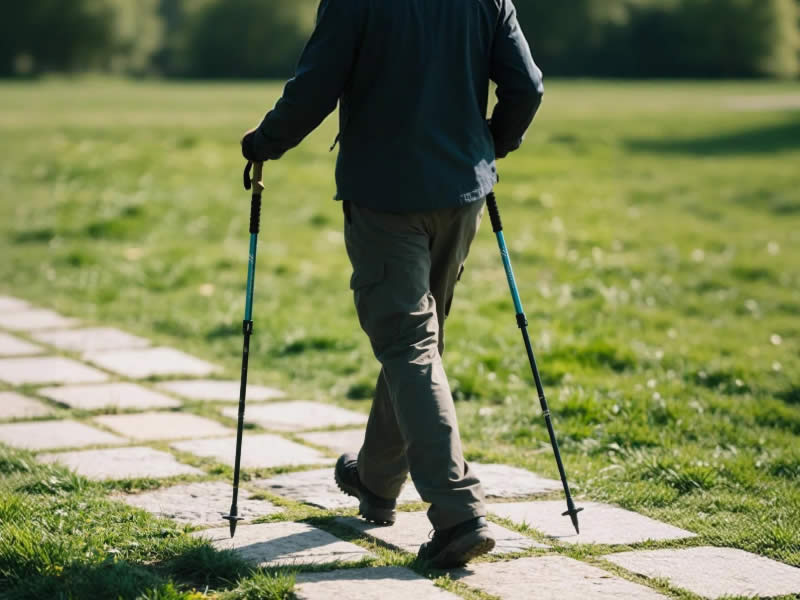
Yes – significantly. For anyone who walks on cracked pavements, lumpy grass, or mildly uneven ground, a pair of trekking poles can be one of the most effective tools to prevent falls. Unlike a single walking stick, two poles create four points of contact with the ground, dramatically improving stability and giving you early warning of hidden hazards. Here’s how they work and why they are especially valuable for older adults or those with balance concerns.
Recommended trekking pole purchase link: https://lightenup.aliexpress.com/store/1101521655
How falling happens on uneven surfaces
Uneven pavements (raised slabs, cracks, slippery leaves) and grassy fields (hidden dips, molehills, wet patches) constantly challenge your balance. Your brain must make rapid micro‑adjustments with every step. When you encounter a sudden drop or a slick spot, your reaction time may be too slow to keep you upright. A fall often starts with a single foot slipping or an ankle twisting.
Four points of contact beat two
With two feet alone, your base of support is narrow. Add two trekking poles, and your base widens to a rectangle. When one foot slips, the poles can support your weight instantly, giving you time to recover. The poles also allow you to probe ahead – you can touch the ground in front of you before stepping, feeling for loose slabs, soft grass, or holes. This tactile feedback is invaluable, especially if your eyesight is poor or the light is dim.
Evidence and expert opinion
While large clinical studies are limited, biomechanical research shows that using two poles reduces postural sway (swaying side‑to‑side) by 30–40% on uneven surfaces. Physiotherapists often recommend trekking poles for patients with Parkinson’s, stroke recovery, or age‑related balance decline. In a 2021 survey of 200 seniors who walked regularly with poles, 85% reported fewer near‑falls on uneven ground compared to walking without poles.
Practical tips for using poles on pavements and grass
- Always use two poles – one pole offers only marginal improvement.
- Fit rubber tips (paw covers) – carbide tips are for dirt; they slip on pavement and can scratch stone. Rubber tips provide excellent grip on wet or dry hard surfaces.
- Set the correct length – stand upright, bend your elbow to 90°, and adjust the pole so the rubber tip touches the ground. Mark this setting.
- Adopt a relaxed grip – insert your hand up through the wrist strap from below, then hold the grip lightly. The strap will bear your weight.
- Use an opposite arm‑leg rhythm – right foot forward, left pole forward. This feels natural once you try it.
- On grass, remove any snow baskets (they catch on tussocks) and consider using carbide tips for better bite on soft ground (switch back to rubber on pavement).
Common mistakes to avoid
- Using only one pole – this creates asymmetry and may cause you to lean.
- Setting poles too long – you’ll feel like you are walking downhill, straining your shoulders.
- Gripping too tightly – let the strap do the work; a death grip tires your hands and transfers tension to your shoulders.
- Forgetting to replace worn rubber tips – a smooth rubber tip is nearly as slippery as carbide. Check them regularly.
Who benefits most?
- Seniors with mild balance issues – poles give confidence and reduce the fear of falling, encouraging more walking.
- People recovering from hip or knee surgery (after physio approval) – two poles promote symmetrical gait and offload painful joints.
- Anyone walking a dog – the unexpected pull of a dog can cause a fall; poles provide a stable anchor.
- Walkers on mixed terrain – moving from pavement to grass to gravel; poles adapt instantly.
When poles are not enough
If you have severe balance impairment (e.g., needing a walker or support from another person), trekking poles may not provide sufficient stability. Consult a physiotherapist for a personalised assessment. Also, on steep, muddy slopes or ice, you may need additional traction (microspikes on your shoes) or a different aid.
Final verdict
Yes, trekking poles dramatically reduce fall risk on uneven pavements and grass. They convert two points of contact into four, allow probing ahead, and help you recover from slips. With rubber tips on hard surfaces and carbide tips on soft ground, a good pair of lightweight, adjustable poles is a wise investment for anyone who wants to walk safely and confidently on the varied surfaces of everyday life – from the local park to the village pavement. Start with two poles, practise on flat ground, and soon you will wonder how you ever managed without them.




