




Are trekking poles allowed as hand luggage on Ryanair and easyJet?
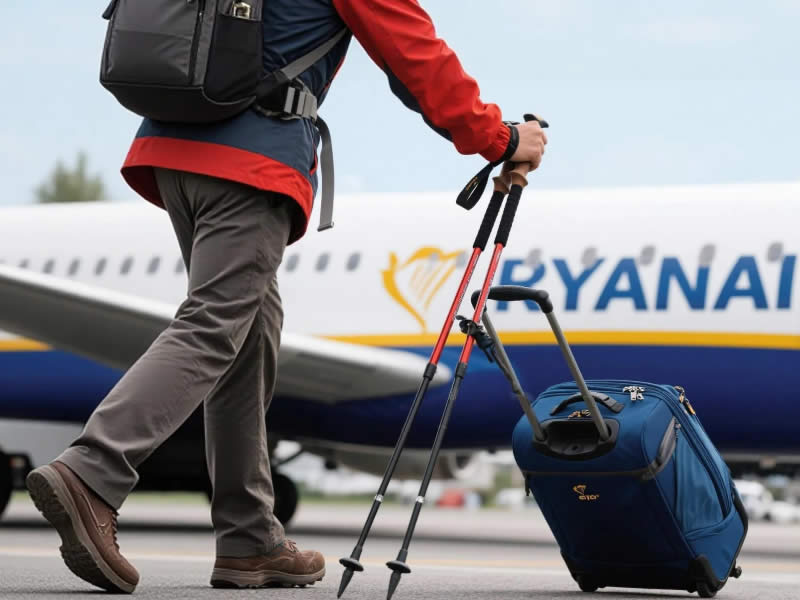
No – neither Ryanair nor easyJet permits trekking poles in cabin baggage. Both airlines classify trekking poles as “blunt instruments” or “sharp objects” (the tip qualifies as a point that could cause injury). Therefore, they must be placed in checked luggage. Attempting to carry them through security will result in confiscation or a requirement to check your bag at the gate, often at a significant fee. Here’s a detailed breakdown of each airline’s policy, how to pack your poles for check‑in, and tips to avoid problems.
Recommended trekking pole purchase link: https://lightenup.aliexpress.com/store/1101521655
Ryanair’s policy
Ryanair’s prohibited items list includes “walking sticks, hiking poles, ski poles, and any similar items made of metal or other material that could be used as a weapon.” This explicitly covers trekking poles. There is no exception for folding or small poles. Even if collapsed, they are not allowed in the cabin. You must place them in your checked baggage. If you only have a carry‑on bag, you will need to purchase a checked bag allowance (Ryanair’s fees are high at the airport). Tip: add a checked bag when booking online – it’s far cheaper.
easyJet’s policy
easyJet similarly prohibits “walking sticks, hiking poles, shooting sticks, and ski poles” in cabin baggage. Their website states: “Any item that could be used as a blunt instrument or to cause injury is not permitted in the cabin.” Trekking poles fall under this category. Like Ryanair, you must check them in. easyJet allows one cabin bag (e.g., a small backpack) and a personal item (e.g., handbag) – but poles cannot be in either. They must go in the hold.
Why the ban exists
Security regulations across Europe (EU and UK) treat trekking poles as potential weapons. The pointed carbide tip and the rigid shaft make them similar to a baton. Even if you have no ill intent, security screeners must enforce the rules uniformly. Anecdotally, many hikers have had poles confiscated at airports including Manchester, Gatwick, and Edinburgh – a costly and frustrating experience.
How to pack trekking poles for checked luggage
- Collapse or fold your poles to their shortest length.
- Remove baskets (store them in a small bag).
- Cover the carbide tips with rubber covers or tape to prevent puncturing your suitcase or other items.
- Place poles in a protective sack (often included with purchase) or wrap them in clothing (e.g., a fleece jacket) to prevent rattling and damage.
- Put them inside your checked suitcase – not in a separate, unaccompanied bag (which might be treated as a separate item).
- If your suitcase is too small, consider using a sturdy duffel bag or a dedicated pole tube (a hard plastic tube often used for fishing rods). Some outdoor shops rent these.
Alternative: ship your poles ahead
If you are worried about lost luggage or want to travel with only carry‑on, you can ship your trekking poles to your destination (e.g., a hotel, hostel, or post office). Use a courier service like Royal Mail, DPD, or a dedicated luggage shipping company. This costs about £10–20 within the UK, or more internationally. This option removes the risk of poles being confiscated or damaged in the hold.
What about foldable poles – are they an exception?
No. Even ultralight Z‑poles that collapse to 35 cm are still prohibited. The length does not matter; the classification as a “blunt instrument” applies regardless. Do not hope that a small size will sneak through – security scanners can see the shape and materials.
Can I carry them on if I have a disability?
Airlines may make reasonable adjustments for passengers with disabilities who require walking aids. However, trekking poles are not typically considered standard mobility aids like a walking stick or crutches. If you have a medical need, you must contact the airline’s special assistance team in advance and provide documentation (e.g., a doctor’s note). Even then, they may insist on the poles being checked at the gate. For reliable mobility support, a folding walking stick (with a single point) is more likely to be allowed – but still check with the airline.
Final recommendations
- Assume trekking poles are not allowed in the cabin on Ryanair, easyJet, and most other European airlines (e.g., Jet2, BA, Lufthansa).
- Always check the airline’s website before flying – policies can change.
- Pack poles in checked luggage or ship them ahead.
- If your poles are very expensive, consider buying a hard‑sided suitcase or a pole tube for protection.
- Label your poles with your name and contact details in case the checked bag goes missing.
By following these steps, you can avoid the disappointment of having your poles confiscated and enjoy your hiking holiday without last‑minute gear headaches.




