




Do trekking poles help with weight loss when walking?
Yes – using trekking poles while walking can increase your energy expenditure (calorie burn) compared to walking without them. However, they are not a magic weight‑loss tool. Weight loss ultimately depends on creating a consistent calorie deficit through diet and overall physical activity. Trekking poles are a useful adjunct that can make walking more efficient, more enjoyable, and slightly more demanding, which may help you walk longer and more often. Here’s what the science says and how to make the most of them.
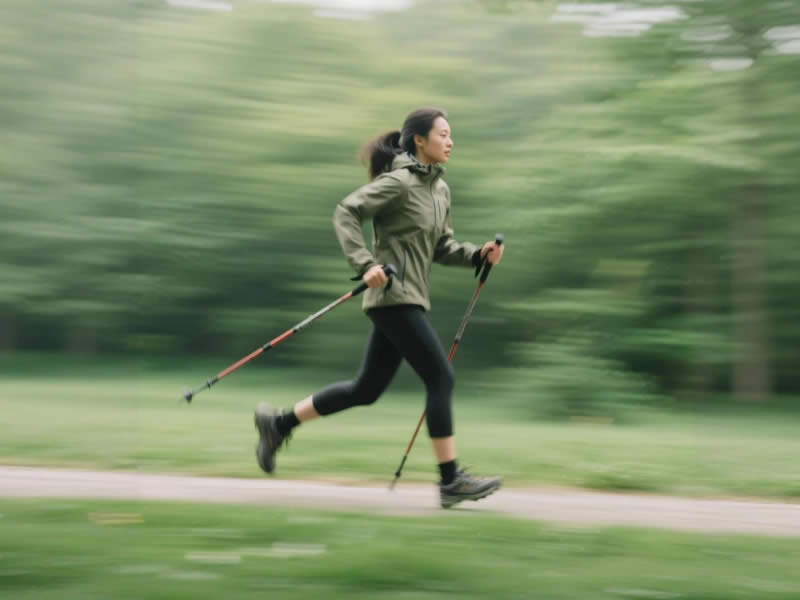
Recommended trekking pole purchase link: https://lightenup.aliexpress.com/store/1101521655
How trekking poles increase calorie burn
When you walk without poles, your legs do almost all the work. Your arms swing passively, contributing little to forward motion. When you use trekking poles correctly – planting them actively and pushing back with each stride – you engage your upper body: shoulders, triceps, lats, chest, and core muscles. This additional muscle recruitment requires more energy. Studies have shown that walking with poles can increase oxygen consumption by 5–20% compared to regular walking at the same speed, translating to roughly a 10–30% increase in calorie burn per hour.
What the research says
- A 2018 study in the Journal of Sports Medicine and Physical Fitness found that healthy adults walking on a treadmill with trekking poles at a self‑selected pace burned about 15% more calories than walking without poles.
- Nordic walking (a specific technique using poles) has been shown to increase energy expenditure by 20–30% compared to ordinary walking, while also reducing perceived exertion.
- For overweight individuals, using poles can allow them to walk at a higher intensity without feeling more tired, because the poles spread the workload across more muscles.
Real‑world impact on weight loss
Let’s put the numbers into perspective. A 70 kg (154 lb) person walking at a brisk pace (5 km/h) without poles burns roughly 250–300 calories per hour. With poles (active planting), that same person might burn 300–360 calories per hour – an extra 50–60 calories. That doesn’t sound huge, but over a month of walking 5 hours per week, that’s an extra 1,000–1,200 calories, which could contribute to losing about 0.15 kg (0.33 lb) of fat per month, all else being equal. More importantly, poles reduce joint pain and fatigue, which may encourage you to walk longer or more frequently, amplifying the calorie deficit.
Why poles are not a quick fix for weight loss
- Calorie burn is modest – You would need to walk many hours with poles to lose a significant amount of weight. Diet remains the primary lever.
- Technique matters – Tapping the poles lightly does nothing. You must actively push back with each plant to engage upper body muscles. Nordic walking technique (straight arms, open hand on backswing) is most effective, but even standard trekking pole technique (alternating, pushing back) helps.
- Poles add weight – Carrying 300–500 g of poles burns a tiny extra amount, but not enough to matter.
- Weight loss requires consistency – The best exercise is the one you will do regularly. If poles help you walk more because they reduce knee pain or make walking more fun, then they indirectly support weight loss.
How to maximise calorie burn with trekking poles
- Use an active push – Don’t just let the pole touch the ground. Drive it backward as you step forward, like a ski poling motion. You should feel your triceps and lats working.
- Maintain a brisk pace – Poles work best at faster speeds (at least 5 km/h). Slower strolling offers less benefit.
- Use the correct rhythm – Alternate opposite pole to foot (right foot forward, left pole down). This uses your body’s natural counter‑rotation.
- Incorporate hills – On uphills, shorten poles and push down hard. On downhills, lengthen poles and brake. Hills dramatically increase calorie burn.
- Add intervals – Walk fast for 2 minutes, then recover for 1 minute, with active planting throughout.
- Use Nordic walking technique if possible – Dedicated Nordic poles and a straight‑arm, open‑hand style increase upper‑body engagement further. But standard trekking poles with proper wrist strap use still work.
Other benefits that support weight loss
- Reduced joint pain – Poles offload knees, hips, and ankles, allowing people with arthritis or past injuries to walk longer distances without discomfort.
- Improved posture – Poles encourage an upright stance, which can help you breathe better and walk more efficiently.
- Greater confidence – Knowing you have stable support may encourage you to explore hilly or uneven terrain, which burns more calories.
- Increased step count – If poles make walking more enjoyable, you will likely walk more steps per day.
Final verdict
Trekking poles can help with weight loss, but only as part of a broader strategy. They increase calorie burn by 10–30% compared to normal walking, reduce joint pain, and may encourage you to walk more often. However, they are not a substitute for a calorie‑controlled diet. Think of them as a tool to make your walking more effective and sustainable. Combine a healthy diet with regular, brisk walking using active pole technique, and you will see results. For someone who already walks for exercise, adding trekking poles is a simple, low‑cost way to enhance calorie burn and overall fitness.




