




Are expensive Leki trekking poles worth the high import price in Brazil?
For Brazilian hikers, buying a pair of Leki trekking poles means paying a significant premium. Import duties, taxes, and shipping can double or even triple the European retail price. A pair that costs €100 (about 550 BRL) in Germany can easily exceed 1,000 BRL in Brazil. The question is: does the extra cost deliver enough value over local alternatives? The answer depends on how you hike.
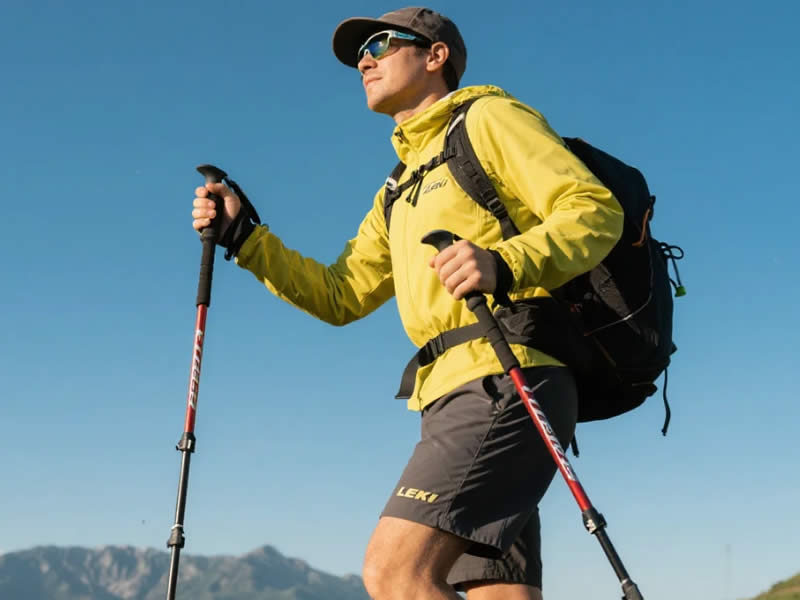
Recommended trekking pole purchase link: https://lightenup.aliexpress.com/store/1101521655
What you pay for with Leki (and other premium brands)
- 7075 aluminium shafts – heat‑treated and far stronger than the 6061 alloy used in many budget poles. Leki poles bend rather than snap, and they can be straightened in the field. Cheap poles often bend permanently or snap at the ferrule.
- SpeedLock lever locks – infinitely adjustable, tool‑free, and reliable in wet, muddy, or cold conditions. They do not slip like twist locks. Replacement parts are available.
- Replaceable carbide tips – Leki uses high‑grade tungsten carbide that lasts 1,000+ km on abrasive Brazilian rock (quartzite, granite). The tips can be swapped when worn.
- Comfortable, ergonomic cork grips – left/right specific (Aergon) reduce wrist strain. Cork absorbs sweat – essential in Brazil’s humid heat.
- Warranty and repairability – Leki offers a limited lifetime warranty. More importantly, you can buy spare parts (locks, straps, tip ferrules, even shaft sections) online and keep the poles working for a decade. Local budget poles are usually disposable.
What the import price means in Brazil
A set of Leki Makalu poles that retails for €100–120 in Europe will cost around 900–1,200 BRL from a reputable Brazilian importer (e.g., Adventure Sport, Dancor). On Mercado Livre, grey‑market imports may be slightly cheaper but risk counterfeits. Meanwhile, a Decathlon Forclaz MT500 costs about 250–300 BRL, and a Kalvo K6 is around 180–200 BRL.
The case for Leki (when it’s worth it)
- Frequent, serious hiking – If you hike every weekend on rocky terrain (Serra dos Órgãos, Chapada Diamantina, Pico da Bandeira), the durability and comfort of Leki poles will pay off. Cheap poles may fail (twist locks slip, tips wear, shafts bend) after a few months, forcing replacement. Over 3–5 years, Leki may be cheaper than buying three pairs of budget poles.
- Joint issues or heavy pack – If you have bad knees or carry a multi‑day pack (over 10 kg), the reliable locking and load transfer of Leki poles provide safety that cheap poles cannot guarantee. A collapsed pole on a steep descent could cause a serious fall.
- Long‑term investment – With spare parts available, Leki poles can last 10+ years. Over that time, the cost per year becomes very low.
- Resale value – Used Leki poles in good condition retain value. You can recoup part of the cost if you upgrade.
The case against Leki (stick with local budget poles)
- Casual, light use – If you hike only a few times per year on gentle trails (e.g., Floresta da Tijuca, Parque da Cidade), a pair of Decathlon Forclaz MT500 or Kalvo K6 will serve you well. The extra durability of Leki is unnecessary.
- Very tight budget – 1,000 BRL is a lot of money. You could buy good hiking boots and a backpack for that amount. Prioritise other gear first.
- Risk of theft or loss – If you often hike in crowded areas or travel with gear, losing an expensive imported pole hurts more than losing a budget pair.
What about other premium brands available in Brazil?
Black Diamond and Komperdell are also imported and similarly priced. The same logic applies. If you want premium performance, Leki is among the best.
Tips for buying Leki in Brazil
- Buy from an authorised importer (e.g., Adventure Sport, Equipaventura) to get genuine product and warranty support.
- Look for sales – sometimes during Black Friday or outdoor expos, prices drop by 20–30%.
- Consider bringing from abroad – if you travel to Europe or the US, buy Leki there and bring them back. Even with baggage fees, it’s often cheaper.
- Buy spare parts at the same time – extra tips, a spare lever lock, and rubber paw covers. These are hard to find locally.
Final verdict
Expensive Leki trekking poles are worth the high import price in Brazil for dedicated, frequent hikers who prioritise safety, durability, and comfort. The reliability of the SpeedLock, the ergonomics of the cork grip, and the ability to replace parts justify the premium over several cheap poles. For occasional or light hikers, a good mid‑range aluminium pole (Decathlon Forclaz MT500, 250–300 BRL) offers excellent value. Don’t buy Leki if you are a beginner or hike only a few times per year – save your money for better boots. But if you live for the trails and want a pole that will last a decade, invest in Leki. Your knees will thank you.




