




Are foldable trekking poles better than telescopic for backpacking Brazil?
For backpacking in Brazil – a country of immense diversity from the humid Atlantic Forest to the rocky canyons of Chapada Diamantina and the red‑soil trails of the Pantanal – the choice between foldable (Z‑pole) and telescopic (3‑section) trekking poles is crucial. The short answer: for most Brazilian backpacking, telescopic aluminium poles with lever locks are better than foldable poles. Foldable poles are lighter and pack smaller, but they sacrifice durability and adjustability – qualities you need on Brazil’s unforgiving terrain.
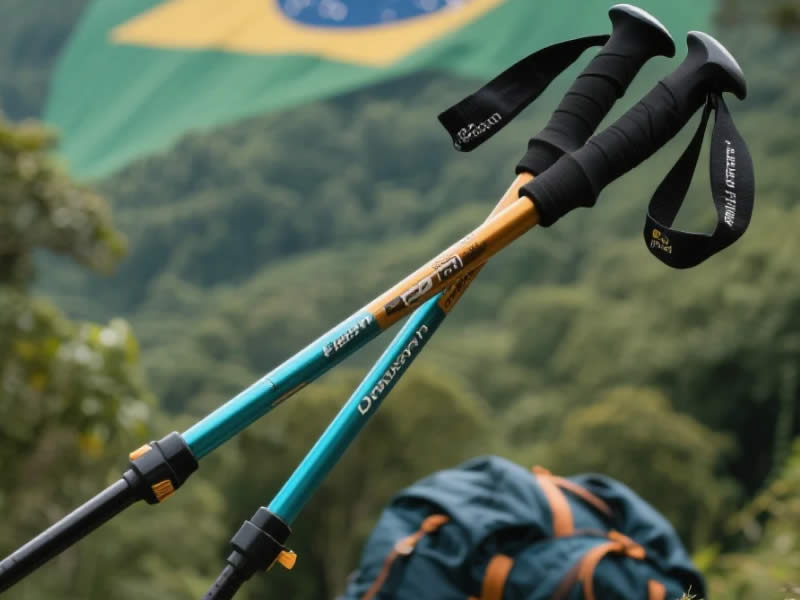
Recommended trekking pole purchase link: https://lightenup.aliexpress.com/store/1101521655
Foldable (Z‑pole) trekking poles
Foldable poles (e.g., Black Diamond Distance Z, Leki Ultratrail) consist of sections connected by an internal cord. They snap together and collapse into a very compact bundle (30–40 cm). Pros: very light (300–400g per pair), pack small, quick to deploy. Cons: fixed length (cannot adjust for steep hills), weaker joints, carbon fibre versions can snap under lateral stress, and push‑button locks can jam with mud or grit.
Telescopic (3‑section) trekking poles
Telescopic poles (e.g., Leki Makalu, Black Diamond Trail Pro, Decathlon Forclaz) have nested tubes that slide and lock. Pros: adjustable length (shorten for uphills, lengthen for downhills), stronger and more durable (especially 7075 aluminium), field‑repairable, replaceable parts. Cons: heavier (500–600g per pair), longer collapsed (60–70 cm), bulkier to pack.
Why telescopic poles are better for Brazilian backpacking
- Terrain demands adjustability – Brazil’s trails are rarely flat. From the steep granite slabs of Pedra do Baú to the constant ups and downs of the Vale do Pati, you need to shorten poles for climbs and lengthen them for descents. Foldable poles have fixed lengths – you either commit to a single length (usually 110–130 cm) that may be wrong for half the trail. Telescopic poles give you fine control.
- Durability on rocky, rooty trails – Foldable carbon poles are notorious for snapping when jammed between rocks or twisted on roots. Brazilian trails are full of loose quartzite, hidden tree roots, and slippery moss. A broken pole on a remote section of the Trilha Transcarioca or in the Serra do Mar can ruin your trip. Aluminium telescopic poles bend rather than snap; you can often straighten them and continue.
- Mud and grit resistance – Foldable poles have push‑button joints that collect mud and sand, leading to jamming or failure to lock. Brazil’s rainy season creates knee‑deep mud in many regions (e.g., the Pantanal in wet season). Telescopic poles with external lever locks (SpeedLock, FlickLock) are much easier to clean and far less likely to fail.
- Heavy pack support – Backpacking Brazil often means carrying a multi‑day pack (10–15 kg). Foldable poles are not designed for heavy loads; their thin walls and joints may flex or collapse. Telescopic aluminium poles (especially 7075) handle heavy packs with confidence.
- Corrosion resistance – Humidity and sweat can corrode the steel springs inside foldable poles’ locking mechanisms. Aluminium telescopic poles with anodised shafts and stainless steel screws resist corrosion better.
When foldable poles might be acceptable
- You are a very light backpacker (pack under 8 kg) and stick to smooth, well‑maintained trails (e.g., the beach trails of Fernando de Noronha or the gravel roads of the Serra da Canastra).
- You are an ultralight traveller who needs poles to fit inside a carry‑on suitcase (foldable poles collapse to 35–40 cm, while telescopic are 60+ cm).
- You are using them for trail running or day hikes, not multi‑day backpacking.
Recommendation for backpacking Brazil
Invest in telescopic 7075 aluminium poles with lever locks and cork grips. The Decathlon Forclaz MT500 is an excellent value option widely available in Brazil (Decathlon stores in São Paulo, Rio, etc.). For a premium choice, the Leki Makalu offers unbeatable durability and repairability – order online or bring from abroad. Avoid twist‑lock telescopic poles; they slip when wet.
Final verdict
For backpacking Brazil, telescopic trekking poles are generally better than foldable. They offer adjustability for hills, superior durability on rocky/muddy terrain, reliable locking mechanisms, and the ability to handle heavy loads. Foldable poles are best reserved for ultralight runners or travellers with extreme packability needs. For the safety and comfort of a Brazilian backcountry adventure, choose telescopic aluminium.




