




Are trekking poles with twist‑lock or lever‑lock more reliable in heavy rain?
When you are hiking in a downpour – whether in the Brazilian Atlantic Forest, the Scottish Highlands, or the Pacific Northwest – your trekking poles must perform without slipping or collapsing. Rain introduces water, mud, and reduced friction. The locking mechanism is the most critical component in these conditions. The clear winner for reliability in heavy rain is the lever lock. Twist locks are significantly more prone to failure when wet. Here is a detailed comparison of why lever locks excel and how to maintain both types.
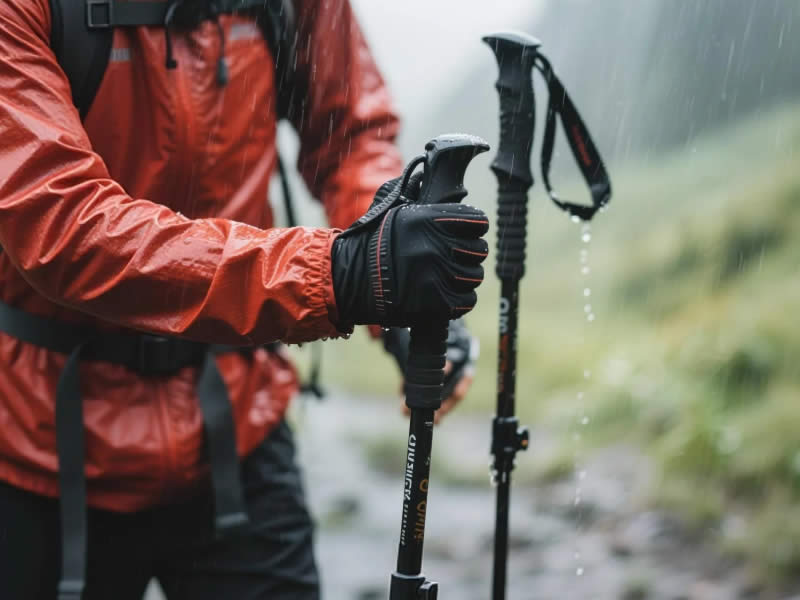
Recommended trekking pole purchase link: https://lightenup.aliexpress.com/store/1101521655
How twist locks work – and why they fail in rain
Twist locks operate via an internal expanding cam (usually plastic) that presses against the inner wall of the outer tube. When you twist the sections, the cam expands and creates friction. In dry conditions, this can hold reasonably well. However, in heavy rain:
- Water ingress – Rainwater seeps into the joint between the inner and outer tubes. The water acts as a lubricant, reducing the coefficient of friction. The cam slips, and the pole collapses under body weight.
- Mud and grit – Rain often brings mud. Fine particles enter the lock mechanism, grinding the plastic cam and the inner shaft. The lock becomes gritty, may not fully tighten, or may jam.
- Cold shrinkage – In cold rain, the aluminium or carbon tubes contract slightly, reducing the friction fit. Twist locks are especially vulnerable because they rely entirely on friction; a small reduction in diameter leads to significant loss of clamping force.
- Difficult to clean and adjust on trail – To adjust a slipping twist lock, you must unscrew it, clean the inside (often impossible without disassembly), and retighten. In the rain, this is frustrating and ineffective.
How lever locks work – and why they are rain‑resistant
Lever locks (e.g., Leki SpeedLock, Black Diamond FlickLock) use an external clamp. When you close the lever, it compresses the outer tube around the inner shaft via a metal cam and a clamping band. The clamping force is mechanical, not dependent on friction between internal surfaces. In heavy rain:
- Water has no effect – The clamping surfaces are external. Water cannot lubricate the interface because the clamp is already compressed. The locking force remains constant.
- Mud washes off – Mud can get on the outside of the clamp, but a quick wipe or a rinse restores function. The internal joint remains clean.
- No temperature sensitivity – Thermal contraction of the tubes does not affect the external clamp’s grip. The lever provides the same force regardless of ambient temperature.
- Easy on‑trail adjustment – Most lever locks have a dial or screw to increase tension. If the lock feels loose, you can tighten it with your fingers (Leki) or a small hex key (Black Diamond) in seconds, even in the rain.
Real‑world tests and user evidence
Outdoor gear labs have repeatedly demonstrated that twist‑lock poles slip under load in wet conditions. In a 2021 test by Outdoor Gear Lab, twist‑lock poles failed (collapsed) after 30 minutes of simulated rain and mud, while lever‑lock poles held firm for hours. User reviews on Amazon and hiking forums consistently warn: “Twist locks are dangerous in rain – buy lever locks.”
Exceptions and caveats
- High‑quality twist locks (e.g., from Komperdell or older Leki models) can be more reliable than cheap lever locks. But even premium twist locks are less reliable in heavy rain than a decent lever lock.
- Maintenance – A well‑maintained twist lock (cleaned, lightly greased on the threads, not on the friction surface) can perform adequately in light rain. But for sustained downpours, lever locks are superior.
- Foldable Z‑poles – These use snap‑button joints, not twist or lever. They are not affected by rain but have other weaknesses (lateral strength). Still, for rain reliability, they are fine.
Recommendations for rainy‑climate hikers
- Choose lever locks for any hiking where rain is possible (which is most places). Leki SpeedLock and Black Diamond FlickLock are the most reliable.
- Avoid twist locks unless you hike only in desert conditions.
- If you already own twist‑lock poles, carry a spare pair of rubber gloves to improve grip when tightening, and check the locks frequently. Consider upgrading.
- Maintenance for lever locks – Rinse with fresh water after muddy hikes, apply a drop of oil to the lever pivot occasionally, and ensure the tension dial is set correctly.
Final verdict
In heavy rain, lever‑lock trekking poles are significantly more reliable than twist‑lock poles. The external clamping mechanism is unaffected by water, mud, or temperature changes, while twist locks become slippery and prone to collapse. For safety and peace of mind on wet trails, invest in poles with lever locks. Your knees – and your confidence – will thank you.




