




Do I need trekking poles with snow baskets for Brazilian winter hikes?
No – for the vast majority of Brazilian winter hikes, you do not need snow baskets (also called powder baskets). Snow baskets are large plastic discs (7–10 cm diameter) designed to prevent trekking poles from sinking into deep, soft snow. Brazil is a tropical and subtropical country; snowfall is extremely rare, occurring only in a few high‑altitude locations in the far south, such as São Joaquim (Santa Catarina), Bom Jardim da Serra, or the highest peaks of Rio Grande do Sul. Even there, the snow cover is usually shallow and short‑lived. For almost all Brazilian winter hiking, the small summer baskets (4–6 cm) that come standard on most poles are perfectly adequate. Here is a detailed guide to help you decide.
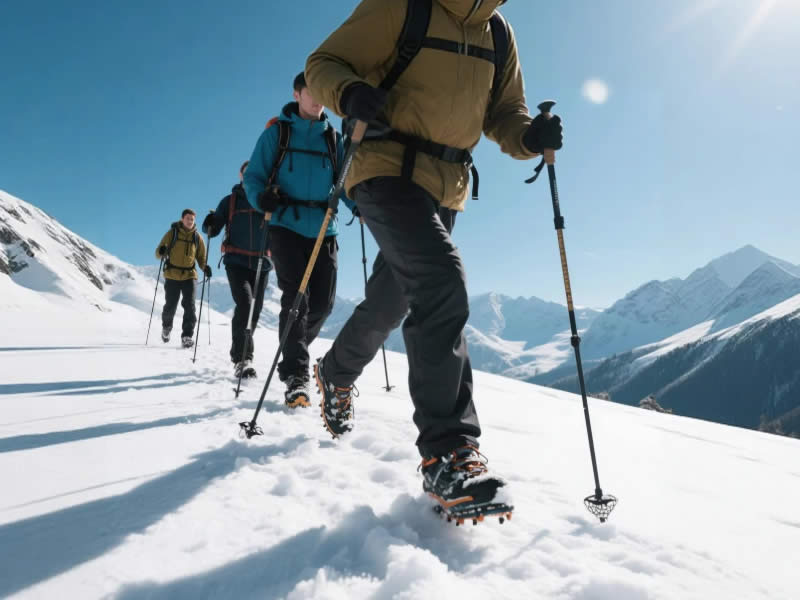
Recommended trekking pole purchase link: https://lightenup.aliexpress.com/store/1101521655
What are snow baskets and what do they do?
Snow baskets attach to the pole shaft just above the tip. Their purpose is to increase the surface area, preventing the tip from plunging deep into soft surfaces like powder snow, loose sand, or deep mud. Without baskets (or with undersized baskets), your pole sinks with every plant, tiring your arms and offering little support. Large snow baskets are essential for winter hiking in alpine regions like the Swiss Alps or the Rocky Mountains, where snow depths can exceed a meter. In Brazil, such conditions are virtually non‑existent.
Brazilian winter climate and snow occurrence
Brazil’s winter runs from June to August. Most of the country experiences mild, dry weather, with temperatures rarely dropping below freezing except in the highlands of the South and Southeast (Serra do Mar, Serra da Mantiqueira, Serra Geral). Snowfall occurs only in a few specific areas:
- São Joaquim and Urupema (Santa Catarina) – The most reliable snow, but usually light (a few centimetres) and lasting only a few days each year.
- Bom Jardim da Serra (Santa Catarina) – Occasional snow.
- Campos do Jordão (São Paulo) – Very rare and light; frost and ice are more common.
- Itatiaia and Serra dos Órgãos (Rio de Janeiro) – No snow; occasional ice on exposed rocks.
- Chapada Diamantina (Bahia) – Never snows.
In these locations, when snow does fall, it is usually a thin, wet layer that melts within hours. Large snow baskets would be overkill – the small summer baskets prevent sinking enough in shallow snow. Moreover, the rocky, rooty trails common in Brazil mean that large baskets can actually be a hindrance, catching on rocks and making the pole clumsy.
When you might need larger baskets
While true snow baskets are not necessary, you may encounter other soft surfaces where a slightly larger basket (5–7 cm) can help:
- Deep, wet mud – After heavy rain, some trails (e.g., in the Atlantic Forest) become boggy. Small summer baskets are often enough, but if your pole sinks too deep, you could upgrade to a medium “mud basket” (sometimes sold as a universal basket). These are not as large as snow baskets.
- Loose sand – On coastal dunes or beaches, large baskets can help prevent sinking. But again, standard small baskets usually suffice.
The downsides of using snow baskets in Brazil
- Extra weight and bulk – Large baskets add grams and make the pole less streamlined. They catch on vegetation and rocks, potentially causing you to trip or the pole to twist.
- Reduced grip on hard surfaces – On rocky trails, the basket can lift the tip off the rock, reducing the carbide’s bite. This is dangerous on steep, polished granite.
- Unnecessary expense – If your poles didn’t come with snow baskets, buying them is a waste of money for Brazilian hiking.
What you should use instead
- Stick with the small summer baskets that came with your poles. They are designed to prevent sinking into soft dirt, light mud, and shallow snow. Remove them entirely on rocky sections for better tip contact.
- For very muddy trails, consider medium‑sized baskets (about 5–6 cm) if you can find them. But many hikers simply use no baskets and accept a little sinking – it’s rarely a problem.
- If you hike in the far south during a rare snow event, the small baskets will work fine for the thin, wet snow. You do not need to buy large baskets.
One exception: ice crust on hard snow
In the high mountains of southern Brazil (e.g., Serra do Rio do Rastro), winter can bring hard, crusty snow (frozen granular snow) rather than powder. For this surface, you actually want no basket – the carbide tip needs to bite through the crust. A large snow basket would lift the tip and cause skidding. So again, no need for snow baskets.
Conclusion
For Brazilian winter hikes, you do not need trekking poles with snow baskets. The standard small baskets that come with most poles are sufficient for the rare, shallow snow and for mud. Save your money and avoid the bulk. If you are unsure, ask local hikers in your specific region (e.g., São Joaquim) – they will confirm that even there, snow baskets are rarely used. Focus on getting poles with good lever locks and carbide tips – that matters far more for Brazilian trails.




