




Best trekking poles for crossing rocky rivers in Brazilian national parks?
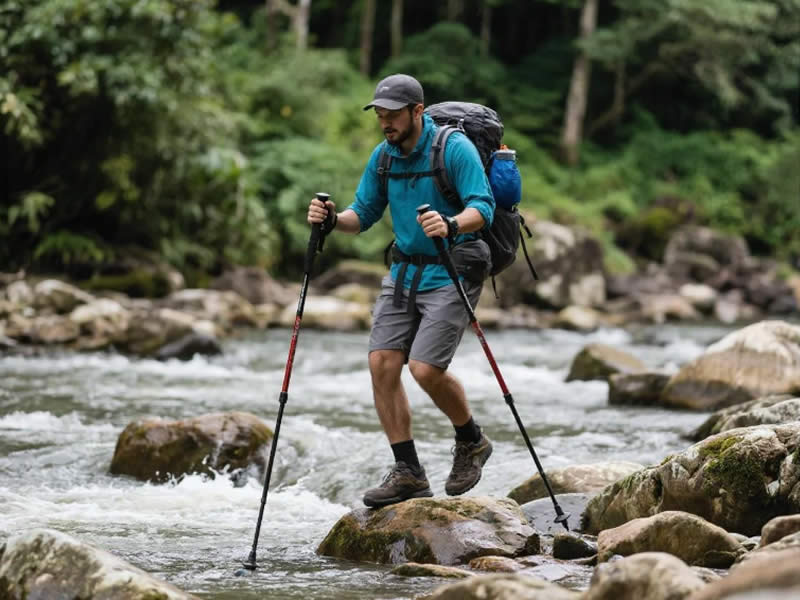
Crossing rocky rivers is a common challenge in many Brazilian national parks – from the crystal‑clear streams of Chapada Diamantina to the swift‑flowing rivers of Serra dos Órgãos and the boulder‑strewn waters of Serra da Canastra. A slip on a wet, moss‑covered rock can lead to serious injury, damaged gear, or a lost pair of poles. The right trekking poles are essential for stability, depth probing, and balance. The best poles for this task are 7075 aluminium with lever locks, tungsten carbide tips, and cork grips. Avoid carbon fibre (brittle) and twist locks (unreliable when wet). Here is a detailed guide to choosing and using poles for river crossings in Brazil.
Recommended trekking pole purchase link: https://lightenup.aliexpress.com/store/1101521655
Why aluminium and lever locks?
- Aluminium (7075 alloy) is strong and ductile. If your pole gets jammed between rocks, it will bend rather than snap. You can often straighten a bent aluminium pole and continue. Carbon fibre can shatter on a sudden impact, leaving you with a useless stick.
- Lever locks (external clamps) are not affected by water. Mud and grit can be wiped off. Twist locks, by contrast, allow water to seep into the internal mechanism, causing them to slip or jam. In a river crossing, a collapsed pole could send you tumbling.
- Cork grips provide a secure, non‑slip hold even when your hands are wet. Foam grips can become slippery; rubber grips become slick.
Essential tip: carbide tips, not rubber
For river crossings, you need the sharp bite of tungsten carbide. Remove any rubber tip covers – they will slide on wet rock. Carbide penetrates algae and bites into the underlying stone. Check that your tips are sharp; replace them if rounded.
Technique for safe river crossings with poles
- Lengthen your poles by 5–10 cm beyond your flat‑ground setting. A longer pole gives you better reach for probing ahead.
- Keep your pack unbuckled (hip belt and sternum strap undone) so you can escape quickly if you fall.
- Plant both poles downstream (on the side the water is flowing toward). The current will push against the poles, not your legs.
- Move sideways, facing upstream. Shuffle your feet, keeping three points of contact (two poles + one foot, or one pole + two feet).
- Probe ahead before stepping. Use one pole to feel for hidden holes, loose rocks, or depth.
- Never lift both poles at once – always keep at least one pole planted.
- Cross at a wide, shallow section where the water is no higher than your knees. Avoid narrow, fast‑flowing channels.
Top pole recommendations for Brazilian rocky rivers
1. Leki Makalu – 7075 aluminium, SpeedLock lever, cork grip, replaceable carbide tip. Length adjustable to 140 cm (for tall users). The gold standard for durability and security. Available via importers.
2. Decathlon Forclaz MT500 – Budget‑friendly, aluminium, lever lock, cork/foam hybrid grip. Widely available in Decathlon stores across Brazil. Excellent value. Note: max length 135 cm – suitable for hikers under 190 cm.
3. Black Diamond Trail Pro – Aluminium, FlickLock lever, foam grip. Very robust. The foam grip is less ideal for wet hands, but the lock is bombproof.
4. Komperdell Expedition Alu – Heavy‑duty, oversized levers, 18 mm shaft. For very large hikers or those carrying heavy packs.
What to avoid for river crossings
- Carbon poles – they can snap when wedged between boulders.
- Twist‑lock poles – water and mud cause slippage.
- Poles with non‑replaceable tips – if the tip wears out, the pole is useless.
- Foldable Z‑poles – their joints can be weaker under lateral stress.
After the crossing
- Rinse your poles with fresh water to remove sand and grit (especially in coastal parks).
- Dry the locking mechanisms – open lever locks and let them air dry.
- Inspect for damage – check if the shaft is bent or the tip is loose.
- Re‑tighten lever locks – they may have loosened from vibration.
Case study: Rio Preto in Chapada Diamantina
The Rio Preto crossing on the way to Fumaça waterfall is typical of Brazilian rocky rivers. The streambed is uneven, with submerged quartzite boulders and slippery algae. Hikers using aluminium poles with lever locks reported stable, confident crossings, while carbon pole users recounted close calls and one snapped shaft. The lesson: invest in robust aluminium poles for this environment.
Final verdict
For crossing rocky rivers in Brazilian national parks, the best trekking poles are 7075 aluminium with lever locks, carbide tips, and cork grips. The Leki Makalu is top‑tier; the Decathlon Forclaz MT500 offers unbeatable value. Avoid carbon, twist locks, and rubber tips. With the right poles and proper technique (plant downstream, three points of contact, probe ahead), you will cross safely and keep your gear dry. Enjoy the adventure – and the stunning waterfalls beyond the river.




