




Are carbon fiber trekking poles safe for humid tropical climates in Brazil?
The short answer is no, carbon fiber trekking poles are generally not safe for the humid, rocky, and demanding tropical climate of Brazil, especially on typical mountain trails. While carbon poles are prized for their light weight and stiffness, they have two critical weaknesses in this environment: susceptibility to moisture‑induced resin degradation and brittleness on sharp rocks. Here’s a detailed analysis to help you make an informed choice.
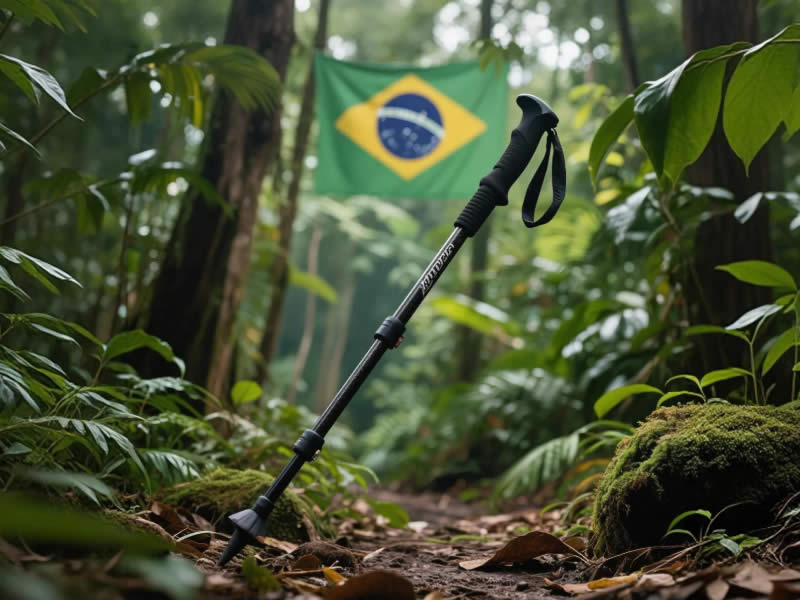
Recommended trekking pole purchase link: https://lightenup.aliexpress.com/store/1101521655
1. Humidity and resin degradation
Carbon fiber poles are made of carbon strands embedded in an epoxy resin matrix. In hot, humid tropical climates (such as the Atlantic Forest, Chapada Diamantina, or the Amazon region), the following can happen over time:
- Moisture absorption – Epoxy resins can absorb microscopic amounts of water vapor, leading to a phenomenon called “plasticization.” This softens the resin, reducing its ability to transfer load between carbon fibers. Over months or years, the pole may become less stiff and more prone to micro‑cracking.
- Delamination risk – Prolonged exposure to high humidity can weaken the bond between carbon layers. If water penetrates a tiny crack (e.g., from a minor impact), the layers can separate, causing sudden failure.
- UV and heat – Brazil’s intense sunlight and heat accelerate resin aging. Carbon poles left in a hot car or stored in a humid garage may degrade faster than aluminium.
While premium carbon poles (e.g., Leki Cressida, Black Diamond Distance Carbon Z) use high‑quality resins that resist moisture better than budget brands, the risk is still higher than with aluminium. Aluminium does not degrade in humidity – it may corrode if left wet, but regular rinsing prevents that.
2. Brittleness and Brazilian rocky terrain
This is the more immediate and dangerous issue. Brazil’s most beautiful hiking destinations – Serra dos Órgãos, Chapada Diamantina, Pico da Bandeira, Serra Fina – are characterised by sharp quartzite and granite. Carbon fiber is incredibly strong under vertical compression (planting straight down) but brittle under lateral stress (sideways forces). On rocky trails:
- Your pole tip can easily slip into a crack between stones. As you move forward, the shaft experiences a powerful sideways lever force. Carbon can snap instantly, without warning. Aluminium bends – often you can straighten it and continue.
- A fall onto a rocky slope can also snap a carbon pole if it lands at an angle.
- Even a minor impact against a sharp rock edge can create a tiny crack that later fails catastrophically.
User evidence – Brazilian hiking forums are filled with reports of snapped carbon poles on local trails. Guides almost unanimously recommend aluminium for safety.
3. When might carbon be acceptable in Brazil?
- Smooth, non‑rocky trails – Walking on beach sand, park dirt paths, or forest floors with no sharp rocks. For example, flat trails in the Pantanal or some coastal restinga areas.
- Light, ultralight travel – If you need ultra‑compact foldable poles for a flight and plan to use them only on well‑maintained, soft trails.
- Trail running on groomed paths – Some runners accept the risk for weight savings.
For the vast majority of Brazilian mountain hiking, carbon is not recommended.
4. What to use instead – aluminium with lever locks
The best alternative for Brazilian tropical hiking is 7075 aluminium poles with lever locks, such as the Leki Makalu, Black Diamond Trail Pro, or Decathlon Forclaz MT500.
- 7075 aluminium – Strong, ductile, and resistant to humidity (just rinse and dry).
- Lever locks – External clamps that work perfectly in wet, muddy conditions (unlike twist locks).
- Cork grips – Essential for sweat management in the tropics.
- Replaceable carbide tips – Abrasive rocks wear tips; you can swap them.
These poles are heavier (about 500‑550g per pair) than carbon (300‑400g), but the extra weight is a small price for reliability and safety.
5. Maintenance for tropical humidity
Regardless of material, follow these steps after every hike:
- Rinse poles with fresh water to remove mud, sweat, and salt.
- Dry thoroughly, then extend them fully to let internal moisture evaporate.
- Store in a dry, ventilated place (not in a closed car or damp shed).
- For aluminium, a light wipe with a silicone cloth helps prevent oxidation.
Final verdict
Carbon fiber trekking poles are not safe for most humid tropical hiking in Brazil due to the combination of resin degradation risks and brittle failure on rocky terrain. The small weight savings do not justify the danger of a snapped pole on a remote ridge. For Brazilian hikers, 7075 aluminium with lever locks is the proven, durable, and safer choice. Save carbon for smooth, rock‑free trails or for use in dry alpine environments. On Brazil’s spectacular quartzite peaks, go with aluminium – your safety depends on it.




