




Cork vs foam handles — which performs better in Brazilian summer hikes?
When the Brazilian summer arrives, hikers in the Atlantic Forest, Serra dos Órgãos, or Chapada Diamantina face a common enemy: sweat. High humidity and scorching temperatures turn your palms into a slippery mess within minutes. The material of your trekking pole grip directly affects your safety, comfort, and performance. After countless hours on humid, rocky trails, the clear winner is cork. Here’s why cork outperforms foam in Brazilian summer hikes.
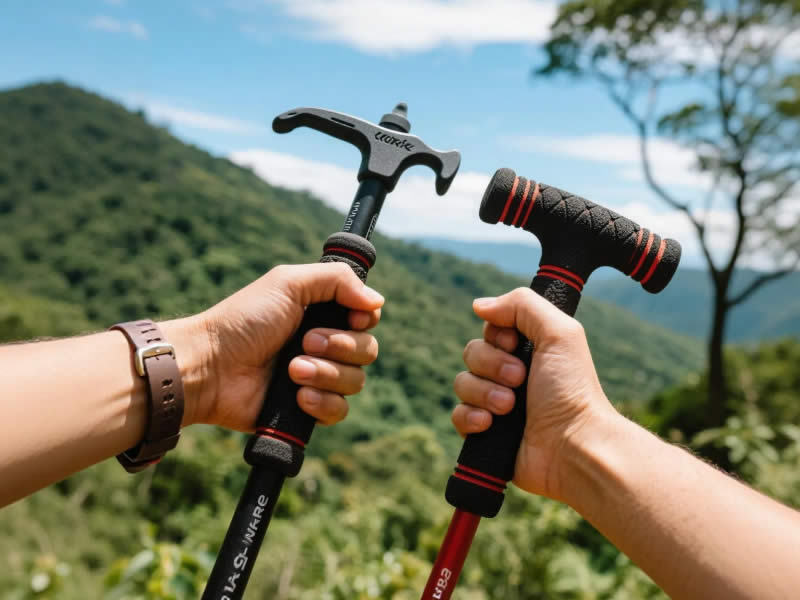
Recommended trekking pole purchase link: https://lightenup.aliexpress.com/store/1101521655
The challenge of Brazilian summer hiking
Brazilian summer (December to March) brings temperatures above 30°C (86°F) and relative humidity often exceeding 80%. Combined with steep climbs and heavy backpacks, your hands will sweat profusely. A grip that becomes slippery forces you to clench tighter, leading to hand fatigue, blisters, and even dangerous slips on descents. The ideal grip material must absorb moisture, maintain friction, and stay comfortable for hours.
Cork handles – the sweat‑absorbing champion
Cork is a natural material harvested from oak bark. Its cellular structure is open and porous, allowing it to wick moisture away from your skin. Here’s how it performs in Brazilian summer:
- Superior sweat management: Cork absorbs sweat directly into its pores, keeping the surface dry and grippy. Unlike foam, which pools sweat, cork stays tacky even in torrential downpours or after hours of climbing.
- Molds to your hand: Over time, cork compresses slightly, forming a custom fit that reduces hot spots and improves control.
- Non‑slip when wet: Many hikers report that a little moisture actually improves cork’s grip, making it feel slightly sticky.
- Comfortable temperature: Cork doesn’t heat up like rubber or foam; it remains neutral even under direct sun.
- Durable in humidity: Cork resists mold and mildew when properly maintained (just rinse and dry). High‑quality cork grips last for years.
Examples of cork grips: Leki Aergon cork, Decathlon Forclaz cork/foam hybrid, Komperdell cork models.
EVA foam handles – lightweight but slippery
EVA (ethylene‑vinyl acetate) foam is a synthetic, closed‑cell material. It is lightweight, affordable, and comfortable in cool weather. However, in Brazilian summer conditions:
- Poor moisture absorption: Foam does not absorb sweat. Instead, moisture sits on the surface, creating a slick film. As your hands sweat more, the grip becomes increasingly slippery.
- Loss of friction: Even textured foam (e.g., Black Diamond’s Trail Pro) loses grip when wet. You may need to constantly wipe the handle or wear gloves.
- Heat retention: Foam can feel hot and sticky in direct sunlight, making it uncomfortable to hold.
- Degradation: Prolonged exposure to UV and sweat can cause foam to break down, becoming crumbly or sticky over time.
Foam is acceptable for cool, dry conditions or for hikers who wear gloves. For bare hands in Brazilian summer, it is not ideal.
Head‑to‑head comparison for Brazilian summer hikes
| Feature | Cork | EVA Foam |
|---|---|---|
| Sweat absorption | Excellent – wicks moisture | Poor – sweat pools on surface |
| Grip when wet | Remains non‑slip, even tacky | Becomes slippery, requires wiping |
| Molding to hand | Yes – custom fit over time | No |
| Heat comfort | Neutral, cool | Can feel hot and sticky |
| Durability in humidity | High (with rinsing) | Moderate – can degrade |
| Weight | Slightly heavier | Lighter |
| Price | Usually more expensive | Cheaper |
The hybrid solution: cork main + foam extension
Many premium poles (e.g., Leki Makalu, Decathlon Forclaz MT500) feature a cork main grip with an extended foam section below. This gives you the sweat‑wicking cork for normal use and the lightweight foam for choking up on steep climbs (where you hold it briefly). This combination works exceptionally well in Brazilian summer.
Tips for maintaining cork grips in summer
- After a sweaty hike, rinse cork grips with fresh water (salt from sweat can dry them out). Do not use soap – it may leave a slippery residue.
- Let them air dry away from direct sunlight.
- If the cork becomes smooth, lightly sand with fine (400‑600 grit) sandpaper to restore texture.
Final verdict
For Brazilian summer hikes, cork handles are significantly better than foam. They absorb sweat, stay non‑slip, mold to your hand, and remain comfortable in high heat and humidity. Foam becomes slippery and requires constant wiping, which is both annoying and potentially dangerous on steep, rocky terrain. If your budget allows, invest in poles with cork grips. Your hands – and your safety – will thank you on every sweaty ascent.




