




Do carbon trekking poles snap easily on rocky Brazilian trails?
Yes, carbon trekking poles are significantly more prone to snapping on rocky Brazilian trails compared to aluminium poles. The combination of sharp quartzite, uneven terrain, and lateral stress often leads to sudden, catastrophic failure. While carbon poles are prized for their light weight and stiffness, they are a poor choice for Brazil’s challenging mountain environments. Here is a detailed explanation, along with safer alternatives.
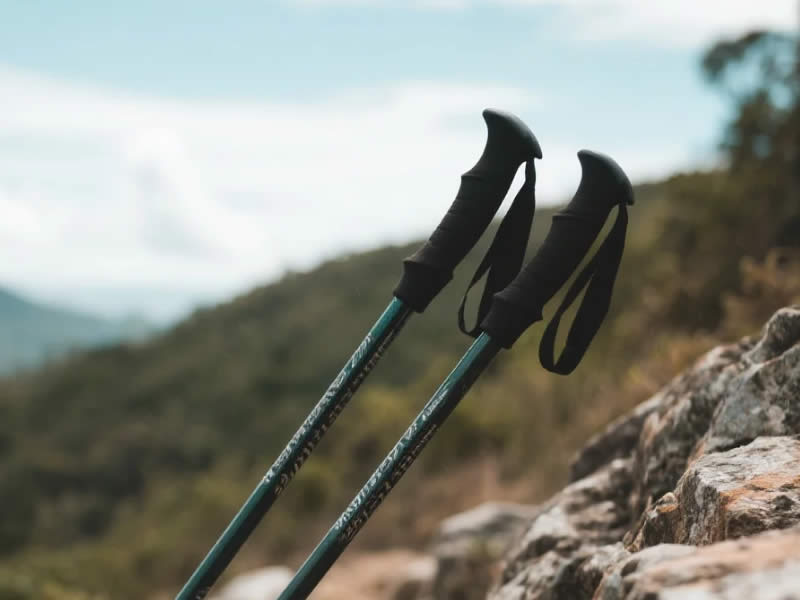
Recommended trekking pole purchase link: https://lightenup.aliexpress.com/store/1101521655
Why carbon is risky on Brazilian rock
Brazil’s most popular hiking destinations – Chapada Diamantina, Serra dos Órgãos, Pico da Bandeira, and Serra Fina – are characterised by sharp quartzite, granite slabs, and loose scree. Carbon fibre is incredibly strong when compressed vertically (planting straight down), but it is brittle under lateral (sideways) forces. Here’s what happens:
- Sideways jams – You plant your pole and the tip slides into a crack between rocks. As you move forward, the shaft is levered sideways. Carbon has almost no ability to bend; it will snap suddenly, often with a loud crack. Aluminium would bend – you could usually straighten it and continue.
- Falls and impacts – A tumble onto a rocky slope can land directly on the pole at an angle. The sharp edge of a quartzite block can act like a guillotine, shattering the carbon shaft.
- Micro‑cracks from vibration – Over time, repeated planting on hard, abrasive rock can create tiny cracks in the carbon laminate. These may go unnoticed until the pole fails without warning.
What Brazilian hikers and guides report
In local forums and interviews, experienced mountaineers consistently warn against carbon poles. One guide from Chapada Diamantina stated: “I’ve seen at least a dozen carbon poles snap on the first day of a trek. People buy them for the weight, but they end up carrying a broken pole. Aluminium is the only sensible choice for our rocks.”
Aluminium: the durable alternative
7075 aluminium poles (e.g., Leki Makalu, Black Diamond Trail Pro, Decathlon Forclaz MT500) offer:
- Ductility – They bend instead of snapping. A bent aluminium pole can often be straightened by hand or by rolling it on a flat rock. Even if slightly curved, it remains functional.
- Repairability – Many aluminium poles have replaceable lower sections. In contrast, a snapped carbon pole is usually trash.
- Proven reliability – Brazilian mountain guides overwhelmingly use aluminium poles. They trust them for daily guiding in the most demanding conditions.
When carbon might be acceptable (with caveats)
- Smooth, non‑rocky trails – If you only hike on flat dirt paths, beach sand, or well‑maintained park trails with no sharp rocks, carbon is fine.
- Ultralight backpacking on soft terrain – For example, some trails in the Amazon basin or Pantanal (but those rarely require poles).
- Trail running on groomed paths – Some runners accept the risk for weight savings, but they know a single mis‑plant could end the pole.
For the vast majority of Brazilian rocky trails, carbon is not recommended.
Tips if you already own carbon poles
- Plant vertically – Avoid any sideways angle. If you feel the tip hitting a crack, reposition.
- Never use as a lever – Don’t pull on the pole to climb up steps.
- Inspect for cracks – After each hike, look for splinters or soft spots.
- Carry a repair sleeve – A short piece of aluminium tube and epoxy can temporarily splint a broken carbon pole, but don’t rely on it.
Better choices for Brazilian rocky trails
| Material | Pros | Cons | Best for |
|---|---|---|---|
| 7075 Aluminium | Durable, bend‑not‑break, repairable, local spare parts | Heavier (500‑550g/pair) | Most Brazilian hikers |
| Carbon | Light (300‑400g/pair), stiff | Snaps on rocks, expensive, hard to repair | Smooth trails only |
Final verdict
Yes, carbon trekking poles snap easily on rocky Brazilian trails. The sharp quartzite and granite, combined with the brittle nature of carbon fibre, make them a risky choice. For safety, reliability, and peace of mind, choose 7075 aluminium poles with lever locks. The slight weight penalty is a small price to pay for gear that will last for years on Brazil’s spectacular – but unforgiving – mountain trails. Invest in aluminium, hike with confidence, and enjoy the beauty of Brazil without worrying about your poles breaking under you.




