




Are carbide tips worth the investment for Brazilian rocky mountain trails?
Absolutely – yes. For anyone hiking on Brazil’s rocky mountain trails, such as those in Chapada Diamantina, Serra dos Órgãos, Pico da Bandeira, or Serra Fina, tungsten carbide tips are not just an option; they are a necessity. The country’s quartzite and granite are among the most abrasive rocks in the world. Steel tips wear down in a single day, while carbide tips last months or years. Here is a detailed analysis of why investing in carbide tips is one of the smartest gear decisions you can make for Brazilian hiking.
Recommended trekking pole purchase link: https://lightenup.aliexpress.com/store/1101521655
Why Brazilian rock destroys ordinary tips
Brazil’s mountain ranges are formed primarily of quartzite (hardness 7 on Mohs scale) and granite (hardness 6–7). These rocks are extremely abrasive. When you plant a pole, the tip scrapes against sharp edges and grains of quartz. A standard steel tip (hardness 5–6) will round off, becoming smooth and useless after just 20–30 km of rocky trail. Once the tip is blunt, it slides on rock, providing no grip – a dangerous situation on steep slopes.
Carbide tips: engineered for abrasion
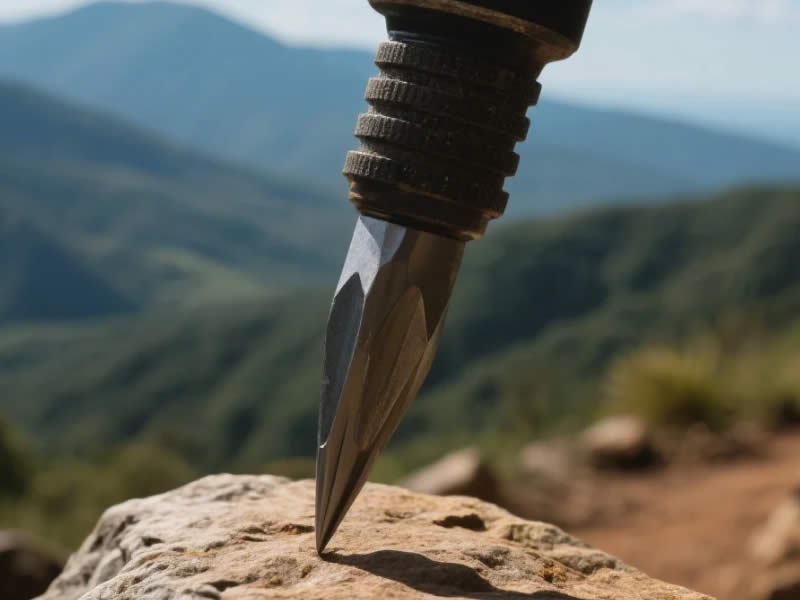
Tungsten carbide is a ceramic‑metal composite with a hardness of 8.5–9, second only to diamond. When you press a carbide tip onto quartzite, the rock wears microscopically, not the tip. Carbide tips typically last 500–1,000 km on Brazilian rock – 10 to 20 times longer than steel.
Advantages of carbide tips for Brazilian trails
- Superior grip – A sharp carbide tip penetrates smooth rock, moss, and even thin ice. It provides confidence on steep descents and slippery slabs.
- Longevity – A single pair of carbide tips can last through multiple multi‑day treks. Steel tips would need replacement after every weekend hike.
- Replaceability – Most quality carbide tips are screw‑in or press‑fit. When they eventually wear down (after hundreds of kilometres), you can replace them for a small cost (15–30 BRL per pair). Steel tips on budget poles are often moulded in – once worn, the entire pole is garbage.
- Cost‑effective – A pair of carbide tips costs about 20–40 BRL. Over a year of frequent hiking, you might need 1–2 pairs. In contrast, a cheap set of steel‑tipped poles might cost 150 BRL and be worn out in a month. Carbide tips on quality poles are cheaper in the long run.
What about “budget” carbide tips? – Some cheap poles advertise “carbide” tips, but these often have a tiny carbide pellet embedded in a steel base. Once the steel wears, the pellet falls out. Genuine carbide tips have a large, solid carbide point. Inspect your tips.
Real‑world comparison from Brazilian hikers
- “I used a cheap pole with steel tips on a 4‑day trek in Chapada. The tips were completely round by day 2. I slipped constantly. After switching to Leki with carbide, I did the same trek and the tips still looked new.”
- “I’ve had the same carbide tips on my Decathlon Forclaz for 500 km of rocky trails. Still sharp. Best investment.”
Maintenance tips for carbide tips in Brazil
- Rinse after hiking – Remove red mud and sand; dry.
- Replace when rounded – If the point is no longer sharp, order new tips. Using a blunt tip defeats the purpose.
- Carry a spare pair – For very long treks (over 200 km), bring a replacement set.
- Use rubber tips on pavement – When walking on roads to the trailhead, put rubber covers on to protect the carbide from unnecessary wear.
What about steel tips? – Steel tips are only acceptable for very light, short hikes on soft, non‑abrasive surfaces (e.g., dirt paths, grass, or pavement). For any rock contact, they are inadequate and potentially dangerous.
Final verdict
Carbide tips are undoubtedly worth the investment for Brazilian rocky mountain trails. They grip securely, last hundreds of kilometres, and are replaceable. The small upfront cost (often included on quality poles) pays for itself in safety and longevity. When buying trekking poles in Brazil, make sure they have replaceable tungsten carbide tips. Avoid poles with steel or non‑replaceable tips. Your knees, your confidence, and your enjoyment of Brazil’s stunning mountains will thank you.




