




Do shock‑absorbing springs in trekking poles work well on Brazilian cobblestone paths?
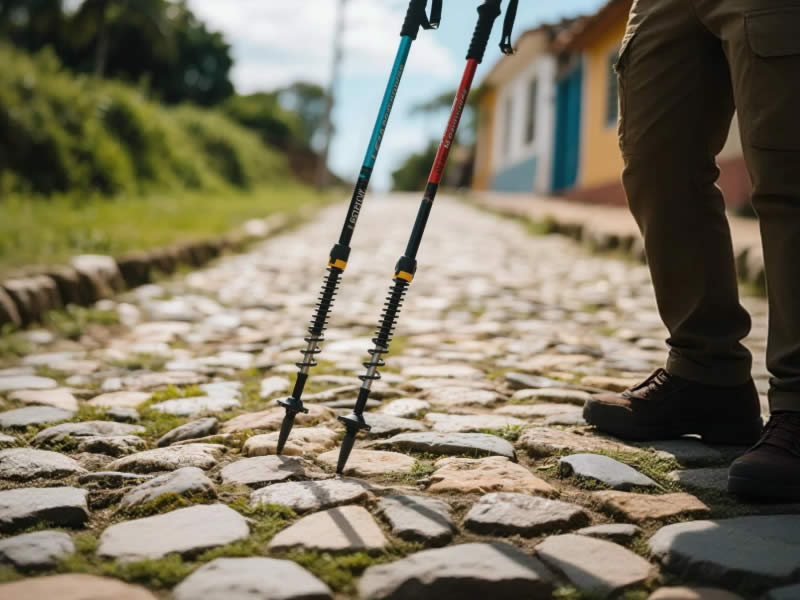
Walking on Brazilian cobblestone paths – found in historic towns like Paraty, Ouro Preto, Salvador, and Recife – is a unique challenge. These stones are rounded, uneven, and often slick from humidity or rain. Trekking poles with shock‑absorbing springs can help reduce the jarring impact on your wrists, elbows, and shoulders, but they are not essential and come with trade‑offs. For occasional use on cobblestones, they are acceptable; for serious hiking on Brazil’s rocky mountain trails, rigid poles are still better. Here is a detailed evaluation.
Recommended trekking pole purchase link: https://lightenup.aliexpress.com/store/1101521655
How shock‑absorbing springs work
A spring (or elastomer) in the upper shaft compresses slightly (10–20 mm) when you plant the pole, absorbing some of the vertical impact that would otherwise travel up your arm. This can make walking on hard, unyielding surfaces like cobblestones, concrete, or pavement more comfortable for your upper body joints.
Do they work well on Brazilian cobblestones?
Yes, for reducing arm fatigue and joint impact. Cobblestones are hard and irregular. Each plant sends a jarring vibration through the pole. A quality spring mechanism can smooth out that vibration, making the walk feel less harsh on your wrists and elbows. This is especially beneficial for older hikers or those with arthritis.
However, there are significant downsides:
- No benefit for knees – The spring does not reduce the load on your knees. Knee protection comes from using any poles correctly (wrist straps, proper length). If you are walking on cobblestones to reach a trailhead, your knees will still feel the impact of stepping on uneven stones.
- Added weight – Springs add 30–50 g per pole. On a long walk through a historic town, you may not notice, but every gram counts on a multi‑day trek.
- Bounciness on uneven stones – On irregular cobblestones, the spring can cause the pole to bounce slightly, reducing the precise feedback you need to plant securely. This can feel disconcerting and may actually reduce stability.
- Maintenance and reliability – Springs can squeak, jam with grit, or corrode in Brazil’s humid climate. Over time, they may lose tension. Rigid poles have no such issues.
When to use shock‑absorbing poles on cobblestones
- Urban walking or historical tours – If you are spending a full day walking on cobblestones (e.g., exploring Paraty’s historic centre), shock‑absorbing poles can reduce arm fatigue and make the experience more comfortable.
- Light, occasional use – For a short walk from a car park to a trailhead, the springs are fine.
- Users with wrist or elbow arthritis – The cushioning can be genuinely helpful.
When to choose rigid poles instead
- For the actual trail – Once you leave the cobblestones and hit dirt, mud, or rock, rigid poles provide better feedback and reliability.
- For multi‑day backpacking – The extra weight and complexity of springs are not worth it.
- If you only have one pair of poles – Rigid poles are more versatile and durable overall.
What about using rubber tips on cobblestones?
Regardless of shock absorption, always use rubber tip covers (paw covers) on cobblestones. Carbide tips will skid and wear quickly. Rubber tips provide grip, protect the stones from scratching, and reduce noise.
Alternatives to anti‑shock poles for cobblestones
- Lightweight rigid poles with cork grips – They are still comfortable and offer good vibration damping through the cork.
- Nordic walking poles (fixed length, with glove straps) – Excellent for fitness walking on hard surfaces.
- Just use rubber tips on your existing rigid poles – The rubber itself absorbs some shock.
Recommendation for Brazilian hikers
If you already own shock‑absorbing poles, they will work fine on cobblestones – just add rubber tips. If you are buying new poles for mixed use (cobblestones + trails), a good rigid pole with lever locks and cork grips is a smarter investment. You can always add a small shock‑absorbing tip (some aftermarket products exist) if needed, but most hikers find rigid poles perfectly adequate.
Final verdict
Shock‑absorbing springs do work on Brazilian cobblestone paths by reducing upper‑body impact, but they are not necessary. For occasional urban walking, they are a nice bonus. For serious hiking on Brazil’s rugged trails, rigid poles with lever locks are still the superior choice. If you can afford only one pair, buy rigid. If you have joint issues and walk on hard surfaces frequently, consider anti‑shock, but be aware of the trade‑offs.




