




What is the best trekking pole shaft diameter for heavy jungle use?
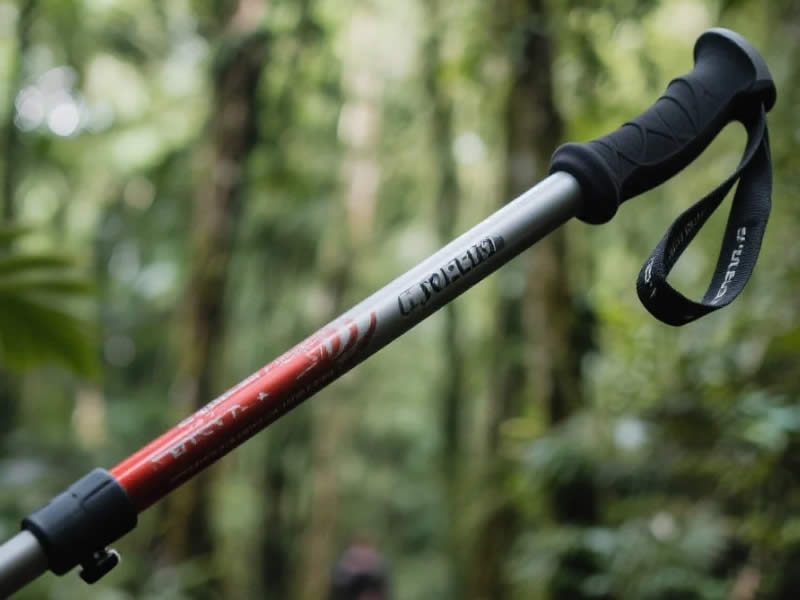
When hacking through dense tropical jungle – whether in the Amazon, the Atlantic Forest, or Southeast Asian rainforests – your trekking poles face extreme abuse. You will plant them in soft, muddy ground, push aside thick vegetation, and often leverage them against roots and rocks. In these conditions, the shaft diameter directly affects strength, stiffness, and durability. The best shaft diameter for heavy jungle use is 16–18 mm for aluminium poles (or the equivalent stiffness for carbon). Here’s why, and what to look for.
Recommended trekking pole purchase link: https://lightenup.aliexpress.com/store/1101521655
Why diameter matters in the jungle
- Lateral stress – In the jungle, you rarely plant a pole perfectly vertically. You push sideways to clear ferns, test muddy patches, or brace against sloping ground. A thin shaft (14–15 mm) will flex excessively or bend permanently under this lateral load.
- Impact resistance – You will hit trees, rocks, and logs. A thicker shaft spreads impact forces over a larger area, reducing the chance of denting or cracking.
- Stiffness for clearing vegetation – When you use your pole to part thorny bushes or push aside hanging vines, a stiffer shaft transmits force more effectively and doesn’t whip around.
Recommended diameter range: 16–18 mm
- 16 mm – The minimum for reliable jungle use. Many quality poles (e.g., Leki Makalu lower section) are 16 mm. They are light enough for long days but still stiff enough for moderate abuse.
- 18 mm – The heavy‑duty sweet spot. Poles like the Komperdell Expedition Alu (18 mm) or older Black Diamond models offer exceptional stiffness and resistance to bending. They are slightly heavier but virtually indestructible.
- Above 18 mm – Unnecessary. Poles with 20 mm shafts (rare) become too heavy and bulky for backpacking.
Material matters as much as diameter
- 7075 aluminium – The best choice for jungle use. It is strong, ductile, and bends rather than snaps. A bent aluminium pole can often be straightened in the field.
- Carbon fibre – Not recommended for heavy jungle use. Even with a larger diameter, carbon is brittle and can shatter when twisted or struck sideways.
- 6061 aluminium – Acceptable but less strong than 7075. A 16 mm 6061 pole will bend more easily than a 16 mm 7075 pole.
What about foldable Z‑poles?
Foldable (Z‑pole) diameters are typically 14–16 mm, but the joints are the weak point, not the shaft. For heavy jungle, telescopic poles with overlapping sections are far stronger.
Other important features for jungle trekking poles
- Lever locks – Twist locks fail in mud and humidity. External lever locks (Leki SpeedLock, Black Diamond FlickLock) are essential.
- Cork grips – Absorb sweat and stay non‑slip in high humidity.
- Replaceable carbide tips – Jungle rocks and roots wear tips quickly.
- Baskets – Small baskets help prevent sinking into mud; remove them when not needed.
Recommended poles for heavy jungle use
| Model | Diameter | Material | Lock | Jungle suitability |
|---|---|---|---|---|
| Leki Makalu | 16 mm | 7075 Al | SpeedLock | Excellent |
| Komperdell Expedition Alu | 18 mm | 7075 Al | Powerlock | Outstanding |
| Black Diamond Trail Pro | 17 mm | 7075 Al | FlickLock | Excellent |
| Decathlon Forclaz MT500 | 16 mm | 7075 Al | Lever lock | Very good (budget) |
Maintenance for jungle use
- Rinse after every hike – Mud and plant sap can corrode locks. Dry thoroughly.
- Inspect for bends – Roll the pole on a flat surface to check straightness.
- Lubricate lever pivots – A drop of oil prevents rust.
Final verdict
For heavy jungle use, choose trekking poles with 16–18 mm diameter 7075 aluminium shafts, lever locks, and cork grips. Avoid carbon, twist locks, and any pole thinner than 16 mm. The Komperdell Expedition Alu (18 mm) is the tank of jungle poles, while the Leki Makalu (16 mm) offers a lighter but still robust option. With the right shaft diameter, you can confidently push through the densest thickets, cross muddy swamps, and tackle slippery slopes – all while protecting your knees and keeping your gear intact.




