




What is the difference between trekking poles and ski poles for Brazilian winter?
At first glance, trekking poles and ski poles look similar – two sticks with pointy ends. However, they are designed for fundamentally different activities and environments. In the context of Brazilian winter – which is generally mild, with rare snowfall limited to the high peaks of the South (e.g., São Joaquim, Urubici, and the Serra Gaúcha) – understanding these differences is crucial to choosing the right tool. Here is a detailed comparison, with practical advice for Brazilian winter conditions.
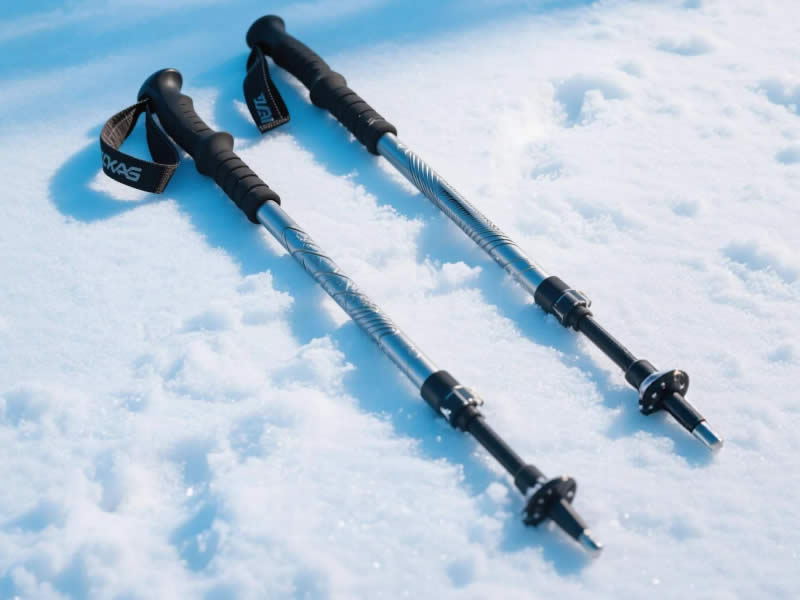
Recommended trekking pole purchase link: https://lightenup.aliexpress.com/store/1101521655
Purpose and movement
- Trekking poles are designed for walking and hiking on varied terrain: dirt, rock, gravel, mud, and occasional light snow. Their primary functions are to improve balance, reduce knee impact on descents, assist with uphill propulsion, and provide stability on uneven ground.
- Ski poles (both alpine and cross‑country) are designed for use on snow, with a specific technique. Alpine ski poles help with timing, turns, and balance while skiing downhill. Cross‑country ski poles are used for propulsion in a diagonal or double‑poling motion. They are not intended for walking on bare ground or rock.
Length adjustability
- Trekking poles: Almost always adjustable (telescopic or foldable). Length range typically 100–135 cm, allowing you to shorten for uphill and lengthen for downhill – essential for varied terrain. Even on flat Brazilian winter trails, adjustability helps accommodate different users and slopes.
- Ski poles: Traditionally fixed‑length. The correct length for alpine skiing is roughly the height of your armpit; for classic cross‑country skiing, it is around shoulder height. Adjustable ski poles exist for backcountry touring, but they are the exception. For Brazilian conditions, a fixed‑length ski pole would be unsuitable for walking on rocky trails or for adjusting to steep grades.
Baskets
- Trekking poles: Come with small interchangeable baskets (4–6 cm) for summer use to prevent sinking into soft dirt. Large snow baskets (7–10 cm) can be swapped on for winter snow. In most of Brazil, even in winter, the small baskets are sufficient; large baskets are only needed if hiking in actual deep snow (rare).
- Ski poles: Have large, often permanently attached baskets (8–12 cm) designed to prevent the pole from sinking deep into powder snow. These baskets are unnecessary and even obstructive on Brazilian trails, as they catch on rocks, roots, and vegetation.
Tips
- Trekking poles: Use a tungsten carbide tip (very hard and pointy) that bites into rock, dirt, and ice. Rubber covers are available for pavement. For Brazilian winter, the carbide tip works well on icy patches or firm snow.
- Ski poles: Typically use a steel tip with a small carbide point. The tip is designed for hard snow and ice but wears quickly on rock or dirt. Using ski poles on rocky Brazilian trails would destroy the tips rapidly.
Grips and straps
- Trekking poles: Grips are made of cork, foam, or rubber, shaped for a relaxed handhold. The wrist strap is a simple adjustable loop; you insert your hand from below to transfer weight. This works well for walking.
- Ski poles: Grips are often moulded plastic or rubber, with a special strap that may include a quick‑release mechanism or a full glove (for cross‑country). The strap is designed to allow you to let go of the pole without dropping it during the backswing. For walking, this strap system is awkward and unnecessary.
Materials and weight
- Trekking poles: Aluminium (7075) or carbon fibre, typically weighing 200–300 g per pole (400–600 g per pair). Focus on durability and lightweight for carrying.
- Ski poles: Aluminium, carbon, or composite. Alpine ski poles are heavier and sturdier to withstand aggressive planting; cross‑country poles are very light (under 150 g per pole) but fragile. Neither is optimised for the lateral stresses of rocky Brazilian trails.
Which one should you use for Brazilian winter?
For the vast majority of outdoor activities in Brazilian winter – hiking in the Atlantic Forest, camping in the Serra da Mantiqueira, trekking to Pico da Bandeira, or even walking on rare snow in the South – trekking poles are the correct choice. They are versatile, adjustable, durable on rock, and can be fitted with rubber tips or small baskets as needed. Ski poles are not suitable for hiking; they are single‑purpose tools for snow sports.
When might you need ski poles in Brazil?
- If you are actually skiing (downhill or cross‑country) in the very rare snow conditions of the South – for example, at a ski resort like Snow Valley in São Joaquim, or backcountry skiing on the rare deep powder days in the Serra do Rio do Rastro. In these cases, you need proper ski poles with large baskets and appropriate length.
- If you are snowshoeing in deep snow (uncommon in Brazil), trekking poles with added large snow baskets work perfectly well – you do not need ski poles.
Conclusion
For Brazilian winter hiking, trekking poles are the superior and more versatile choice. They are adjustable, have durable carbide tips for rock, and can be adapted to light snow with large baskets. Ski poles are designed only for snow and skiing; using them on rocky, rooty, or muddy Brazilian trails will lead to premature wear and poor performance. Unless you are actually skiing, leave the ski poles at the resort and bring your trekking poles.




