




How to use trekking poles to save energy on the Serra dos Órgãos traverse?
The Serra dos Órgãos traverse (Travessia Petrópolis–Teresópolis) is one of Brazil’s most spectacular and demanding multi‑day treks. With constant steep ascents, sharp quartzite ridges, slippery descents, and high humidity, energy conservation is critical. Trekking poles, used correctly, can reduce leg fatigue by 20–25% and help you finish each day feeling stronger. Here is a step‑by‑step guide to saving energy with your poles on this classic Brazilian traverse.
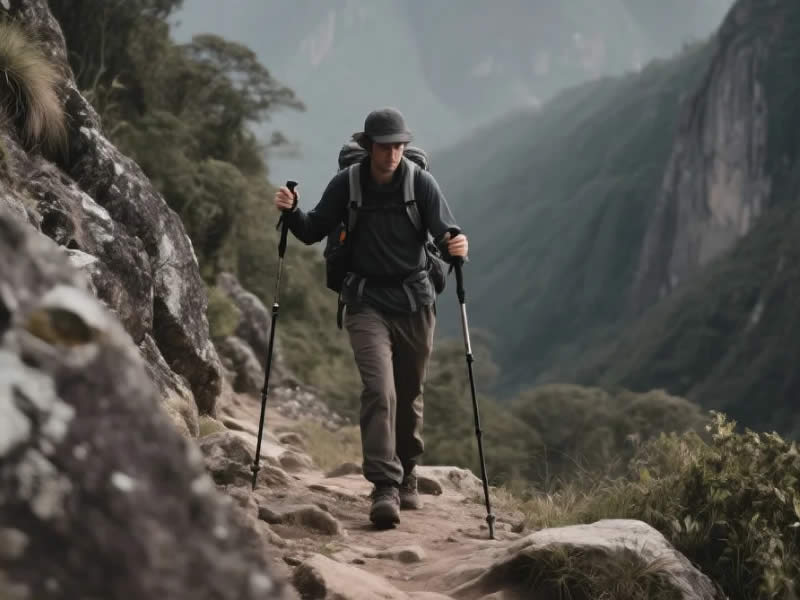
Recommended trekking pole purchase link: https://lightenup.aliexpress.com/store/1101521655
1. Set the correct length for each terrain
Energy waste often comes from using the wrong pole length. Follow this rule:
- Flat or rolling sections (e.g., the plateau between peaks): Set poles so your elbow is at 90° when the tip is on the ground. Mark this length.
- Steep uphill (e.g., the ascent to Pedra do Sino): Shorten poles by 5–10 cm. A shorter pole keeps your arms low, allowing you to push down effectively without raising your shoulders. This transfers work to your triceps and lats, sparing your quadriceps.
- Steep downhill (e.g., the descent into the Garrafão valley): Lengthen poles by 5–10 cm. A longer pole lets you plant ahead of your body, creating a braking effect that transfers weight from your knees to your arms. This saves your quads and reduces knee impact.
Adjusting length takes only seconds with lever locks (e.g., Leki SpeedLock). Mark your “uphill”, “flat”, and “downhill” settings on the shaft with tape.
2. Use the wrist straps correctly – hand up from below
Most hikers waste energy by gripping the poles tightly. The correct strap technique:
- Insert your hand up through the strap from below.
- Bring your hand down onto the grip. The strap should sit between your thumb and index finger, crossing the back of your hand.
- Tighten the strap so it is snug but not cutting off circulation.
- Relax your fingers – the strap bears your weight. Your fingers simply guide the pole.
When you push down on the pole, the strap transfers force directly from your arm. This reduces hand fatigue and allows you to use your upper body efficiently, saving leg energy.
3. Master the planting rhythm
- On gentle slopes and flats: Use alternate planting – opposite pole to forward foot (right foot forward, left pole down). This uses your body’s natural counter‑rotation, conserving energy.
- On steep climbs: Switch to double planting – plant both poles together ahead of your body, then pull yourself up. This maximises upper‑body contribution, saving your legs for the long traverse.
- On steep descents: Also use double planting, but push down to brake rather than pull. This transfers the eccentric load from your knees to your arms.
4. Push back, don’t just poke
A common energy waste is lightly tapping the pole on the ground. For efficient energy transfer, push down and back with each plant. Imagine you are propelling yourself forward like a skier. This active push adds a small amount of forward momentum, reducing the work your legs must do. On uphill sections, this push is especially valuable.
5. Choke down on extended foam grips on steep climbs
Many poles (e.g., Leki Makalu, Decathlon Forclaz MT500) have an extended foam section below the main grip. On the steepest pitches of the traverse (e.g., the climb to Morro da Bandeira), slide your hand down to this foam extension. This effectively shortens the pole even further, giving you maximum leverage and allowing you to use your strongest arm muscles.
6. Maintain a relaxed, upright posture
Hunching over your poles strains your back and wastes energy. Keep your chest open, shoulders back, and look ahead, not at your feet. Lean slightly forward from your ankles (not your waist). Good posture improves breathing efficiency and allows the poles to work as designed.
7. Take micro‑breaks with pole support
On the long, relentless climbs, you can rest without sitting down. Plant both poles firmly, lean back slightly, and let the straps support your weight. This allows you to catch your breath and shake out your legs for 30 seconds, then continue without losing momentum.
8. Use carbide tips and remove rubber covers
The quartzite ridges of Serra dos Órgãos are slippery when wet. Always use bare tungsten carbide tips – they bite into rock and mud. Rubber paw covers are for pavement only and will cause slips. Ensure your tips are sharp; replace them if rounded.
9. Practice energy‑saving drills before the traverse
Before heading to Petrópolis, practice the following on a local hill:
- Cadence drill: Climb with poles shortened, using double planting. Count your steps; aim for a quick, rhythmic pace (e.g., plant both poles every second step).
- Strap relaxation drill: Walk on flat ground, then completely relax your fingers. The poles should stay attached via the straps. This builds trust in the strap system.
10. Choose the right poles for the traverse
- Material: 7075 aluminium (e.g., Leki Makalu, Decathlon Forclaz MT500). Avoid carbon – it can snap on quartzite.
- Locking mechanism: Lever locks (not twist locks). They are reliable in rain and mud.
- Grips: Cork or cork/foam hybrid – they absorb sweat and stay non‑slip.
- Tips: Replaceable carbide – carry spares.
Final thoughts
The Serra dos Órgãos traverse is a test of endurance and technique. By adjusting pole length for each terrain, using wrist straps correctly, mastering the planting rhythm, and actively pushing back, you can save significant leg energy. This allows you to enjoy the stunning views of the Dedo de Deus and the surrounding peaks without being exhausted by the constant ups and downs. Practice these techniques on shorter hikes, then apply them on the traverse. Your legs – and your knees – will thank you.




